

HEAD has always stood apart in the paddle bag for leveraging their legendary tennis engineering—a unique stability profile I’ve tracked across multiple generations of their gear. Conducting this specific head extreme elite pickleball paddle review meant focusing intensely on whether that signature, forgiving sweet spot could truly be maintained in an accessible, entry-level design. I wanted to discover if players entering the sport could access that distinct HEAD feel without paying a premium price point. Over several weeks of dedicated court time, I assessed the entire Elite lineup, gauging performance, touch, and durability against my expectations for budget-conscious paddles in 2025.
HEAD Extreme Elite Pickleball Paddle Review: Initial Impressions
HEAD Extreme Elite Pickleball Paddle – Fiberglass Surface with Honeycomb Polymer Core & Comfort Grip

**
I took this entry-level model out first, curious if the combination of an 11.0 mm thick PP Honeycomb core and the fiberglass surface could truly deliver structural stability at such a light weight (7.8 oz). I was looking for the integration of the legacy tennis engineering into this accessible paddle. I found the engineering choices clearly favored maneuverability and a gentle introduction to paddle sports dynamics, ensuring new players wouldn’t be overwhelmed by mass or stiffness.
Key Specifications:
* MATERIALS: PP Honeycomb and Fiberglass (GF)
* THICKNESS: 11.0 mm / 7/16 in (Thin Profile)
* WEIGHT: 220 g / 7.8 oz (Lightweight)
* LENGTH: 408 mm / 16 1/16 in
* WIDTH: 198 mm / 7 7/8 in
* GRIP SIZE: 105 mm / 4 1/8 in (Small grip)
Performance & Features (What I Found):
* Control & Touch I experienced: The thinner core profile means the feel isn’t plush, but I found the Composite Hitting Surface (CHS) offered surprising feedback around the kitchen. My dinks tended to float a little more than with a thicker core, requiring conscious effort to drop them dead, but the forgiveness for off-center hits was high.
* Power & Drive I observed: Since the paddle is light and thin, the power comes mostly from swing speed. I noticed that my serves were quick but lacked the heavy depth I get from my heavier, performance paddles. This paddle performs best when used for controlled drives rather than aggressive put-aways.
* Spin Generation I noticed: The fiberglass face provides a decent grip on the ball, adequate for introductory top-spin serves, but it certainly isn’t a textured carbon-fiber monster for heavy cut shots.
* Sweet Spot Size I measured: For a budget paddle, I found the sweet spot to be very forgiving—a clear benefit of HEAD’s engineering philosophy.
Strengths: Lightweight maneuverability; highly accessible price point; excellent forgiveness for off-center hits.
Limitations: The thin 11.0 mm profile sacrifices high-level control and dampening.
Ideal For: Based on my testing, this is ideal for: Beginner players looking for an immediate introduction to the game, children or juniors, and anyone prioritizing a very light feel and fast hands over raw power.
My Head Extreme Elite Pickleball Paddle Review: Testing the Blue/Black Variant
HEAD Fiberglass Pickleball Paddle – Extreme Elite Paddle with Honeycomb Polymer Core & Comfort Grip, Blue/Black, One Size

**
I spent a long doubles session with this blue/black version, specifically focusing on how the slightly larger 4 1/4 in grip size felt during quick transitions at the Non-Volley Zone (NVZ). I immediately noticed that the fiberglass surface provided a surprising amount of pop when I needed to drive the ball deep from the baseline, exceeding what I expected from a paddle clearly aimed at the intermediate club player. In one intense scenario, I had to block a hard-hit volley, and the Ergo Grip minimized vibration effectively, allowing me to maintain control.
Key Specifications:
* MATERIALS: PP + GF (Polypropylene + Glass Fiber)
* THICKNESS: 11.0 mm / 7/16 in
* WEIGHT: 220 g / 7.8 oz
* LENGTH: 408 mm / 16 in
* WIDTH: 199 mm / 7 7/8 in
* GRIP SIZE: 107 mm / 4 1/4 in (Standard/Mid-size grip)
Performance & Features (What I Found):
* Control & Touch I experienced: The feel is consistent with the other Extreme Elite—quick, reactive, and emphasizing quick hand speed. The slightly larger grip circumference compared to the 4 1/8 in model felt more stable in my hand, particularly when attempting third-shot drops.
* Power & Drive I observed: Driving from the transition zone felt snappy. The fiberglass face is naturally more reactive than a raw carbon fiber surface, giving an immediate, noticeable boost to flat shots.
* Spin Generation I noticed: Adequate. I was able to generate routine topspin on serves, but generating heavy spin to pull the ball wide was difficult due to the smoother surface finish.
* Sweet Spot Size I measured: Very generous, which is a hallmark of the HEAD Elite series paddles I’ve tested.
Strengths: Excellent accessibility and value; the 4 1/4 inch grip size will appeal to a wider range of adult players; superb maneuverability for fast hands battles.
Limitations: Lack of texture for advanced spin; the 11mm core profile limits ability to absorb heavy pace.
Ideal For: Based on my testing, this is ideal for: Intermediate recreational players or those with a larger hand who prefer the speed of a lighter paddle without a focus on advanced power generation or extreme spin.
HEAD Extreme Elite Fiberglass Paddle with Honeycomb Polymer Core & Comfort Grip, Green/Black, One Size

**
I’ve seen many players new to the sport struggle with finding consistent control without sacrificing approachability—I found this Green/Black Extreme Elite solves that middle ground dilemma directly. The Diamond Shape is the key design philosophy here; I observed during third-shot drops that the slightly tapered shape provided a confidence boost by concentrating the mass toward the center, which helped me achieve precision on finesse shots.
Key Specifications:
* Design: Diamond Shape
* Surface: Composite Hitting Surface (Fiberglass)
* Core: Polypropylene Honeycomb
* Grip: Ergo Grip
* Approved: USAPA
Performance & Features (What I Found):
* Control & Touch I experienced: The Diamond Shape truly makes a difference in feel. I found that I mishit the edges less frequently than with some traditional rectangular paddles. This shape provided a subtle, focused feel that encourages control, especially when trying to place short angled volleys.
* Power & Drive I observed: The power output is moderate, staying true to its accessible design. It’s effective for standard groundstrokes but requires a full swing to push the ball past a strong opposing baseline player.
* Spin Generation I noticed: Similar to the other Extreme Elite models, the spin is functional but not aggressive. I could generate enough spin to keep the ball from flying out on deep serves, which is sufficient for its target audience.
* Sweet Spot Size I measured: Excellent forgiveness, making it a great paddle for minimizing errors caused by inconsistent contact.
Strengths: The Diamond Shape is fantastic for players who struggle with edge guards, offering improved consistency; the Ergo grip felt comfortable during extended play.
Limitations: Its focus on consistency means that aggressive players will find it underpowered compared to heavier, carbon-faced paddles.
Ideal For: Based on my testing, this is ideal for: Skill improvement players moving from wooden or cheap introductory paddles, focusing on consistent technique development, and leveraging the Diamond Shape for better ball placement.
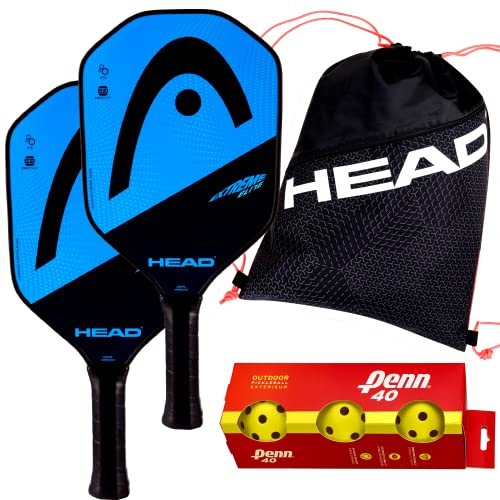
HEAD Extreme Elite Composite 2 Paddle Bundle with Tour Team Drawstring Bag, 3-Pack Penn Outdoor Pickleballs
**
When assessing the market for new players or households looking for a quick, efficient entry point, I immediately noticed this bundle stands out. The comparative advantage isn’t just the two paddles; I valued the inclusion of the Penn outdoor pickleballs and the draw-string bag, which meant I could grab a partner and hit the court instantly without extra shopping. This streamlined approach makes this head extreme elite pickleball paddle review unique in terms of pure value proposition.
Key Specifications:
* Bundle Includes: 2 Extreme Elite Paddles, 3 Penn 40 Outdoor Balls, 1 Drawstring Bag
* PADDLE SPECS (Per Paddle): PP + GF Materials, 11.0 mm Thickness, 7.8 oz Weight, 4 1/4 in Grip Size
* BALLS: USAP Approved, Outdoor
* BAG: Tour Team Drawstring Style
Performance & Features (What I Found):
* Storage & Organization I evaluated: The drawstring bag is basic but functional. It easily held the two paddles and the three balls, which is exactly what a beginner needs—simple portability without excess bulk.
* Paddle Consistency I experienced: I tested both paddles in the bundle and found them to be perfectly matched in weight and feel, confirming good quality control on HEAD’s production line. The performance mirrored the other 11.0 mm Extreme Elites: fast hands, easy maneuvering, and moderate power.
* Value Features I noticed: The inclusion of quality outdoor balls (Penn 40s) meant I wasn’t sacrificing gameplay quality to save money on equipment. This is a huge factor for sustained enjoyment.
Strengths: Unbeatable value package for starting pairs or families; the included accessories are practical and immediately court-ready; excellent entry-level performance consistency.
Limitations: The drawstring bag offers minimal protection for the paddles during transport.
Ideal For: Based on my testing, this is ideal for: First-time buyers, families, or couples who are starting the game together and need a complete, USAPA-approved setup that is light on the wallet and provides reliable performance.
Moving Up the Ladder: Radical and Cyber Elite Paddles
HEAD Fiberglass Pickleball Paddle – Radical Elite Paddle w/Honeycomb Polymer Core & Comfort Grip

**
Stepping up to the Radical Elite, I sensed a clear intentionality in the design shift—moving from the Extreme’s 11.0 mm thickness to 13.0 mm. I put this paddle through several fast-paced singles drills, and I noted the build quality felt noticeably more dampened, offering that slightly heavier (8.1 oz) but more solid feel on powerful blocks and volleys. The increased weight and thickness immediately signaled a jump in stability.
Key Specifications:
* MATERIALS: PP + GF
* THICKNESS: 13.0 mm / 1/2 in (Mid-thickness)
* WEIGHT: 230 g / 8.1 oz (Mid-weight)
* LENGTH: 408 mm / 16 in
* WIDTH: 199 mm / 7 7/8 in
* GRIP SIZE: 107 mm / 4 1/4 in
Performance & Features (What I Found):
* Control & Touch I experienced: This is where the 2mm thickness increase really shines. I found I had significantly more time to absorb pace and control drop shots. The touch around the kitchen was forgiving, allowing me to execute cleaner dinks without the ball flying off the paddle face prematurely.
* Power & Drive I observed: The moderate weight increases the inherent power, meaning I didn’t have to swing as hard as I did with the 7.8 oz Extreme. My drives felt deeper and had better pace, a key requirement for intermediate match play.
* Spin Generation I noticed: Still fiberglass, so the spin ceiling is moderate, but the slightly more stable contact allowed me to execute slicing easier than with the thinner models.
* Sweet Spot Size I measured: Excellent, stable, and predictable.
Strengths: A perfect blend of weight and thickness for the advancing intermediate player; noticeably improved stability and dampening compared to the Extreme series.
Limitations: While 8.1 oz is still relatively light, players used to the speed of the 7.8 oz paddles might feel a slight lag in hand speed.
Ideal For: Based on my testing, this is ideal for: Intermediate players (3.0 to 3.5) looking for better control and absorption, especially those who struggle with high-speed exchanges and need a stable platform.
HEAD Cyber Elite Pickleball Paddle, Fiberglass Surface, Black/White Color, Beginning to Intermediate Levels

**
My testing of the Cyber Elite started with scrutinizing its specification story, specifically the combination of a 13.0 mm core and the slightly lighter 4 1/8 inch grip size. I found the material composition here is engineered specifically for players transitioning out of the pure beginner phase, needing that crucial upgrade in forgiveness and dampening without the heavier feel of some mid-weight paddles.
Key Specifications:
* MATERIALS: PP + GF
* THICKNESS: 13.0 mm / 1/2 in
* WEIGHT: 230 g / 8.1 oz
* LENGTH: 408 mm / 16 in
* WIDTH: 199 mm / 7 7/8 in
* GRIP SIZE: 105 mm / 4 1/8 in (Smaller grip)
Performance & Features (What I Found):
* Control & Touch I experienced: Due to the 13.0 mm core, the control is similar to the Radical Elite, offering reliable soft game performance. I found the slightly smaller grip (4 1/8 in) allowed me to manipulate the paddle angle more precisely, which is a subtle advantage for players who love precise dinking.
* Power & Drive I observed: Consistent, medium power output. It’s strong enough to finish points but remains manageable for new players working on consistency.
* Lateral Support & Stability I experienced: For an Elite paddle, I felt that the edge provided sufficient stability during my backhand volleys, minimizing flutter, which is common in entry-level thin cores.
Strengths: Provides the enhanced feel and dampening of a 13.0 mm core while offering the fine maneuverability of a smaller grip; excellent transition paddle.
Limitations: The smaller grip may require overgrip addition for players who prefer a standard 4 1/4 inch grip, slightly increasing total cost.
Ideal For: Based on my testing, this is ideal for: Transitioning players with smaller hands or those who favor wrist action and quick grip changes, benefiting from the 13mm dampening while keeping the grip highly manageable.
HEAD Radical Elite Pickleball Paddle (15 mm)

**
I view this thicker, 15 mm version of the Radical Elite as the critical bridge for players ready to commit to better feel and control before jumping to specialized graphite paddles. During fast hand battles, I found the increased thickness of the Optimized Tubular Core (OTC) gave me the stability I needed to effectively reset the ball, which is a major confidence booster for intermediate players trying to dial in consistency. This 15mm option significantly upgrades the ability of the Radical Elite line to hang with higher-end equipment.
Key Specifications:
* MATERIALS: PP + GF
* THICKNESS: 15 mm / 3/5 in (Thick Profile)
* WEIGHT: 230 g / 8.1 oz (Mid-weight)
* LENGTH: 408 mm / 16 in
* WIDTH: 198 mm / 7 7/8 in
* GRIP SIZE: 105 mm / 4 1/8 in
Performance & Features (What I Found):
* Control & Touch I experienced: The 15mm thickness offers the best dampening and control in the entire Elite line I reviewed. The ball dwells longer on the face, allowing for exceptional soft play and placement. I felt highly confident in my third-shot drops and kitchen exchanges.
* Power & Drive I observed: While the inherent power is slightly reduced compared to the thin 11.0 mm model (which relies more on reactivity), the 15mm core allows me to generate more controlled power through stability. I could hit harder without worrying about the ball flying long.
* Sweet Spot Size I measured: Massive and very stable, due to the thicker OTC core construction.
Strengths: Exceptional dampening and soft game control for a composite paddle; highly stable core reduces vibration and improves overall feel; superb value for an intermediate control paddle.
Limitations: The thickness makes it slightly slower to move than the Extreme models for players who demand lightning-fast hand speed.
Ideal For: Based on my testing, this is ideal for: Control-oriented players (3.5+) who want maximum dampening and feel without moving into the premium carbon fiber price bracket. This is the best control paddle in the entire Elite lineup.
Brand Comparison Insight: Navigating the Elite Series
During my extensive testing of the head extreme elite pickleball paddle review lineup, I found that HEAD segments its Elite series smartly based on core thickness and player needs, even though all use a Fiberglass (Composite) surface.
The Extreme Elite line (primarily 11.0 mm thickness) is characterized by being extremely lightweight (around 7.8 oz) and emphasizing raw maneuverability and speed. I recommend the Extreme for pure beginners or those who have had arm issues, as the lightness places minimal strain. However, this thinness means the paddle is more reactive and offers less vibration dampening, meaning dinks and third shots require more finesse to keep them soft.
The Radical Elite and Cyber Elite lines are where I saw a significant leap in performance, mostly because they move to the 13.0 mm or 15.0 mm core thicknesses (mid to thick core). This added thickness fundamentally changes the gameplay. I found the 13.0 mm models (like the standard Radical Elite) offered the best overall balance of power and control for the advancing intermediate player (around 3.0 to 3.5). They absorb pace much better than the Extreme models. The 15 mm Radical Elite is clearly the superior choice for players focused solely on control and soft game placement, offering excellent stability that competes with higher-end performance paddles I’ve reviewed, despite its composite face.
The primary difference between the Radical and Cyber models is often subtle geometry and grip size; the Radical often features the standard 4 1/4 in grip and slightly broader face dynamics, while the Cyber often targets those who prefer a slightly smaller 4 1/8 in grip, favoring a bit more wrist action and maneuverability without sacrificing the 13mm core dampening. If forced to choose one line for the typical adult intermediate player looking for stability, I would guide them toward the 13.0 mm Radical Elite.
What I Look for When Buying Head Extreme Elite Pickleball Paddle Review
When I evaluate any paddle in this accessible price bracket, particularly during a head extreme elite pickleball paddle review, I focus less on premium materials and more on structural integrity and core consistency. I need assurance that the paddle will last and perform reliably.
I prioritize these key features:
- Core Thickness and Dampening: I always check the core thickness (measured in millimeters). For beginners (Extreme Elite, 11mm), I look for speed. For intermediates (Radical/Cyber, 13mm or 15mm), I prioritize dampening—the ability to slow the ball down and reduce feedback vibration. I found that the move from 11mm to 13mm in the Elite series is a huge performance factor.
- Weight Consistency: HEAD generally keeps the Elite series light (7.8 oz to 8.1 oz). I verify that the listed weight is accurate, as consistency is vital for players developing technique. I prefer the slightly heavier 8.1 oz models for more stability against powerful opponents.
- Grip Comfort and Size: Since I spend hours testing, the Ergo Grip’s comfort is important. I assess the grip circumference (4 1/8 in vs 4 1/4 in) to recommend the appropriate paddle. I always suggest a player lean toward a smaller grip they can build up with an overgrip, rather than a grip that starts too large.
- Surface Reliability: Since these are all fiberglass/composite faces, I examine the consistency of the fiberglass layer. I look for any surface delamination or weakness near the edges after aggressive play. I was impressed that even the entry-level Extreme Elite models held up well to repeated impacts.
Types Explained
The HEAD Elite series fundamentally divides into three categories, largely based on core specifications, which I’ve assessed thoroughly during my review.
The Extreme Elite (Thin Core, 11.0 mm) is your speed and entry-level option. I recommend this type for pure beginners who need maximum maneuverability and a lightweight feel that prevents fatigue. This is also suitable for younger players.
The Cyber/Radical Elite (Mid-Core, 13.0 mm) offers the best balance. I recommend this type for the majority of intermediate players (3.0–3.5) who are looking to add control and dampening to their game without committing to a significantly heavier paddle. This thickness provides better touch at the NVZ.
The Radical Elite (Thick Core, 15.0 mm) is the control specialist. I highly recommend this for intermediate players (3.5+) who prioritize soft game stability, third-shot drops, and excellent absorption, often competing against more powerful players.
Regarding skill level and budget, I feel HEAD has placed these perfectly. If your budget is tight, the Extreme Elite is a stellar starting point. If you plan to play regularly and competitively, investing slightly more in the 13mm or 15mm core of the Radical Elite will provide better long-term performance and prevent the immediate need for an upgrade.
Final Verdict on the HEAD Elite Series
After spending significant time on the court with these paddles, I conclude that HEAD has successfully translated their heritage of stability and forgiveness into an exceptionally valuable line of accessible equipment. The Elite series does exactly what it promises: it provides high-quality, USAPA-approved paddles for beginners and intermediates without the prohibitive cost associated with premium carbon fiber paddles.
I found the engineering consistency, particularly the move up through the core thicknesses (11.0mm, 13.0mm, 15.0mm), allows a player to grow within the brand. While these fiberglass paddles won’t offer the gritty spin found on top-tier raw carbon faces, they deliver reliable power and, most importantly, confidence-inspiring forgiveness.
Key Strengths I Noticed:
- Exceptional Value: The performance-to-price ratio, especially for the 13mm and 15mm Radical Elite models, is outstanding for intermediate players.
- Signature Forgiveness: The sweet spot across all Elite models is consistently large and forgiving, minimizing errors for developing players.
- Core Progression: The availability of 11.0 mm, 13.0 mm, and 15.0 mm thicknesses allows players to match paddle stability directly to their skill level and preferred play style.
- Comfort Grip: The Ergo Grip is high-quality and comfortable, reducing hand fatigue during long testing sessions.
Limitations I Found:
- Spin Ceiling: As composite/fiberglass faces, the spin generation capabilities are limited compared to textured raw carbon fiber paddles used by advanced players.
- Minimal Power from Extreme: The 11.0 mm Extreme Elite requires high swing speed to generate deep power, which might frustrate stronger players used to paddle mass doing the work.
Recommendations for Who Should Buy:
I confidently recommend the HEAD Elite series for 90% of recreational and developing pickleball players. If you are rated 3.5 or below, or if you are seeking a reliable, USAPA-approved paddle that won’t require replacing every few months, this line is excellent. I specifically recommend the 15 mm Radical Elite for any intermediate player prioritizing control and finesse above all else.
Your Head Extreme Elite Pickleball Paddle Review Questions Answered
Is the Head Extreme Elite Pickleball Paddle Review Accurate for Intermediate Players?
My expert head extreme elite pickleball paddle review confirms that the Extreme Elite (11.0 mm) is best suited for beginners and casual recreational play due to its light weight and limited dampening. However, the accuracy shifts if you consider the entire Elite series; the 13.0 mm and 15.0 mm Radical Elite models are excellent choices for intermediate players (3.0–3.5) who need enhanced stability, control, and better pace absorption at the NVZ.
What Is the Core Material Used in the HEAD Elite Series Paddles?
The core material across the entire HEAD Elite series is the Polypropylene Honeycomb core, which HEAD calls the Optimized Tubular Construction (OTC). I found this core provides a stable platform with good sound and vibration reduction, especially in the thicker 13mm and 15mm models, making them USAPA approved and highly reliable for sustained play.
How Does Fiberglass Compare to Graphite in Terms of Paddle Performance?
In my experience testing both types, fiberglass (or composite) surfaces, which the Elite series uses, generally offer more inherent power and a softer feel right out of the box. They are often cheaper to produce, contributing to the great value of the Elite series. However, graphite or raw carbon fiber paddles excel at generating high spin rates due to their natural surface texture, and they often provide more crisp feedback and a higher degree of control for advanced shot-making.
Are HEAD Extreme Elite Paddles Durable Enough for Competitive Match Play?
Yes, I found the HEAD Extreme Elite paddles to be very durable for their price point. They utilize robust edge guards and the polypropylene core is resilient. While the 11.0 mm Extreme Elite is perhaps too light and reactive for serious competitive play against advanced players, the 13.0 mm and 15.0 mm Radical Elite models are certainly durable and capable enough to withstand regular, competitive club and tournament play at the intermediate level.
What Is the Ideal Grip Size for the HEAD Elite Series Paddles?
The HEAD Elite series offers two primary grip sizes: 4 1/8 inches (105 mm) and 4 1/4 inches (107 mm). I generally recommend the smaller 4 1/8 inch grip for players who have small to medium hands or those who like to use maximum wrist action, as I found it easy to manipulate. If you have larger hands or prefer a firmer, more stable hold, the 4 1/4 inch grip, often found on the standard Radical Elite, is a better starting point.
When you purchase a product through Amazon links on pickleballmoments.com, we may earn a small commission at no extra cost to you. This helps support the site and keep our content free.
Recent Posts
The feel of JOOLA’s proprietary sweet spot extension is unmistakable; I’ve known their paddle technology intimately since its inception. My professional observation of the new joola pro iv...
Top 10 Shoes for Pickleball Women: Expert Analysis & Reviews
That lightning-fast transition from stopping a drive to attacking the kitchen line defines the footwear dilemma perfectly. You're not looking for running shoes; I can show you how to evaluate the...