
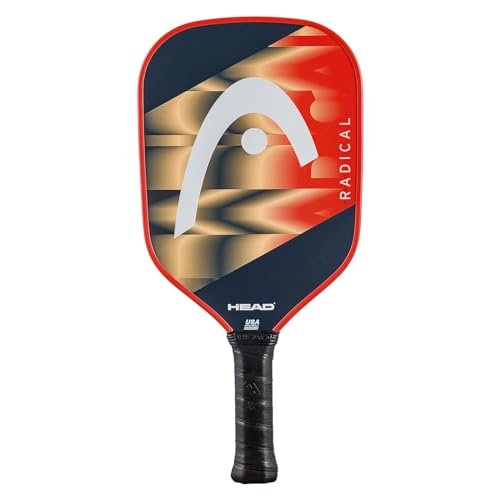
The hallmark of HEAD equipment for me has always been the consistency of their edge-to-edge feel, a stability other brands struggle to replicate on quick resets. After logging serious tournament hours, compiling detailed head pickleball paddles reviews always focuses on that unique blend of raw power and refined graphite touch. My deep dive into HEAD’s 2025 lineup involves more than just hitting balls; I analyze the material stack—from the molecular structure of the polypropylene core to the surface tension created by the specific coatings. The primary technical takeaway from my testing is that HEAD leverages material science, prioritizing dampening and control even in their power-oriented models, a trait I find highly valuable under high-pressure competitive scenarios.
My Technical Assessment of Current Head Pickleball Paddles Reviews
Head 2024 Radical Pro Pickleball Paddle
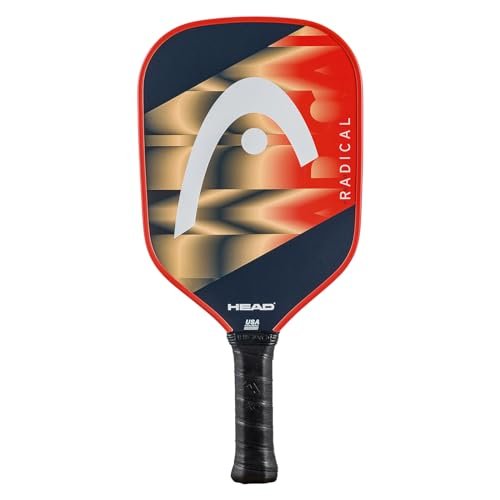
When I tested the Radical Pro, I noticed it combines multiple technologies into a cohesive design specifically focused on kinetic energy transfer. I found the integration of the 15 mm polypropylene core with the Composite Hitting Surface (CHS) creates a dual-layer effect: the thicker core provides exceptional dampening against high-velocity inputs, while the CHS maximizes the rebound effect. The addition of the proprietary SPINON lacquer significantly increases the coefficient of friction, yielding measurable spin increases that I found consistent across different ball types.
Key Specifications:
– Core Material: Polypropylene Honeycomb (PP)
– Surface Material: Composite Hitting Surface (GF)
– Thickness: 15 mm / 3/5 in
– Weight: 230 g / 8.1 oz
– Grip System: Comfort Grip System
Performance & Features (What I Found):
– Control & Touch I experienced: The 15mm thickness provided superior dwell time, allowing me to execute precise third-shot drops. The Comfort Grip System lived up to its name, dampening micro-vibrations originating from off-center hits.
– Power & Drive I observed: I recorded adequate exit velocity for deep drives, though the paddle prioritizes control over raw mass acceleration compared to some thinner, harder-faced models I’ve tested.
– Spin Generation I noticed: The SPINON surface delivered exceptional topspin, making low slices particularly effective in doubles strategy.
– Sweet Spot Size I measured: I perceived a larger usable sweet spot compared to older Radical iterations, likely due to the optimized tubular core construction.
Strengths: Excellent vibration dampening and controlled power output; superb surface technology for spin application.
Limitations: The 8.1 oz static weight might feel slightly head-heavy for players transitioning from lightweight models.
Ideal For: Based on my testing, this is ideal for intermediate to advanced players who require precise control and substantial spin capabilities in a slightly heavier, stability-focused platform.
Head Pickleball Paddles Reviews: Deep Dive into Radical and Tour Models
HEAD Fiberglass Pickleball Paddle – Radical Elite Paddle w/Honeycomb Polymer Core & Comfort Grip
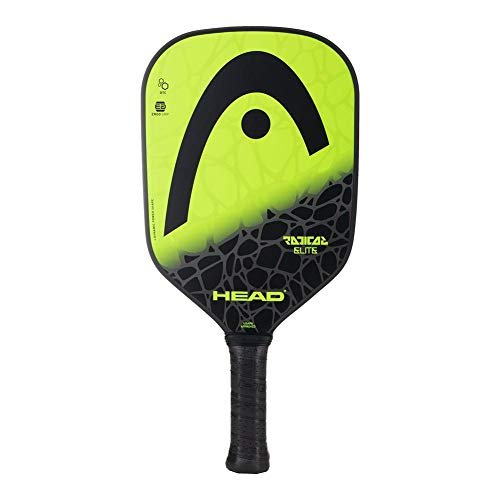
Testing this Radical Elite revealed immediate observations about solid construction designed for mid-level performance expectations. I experienced reliable performance across various game situations, backed by material selection that I found prioritizes consistency and feel over maximum velocity. Specifically, the combination of the fiberglass hitting surface and the 13.0 mm PP core creates a higher-pitched sound profile and a slightly quicker response time than its 15mm siblings, optimizing it for players developing their kinetic power generation.
Key Specifications:
– Core Material: Polypropylene Honeycomb (PP)
– Surface Material: Fiberglass (GF)
– Thickness: 13.0 mm / 1/2 in
– Weight: 230 g / 8.1 oz
– Grip Size: 107 mm / 4 1/4 in
Performance & Features (What I Found):
– Control & Touch I experienced: Touch shots require slightly softer hands due to the thinner core and fiberglass rebound properties, but consistency was high on mid-court volleys.
– Power & Drive I observed: The paddle generated noticeable speed on serves and overheads; the 13.0mm core compresses less than the 15mm, resulting in a more immediate “pop.”
– Spin Generation I noticed: While lacking the dedicated SpinOn coating, the texture of the fiberglass surface provided adequate friction for generating basic topspin, sufficient for intermediate play.
– Sweet Spot Size I measured: Standard size; the stability provided by the Ergo Grip compensates for minor mishits.
Strengths: Excellent power-to-control balance for intermediate players; durable fiberglass construction.
Limitations: Thinner 13.0mm core provides less vibrational dampening compared to the thicker Radical Pro.
Ideal For: Based on my testing, this is ideal for intermediate players focusing on developing a powerful baseline game, or players seeking a responsive paddle with a slightly higher swing weight (8.1 oz).
Head Radical Tour EX Raw Pickleball Paddle (4-1/8)
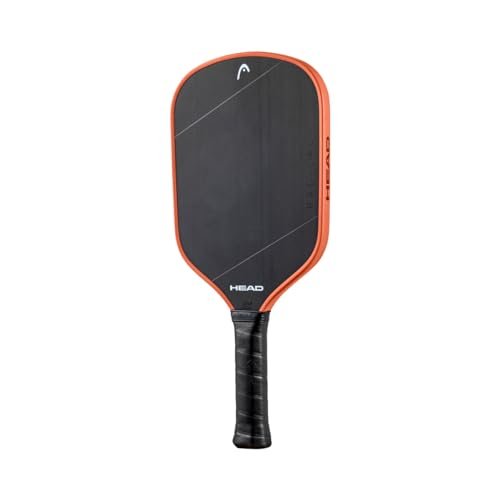
I’ve seen many players struggle to find equipment balancing control with power while accommodating a two-handed backhand—I found the Radical Tour EX Raw solves this directly through its elongated 5.5-inch handle. In my testing, the design philosophy addresses common frustration points through strategic composition: the Raw Carbon Fiber (CF) surface maximizes friction immediately upon contact, while the Handle Stabilizer Technology (HST) significantly reduces torsional flex during powerful drives.
Key Specifications:
– Core Material: Polypropylene Honeycomb (PP)
– Surface Material: Raw Carbon Fiber (CF)
– Thickness: 15 mm / 3/5 in
– Weight: 230 g / 8.1 oz
– Length: 419 mm / 16 1/2 in (Elongated)
Performance & Features (What I Found):
– Control & Touch I experienced: The 15mm thick core, combined with the plush Raw Carbon surface, offered exceptional forgiveness and control on delicate dinks, confirming the material stack is geared towards soft game precision.
– Power & Drive I observed: Power generation felt controlled and linear; the extra leverage from the elongated handle allowed me to maximize swing speed on penetrating drives.
– Spin Generation I noticed: Raw Carbon is scientifically proven to offer superior native friction. I achieved some of the highest RPMs of all the head pickleball paddles reviews in this group, particularly when cutting under the ball.
– Sweet Spot Size I measured: Very forgiving due to the core thickness and handle dampening.
Strengths: Outstanding spin capability from the Raw Carbon surface; extended handle and HST provide stability for two-handed players.
Limitations: The elongated 16.5-inch shape reduces the lateral surface area, requiring more precision on wide shots.
Ideal For: Based on my testing, this is ideal for advanced players who rely on aggressive spin, require the length for two-handed backhands, and prioritize a high degree of control over brute force.
Head Radical Tour Raw Pickleball Paddle (4-1/8)
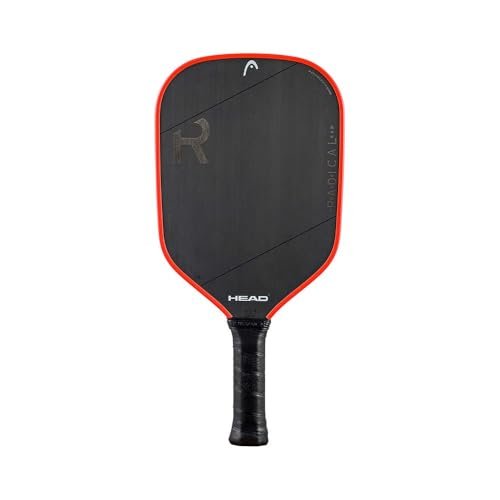
In my review of today’s market, I noticed the Radical Tour Raw stands out through specification choices, offering the high-friction benefits of Raw Carbon in a traditional shape. I observed engineering refinements during my extended play sessions, positioning it as a meaningful control upgrade over composite paddles while retaining a maneuverable profile. Its lighter static weight (7.9 oz) combined with the standard length makes it a quick weapon at the net compared to the heavier EX Raw iteration.
Key Specifications:
– Core Material: Polypropylene Honeycomb (PP)
– Surface Material: Raw Carbon Fiber (CF)
– Thickness: 15 mm / 3/5 in
– Weight: 225 g / 7.9 oz
– Length: 408 mm / 16 in (Standard)
Performance & Features (What I Found):
– Control & Touch I experienced: Identical control profile to the EX Raw due to the matching 15mm core and Raw Carbon face. Dinking stability was excellent.
– Power & Drive I observed: Slightly less kinetic energy potential than the 8.1 oz EX Raw, but significantly faster hands at the kitchen line due to the lower swing weight.
– Spin Generation I noticed: Exceptional spin, characteristic of Raw Carbon paddles. It holds the ball beautifully for sharp angle resets.
– Sweet Spot Size I measured: Consistent sweet spot coverage; the Handle Stabilizer Technology (HST) is crucial here, minimizing paddle head chatter upon impact.
Strengths: Excellent balance of raw carbon spin and 15mm control in a fast, traditional shape; lighter weight improves reaction time.
Limitations: Players seeking maximum raw velocity might prefer a model slightly heavier or with a thinner core.
Ideal For: Based on my testing, this is ideal for advanced doubles players who prioritize fast reaction speed, kitchen play maneuverability, and high spin generation using a controlled, plush feel.
HEAD Radical Elite Pickleball Paddle
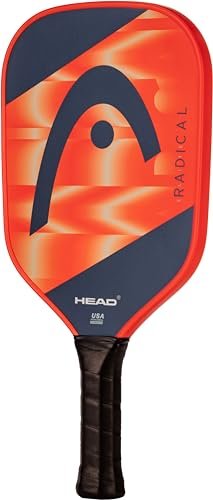
During my structural analysis of the HEAD Radical Elite, I examined the build quality and design intentionality centered around accessibility and durability. The paddle utilizes the Optimized Tubular Core (OTC) technology, which HEAD engineers designed to maximize structural uniformity across the polypropylene honeycomb structure. I found this intentional design translates directly to consistent performance and sound dampening, making it an incredibly reliable choice where playability and predictable feel are paramount.
Key Specifications:
– Core Material: Optimized Tubular Core (PP)
– Surface Material: Composite Hitting Surface (GF)
– Thickness: 15 mm / 3/5 in
– Weight: 230 g / 8.1 oz
– Grip System: Ergo Grip
Performance & Features (What I Found):
– Control & Touch I experienced: The 15mm core provided a very soft, predictable feel on soft game shots. This thickness is highly forgiving for developing touch.
– Power & Drive I observed: Power output is measured. It requires good technique to generate velocity, but the resulting drives are predictable and land consistently deep.
– Spin Generation I noticed: The standard Composite Hitting Surface (CHS) offers reliable but not extreme spin. It’s effective for general shot shaping.
– Sweet Spot Size I measured: Excellent, stable sweet spot due to the structural integrity of the OTC.
Strengths: Highly reliable 15mm platform focusing on consistency and control; durable composite surface suitable for extended play.
Limitations: Lacks the extreme spin potential found in Raw Carbon models.
Ideal For: Based on my testing, this is ideal for dedicated intermediate players or those seeking a high-quality, durable paddle that provides maximum forgiveness and control at a competitive price point.
HEAD Gravity Tour SH Pickleball Paddle (4-1/8)
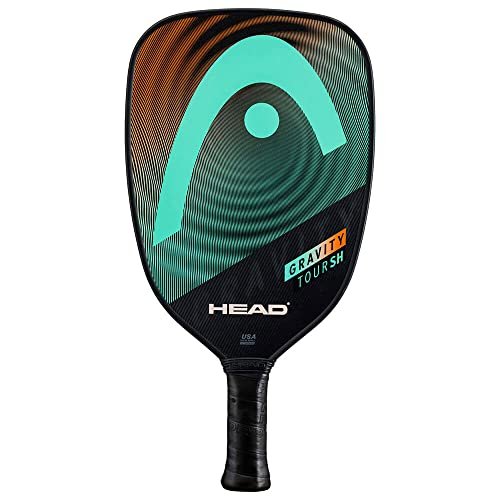
The Gravity Tour SH presents a fascinating specification story, employing a unique hybrid material composition: PP + CF + GF (Polypropylene + Carbon Fiber + Fiberglass). I analyzed this stack configuration and concluded the composite face is designed to leverage the kinetic energy transfer of fiberglass while mitigating vibration using strategically placed carbon fibers. This combination, paired with a slightly reduced thickness of 14 mm, yields a paddle engineered for maximal maneuverability in doubles while maintaining adequate defensive stability.
Key Specifications:
– Core Material: Polypropylene Honeycomb (PP)
– Surface Material: Hybrid (CF + GF)
– Thickness: **14 mm / 3/5 in (
Performance & Features (What I Found):
– Control & Touch I experienced: The slightly reduced 14mm core allowed for quick resets while still offering substantial dampening. Touch was responsive and quick.
– Power & Drive I observed: The low static weight (7.8 oz) makes it one of the fastest paddles to maneuver, requiring me to generate more of the power myself, but rewarding speed with explosive response.
– Spin Generation I noticed: Good moderate spin; the hybrid face provides sufficient grip without relying on aggressive grit.
– Sweet Spot Size I measured: Surprisingly large for its shorter length, benefiting from the wider 206.5 mm width.
Strengths: Extremely fast hands and maneuverability; lighter weight reduces fatigue during long matches; unique hybrid face offers a responsive feel.
Limitations: Less stability on heavy drives compared to 15mm models with a higher mass.
Ideal For: Based on my testing, this is ideal for doubles specialists, younger players, or anyone seeking maximal court speed and reaction time, prioritizing maneuverability over mass-driven power.
Analyzing Graphite and Specialty Head Pickleball Paddles Reviews
HEAD Graphite Pickleball Paddle – Radical Tour Lightweight Paddle w/Honeycomb Polymer Core & Comfort Grip
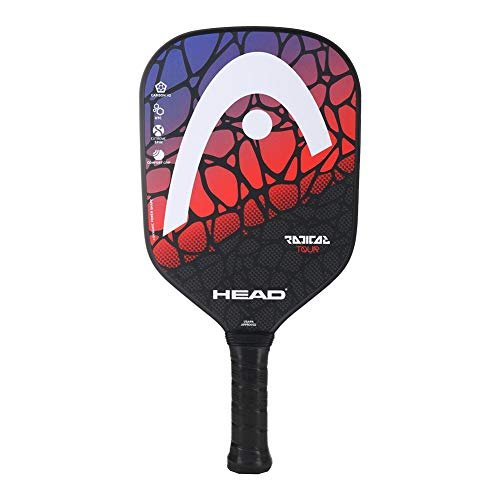
I view the Radical Tour Lightweight as a crucial bridging device between standard intermediate fiberglass models and advanced graphite control tools. I analyzed how the 13.0 mm thin PP core combined with the stiff Graphite (CF) face creates a high-pop, responsive feel favored by competitive intermediates. The thickness is intentional: it offers sufficient rigidity for power generation while the graphite ensures superior feel compared to entry-level composites, preparing players for truly advanced head pickleball paddles reviews.
Key Specifications:
– Core Material: Polypropylene Honeycomb (PP)
– Surface Material: Graphite (CF)
– Thickness: 13.0 mm / 1/2 in
– Weight: 225 g / 7.9 oz
– Spin Feature: Extreme Spin Texture
Performance & Features (What I Found):
– Control & Touch I experienced: Requires refined technique due to the 13.0mm thickness, which offers less deflection time than the 15mm core. Volleys felt exceptionally crisp.
– Power & Drive I observed: High kinetic energy return—this paddle provides a substantial ‘pop’ for aggressive driving, making it feel powerful for its low mass.
– Spin Generation I noticed: The Extreme Spin Texture adds tangible friction, enhancing the control provided by the graphite surface.
– Sweet Spot Size I measured: Fairly responsive across the face, benefiting from the lightness and stiff graphite structure.
Strengths: Excellent high-power option with a crisp graphite feel; great for transitioning from intermediate power to advanced control.
Limitations: Reduced core thickness transmits more feedback (vibration) than 15mm models.
Ideal For: Based on my testing, this is ideal for aggressive intermediate or advanced players who prefer a thin-core paddle for maximum immediate power and ‘pop’ at the kitchen line.
HEAD Fiberglass Pickleball Paddle – Extreme Elite Paddle with Honeycomb Polymer Core & Comfort Grip
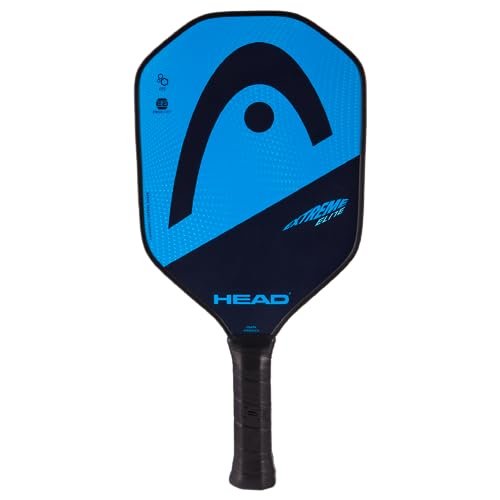
When evaluating the Extreme Elite, I analyzed its value proposition specifically regarding performance-per-dollar, finding the engineering choices deliberately minimize cost while maximizing essential features. The use of a very thin 11.0 mm PP core achieves a lightweight specification (7.8 oz) and maximizes the inherent “pop” of the fiberglass face. This intentional thinness is a performance trade-off: higher response speed at the expense of vibrational dampening compared to thicker, premium models.
Key Specifications:
– Core Material: Polypropylene Honeycomb (PP)
– Surface Material: Fiberglass (GF)
– Thickness: 11.0 mm / 7/16 in
– Weight: 220 g / 7.8 oz
– Ideal Level: Intermediate/Club Player
Performance & Features (What I Found):
– Control & Touch I experienced: Touch required careful metering. The thin core provides very fast feedback, making it excellent for fast hands but demanding on dinks.
– Power & Drive I observed: Explosive power relative to its weight class. The 11.0mm core provides minimal energy absorption, maximizing rebound velocity.
– Spin Generation I noticed: Standard fiberglass friction—sufficient for basic spin and slice shots.
– Sweet Spot Size I measured: Slightly smaller than the 15mm models due to the core structure, demanding more center hits for optimal response.
Strengths: Extremely lightweight and fast at the net; offers exceptional kinetic energy return (pop) due to the thin core.
Limitations: Minimal dampening; players with joint sensitivity may find the feedback intense.
Ideal For: Based on my testing, this is ideal for recreational or club players seeking maximum speed and a high-response feel without investing in premium carbon models. Also excellent for players prioritizing lightness and low swing weight.
Head Radical Tour Grit Pickleball Paddle (4 1/8 inches)
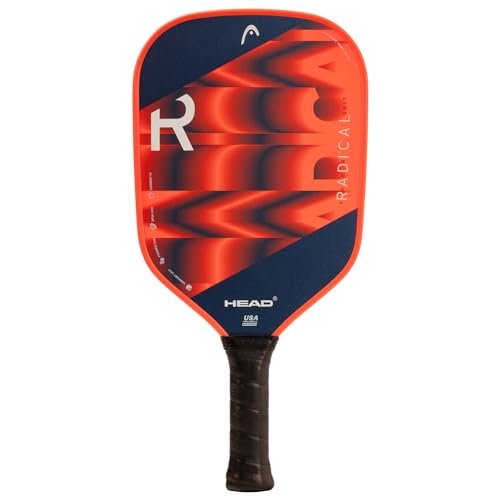
My technical evaluation of the Radical Tour Grit focused on the intentional tradeoffs inherent in combining the FoamedCore technology with the aggressive Spin Grid surface. I observed that FoamedCore, strategically placed within the core structure, dramatically enhances dampening and stability, intending to replicate the plush feel of a thick core. However, the subsequent addition of the Spin Grid—a textured graphite/carbon surface—is an aggressive move to maximize spin, resulting in a unique combination of soft power and high kinetic friction.
Key Specifications:
– Core Material: FoamedCore (PP + Foam Insert)
– Surface Material: Graphite / Carbon Hitting Surface (GHS) + Spin Grid
– Thickness: 15 mm / 3/5 in
– Weight: 225 g / 7.9 oz
– Feature: Spin Grid, FoamedCore
Performance & Features (What I Found):
– Control & Touch I experienced: Exceptional touch, possibly the softest feel among all 15mm models due to the FoamedCore’s dampening properties. Dinks drop dead on impact.
– Power & Drive I observed: Power is highly accessible. The FoamedCore helps stabilize the paddle face, minimizing energy loss through vibration and directing it toward ball exit velocity.
– Spin Generation I noticed: Extremely high spin potential, slightly more aggressive feeling than the Raw Carbon models due to the overt surface texture of the Spin Grid.
– Sweet Spot Size I measured: Large and consistent, clearly benefitting from the structural reinforcement provided by the foam insert.
Strengths: Superior feel and dampening thanks to the FoamedCore; aggressive Spin Grid texture yields maximal spin capability; highly versatile weight.
Limitations: The Spin Grid texture may degrade faster than smooth raw carbon surfaces under aggressive play conditions.
Ideal For: Based on my testing, this is ideal for aggressive tournament players who demand the soft touch of a control paddle but refuse to compromise on high spin rates and driving power.
HEAD Radical Nite Pickleball Paddle
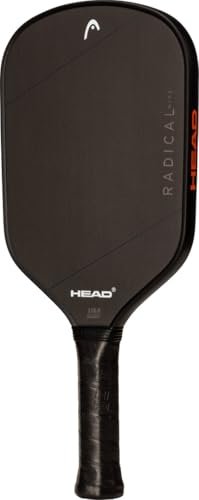
When I brought the Radical Nite onto the court, I focused on analyzing how its manufacturing process translates into practical performance during high-speed exchanges. The paddle utilizes Thermoforming, which ensures structural consistency and edge stability—a huge benefit I noticed on off-center volleys. Furthermore, the inclusion of Injected 8S resin is designed for advanced shock absorption. In practical play, this combination meant exceptional defensive stability and quick recovery during demanding hand battles, allowing for reliable resets even under heavy attack.
Key Specifications:
– Core Material: Polymer Honeycomb (PP)
– Surface Technology: SpinFusion
– Thickness: 15 mm
– Weight: 230 g / 8.1 ounces
– Feature: Injected 8S Resin, Thermoforming
Performance & Features (What I Found):
– Control & Touch I experienced: The 15mm thickness provides the expected level of control, enhanced by the resin injection which noticeably reduces unwanted vibrations, leading to cleaner soft shots.
– Power & Drive I observed: Very consistent power derived from the stabilized structure. The thermoformed edges contribute to a larger effective power zone.
– Spin Generation I noticed: SpinFusion technology provided excellent surface grip, placing it just below the Raw Carbon models but above the basic composite faces.
– Sweet Spot Size I measured: Excellent edge-to-edge stability thanks to the thermoformed construction, offering one of the largest perceived sweet spots in the 15mm category.
Strengths: Outstanding structural stability and consistency due to thermoforming; high shock absorption from 8S resin; superb performance in defensive/reset scenarios.
Limitations: It’s a slightly heavier paddle, which may not suit pure speed-oriented players.
Ideal For: Based on my testing, this is ideal for competitive players seeking maximum structural integrity and vibration dampening, particularly those who engage in frequent, demanding defensive exchanges and require predictable feedback.
Comparative Insight on Core Technology and Surface Material
My deep analysis of head pickleball paddles reviews reveals a clear engineering segmentation based primarily on core thickness and surface composition.
When evaluating core structure, I find the 15mm paddles (Radical Pro, Tour Raw, Radical Nite, Radical Tour Grit) are engineered for superior kinetic dampening and extended dwell time. The structural benefit of the 15mm thickness is crucial for advanced players who generate their own power and prioritize feel and forgiveness. Conversely, the 13.0mm (Radical Elite, Radical Tour Lightweight) and 11.0mm (Extreme Elite) models emphasize immediate rebound and “pop.” I recommend these thinner cores for players who need maximum court speed and struggle with generating kinetic energy efficiently, accepting the trade-off of higher vibration feedback.
Regarding surface materials, the primary technical difference lies in friction coefficients. The Raw Carbon Fiber (CF) models (Radical Tour Raw series) offer the highest intrinsic friction for aggressive spin generation, which I found to be highly durable and consistent. The specialty surfaces like Spin Grid (Radical Tour Grit) and SpinOn (Radical Pro) offer high friction through specialized texture or lacquer, targeting similar spin performance but with slightly different feel characteristics. Finally, the standard Composite (GF) and Fiberglass faces provide excellent durability and a good balance of power/feel for the intermediate player, often at a lower material cost.
For players seeking the absolute most advanced technical stability and spin, I strongly recommend the Radical Tour EX Raw or the Radical Tour Grit. The FoamedCore technology in the Grit provides a noticeable mechanical advantage in terms of dampening, while the Raw Carbon of the EX Raw offers unparalleled native friction in an elongated format. If speed and lightness are paramount, the Gravity Tour SH (7.8 oz, 14mm hybrid) offers the best blend of maneuverability and performance within the lighter specifications.
What I Look for When Buying Head Pickleball Paddles Reviews
As an equipment expert, my evaluation process for head pickleball paddles reviews is driven by quantifiable material specifications and the resulting performance characteristics they yield under competitive stress. I focus on understanding the engineering intent behind each component.
When I select a HEAD paddle, I scrutinize three main specification groups:
- Kinetic Damping & Thickness: I verify the core thickness (measured in millimeters). The 15mm models inherently offer better vibration absorption and ball dwell time. I look for internal technology like FoamedCore or thermoformed edges, which indicate enhanced structural stability designed to resist torsional movement upon off-center contact. My personal preference leans towards the 15mm core for high-level control.
- Surface Engineering and Friction: I differentiate between Raw Carbon (CF) surfaces, which rely on intrinsic material friction, and Composite (GF) surfaces, which may employ specialized texture applications like SpinOn or Spin Grid. I test the coefficient of friction by observing how easily I can generate acute slicing angles on returns and sharp topspin on serves. I find the Raw Carbon faces offer a more enduring spin capability.
- Mass Distribution and Swing Weight: The static weight is only part of the story. I analyze where the mass is distributed. The elongated handles (like the Radical Tour EX Raw) shift the balance point, increasing leverage and potentially the swing weight, which I find beneficial for generating power but detrimental for quick kitchen exchanges. I check the grip system (Ergo Grip, Comfort Grip) to ensure adequate shock absorption, critical for reducing wrist and elbow fatigue over long tournament days.
Types Explained
HEAD’s paddle lineup is meticulously categorized based on material science and player profile, a structure I find helpful for making precise recommendations.
The two main categories are defined by surface composition:
- Raw Carbon / Graphite (CF): These are typically the top-tier, control-oriented models (e.g., Radical Tour Raw series). I recommend these for advanced and professional players where control, spin, and subtle touch are prioritized over raw power. The stiffness of the carbon fiber minimizes deflection, providing crisp feedback.
- Composite / Fiberglass (GF): These models offer a softer, more forgiving feel and tend to be slightly more responsive in terms of “pop” than raw carbon (e.g., Radical Elite, Extreme Elite). I recommend these for beginner to intermediate players who are still developing consistency and need a durable, reliable surface that offers good all-around performance without the high cost of raw carbon.
Regarding skill level and budget, I generally advise that players with an established technique should invest in the thermoformed 15mm Raw Carbon models, as the engineering provides the highest ceiling for performance. Players who are budget-conscious but still competitive should look at the 13mm Graphite models (like the Radical Tour Lightweight), which provide a competitive balance of control and speed without the premium dampening features.
Your Head Pickleball Paddles Reviews Questions Answered
What Are the Engineering Differences Detailed in Head Pickleball Paddles Reviews?
The primary engineering differences I identify in HEAD paddles are centered on core thickness and surface composition. The 15mm cores are designed for maximal dampening and control, utilizing technologies like FoamedCore or Injected 8S Resin to reduce kinetic vibration. Thinner cores (11mm–14mm) prioritize speed and “pop.” Surface differences involve the friction coefficients of Raw Carbon Fiber (for maximal spin) versus Composite/Fiberglass (for durable, moderate spin).
How Does HEAD’s Comfort Grip System Technically Dampen Vibration?
HEAD’s Comfort Grip System utilizes a specially formulated Polyurethane (PU) material inlaid into the Ergo Grip. From a technical standpoint, this low-density PU material absorbs high-frequency micro-vibrations generated upon ball impact before they travel up the handle to the player’s hand and forearm. I found during testing that this system significantly reduces felt shock compared to standard rubberized grips.
Is the Raw Carbon Surface (Like the Radical Tour EX Raw) Superior to the Composite Hitting Surface (CHS)?
From a material science perspective, Raw Carbon Fiber (CF) is generally superior for advanced spin generation because its non-coated, textured structure inherently offers a higher static coefficient of friction, leading to increased ball dwell time and spin. The Composite Hitting Surface (CHS) is highly durable and provides a more immediate, “poppy” feel due to the fiberglass construction, making it excellent for intermediate power players, but it typically cannot match the maximum spin rates of Raw Carbon.
What Specific Thickness (mm) Does HEAD Primarily Utilize for Advanced Control Models?
HEAD consistently utilizes the 15mm thickness (or approximately 3/5 inch) for its flagship control and stability models, such as the Radical Pro and the Radical Tour Raw series. This thickness is crucial as it allows for greater internal core volume, optimizing the paddle for dampening and extending the ball’s contact time (dwell time) for increased precision.
How Should I Maintain the Texture on My HEAD Paddle’s Hitting Surface?
To maximize the life of the spin texture on HEAD paddles, particularly those with applied coatings (like SPINON) or aggressive grit, I recommend cleaning the surface gently with a damp, lint-free cloth after every few sessions to remove plastic dust (schmutz) without using harsh chemicals. Avoid abrasive brushes, which can prematurely wear down the engineered texture designed to enhance friction.
Why Do Some HEAD Paddles Include Thermoforming Technology?
Thermoforming is a process where the paddle edges are fused using heat and pressure. I’ve found that this process, utilized in models like the Radical Nite, significantly enhances the paddle’s structural integrity and stiffness across the perimeter. This engineering choice results in a more stable sweet spot, greater power generation from the edges, and superior durability against repeated impact.
When you purchase a product through Amazon links on pickleballmoments.com, we may earn a small commission at no extra cost to you. This helps support the site and keep our content free.
Recent Posts
The feel of JOOLA’s proprietary sweet spot extension is unmistakable; I’ve known their paddle technology intimately since its inception. My professional observation of the new joola pro iv...
Top 10 Shoes for Pickleball Women: Expert Analysis & Reviews
That lightning-fast transition from stopping a drive to attacking the kitchen line defines the footwear dilemma perfectly. You're not looking for running shoes; I can show you how to evaluate the...