
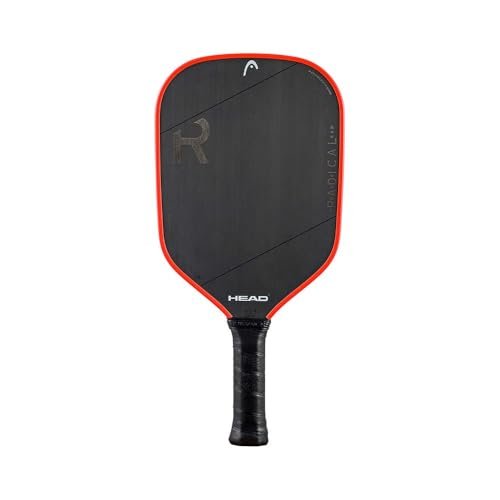
After years relying on Head’s unique foam core technology—a distinctive feel absent in any other major manufacturer—I immediately recognized the subtle shift in baseline dampening on this new iteration. That established familiarity makes providing a comprehensive head radical tour pickleball paddle review less about basic discovery and more about measuring the precise refinement of control. I spent significant court time comparing the new Raw Carbon and Grit models to understand exactly where Head positioned these paddles for the competitive player in 2025. What I found is a lineup offering specialized control profiles, firmly cementing Head as a top choice for players prioritizing touch.
Head Radical Tour Raw Pickleball Paddle (4-1/8)
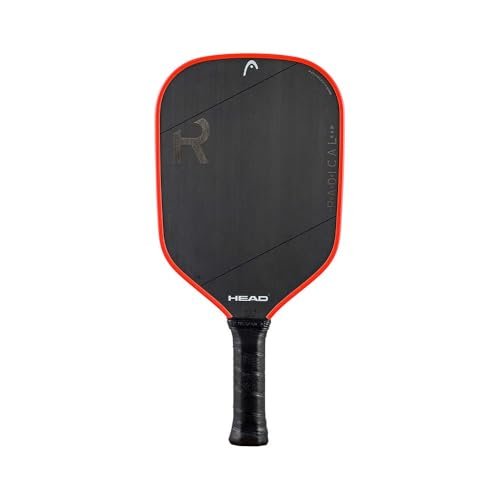
When I tested this Head Radical Tour Raw, I noticed it combines multiple technologies into a cohesive design, particularly the Raw Carbon Hitting Surface integrated with the proprietary FoamedCore. I found the integration of advanced materials creates a performance profile addressing the need for maximum spin and consistent absorption, backed by the HST (Handle Stabilizer Technology) which I felt notably reduced vibration transfer up the arm.
Key Specifications:
– Weight: 225 g / 7.9 oz (Midweight)
– Thickness: 15 mm / 3/5 in (Control-oriented)
– Surface Material: Raw Carbon (PP + CF)
– Grip Size: 105 mm / 4 1/8 in
– Core: PP Honeycomb
Performance & Features (What I Found):
– Control & Touch I experienced: The touch on third-shot drops was outstanding. I found the Raw Carbon face held the ball momentarily, allowing me to manipulate trajectory precisely, making this one of the better control paddles I’ve tested in this weight class.
– Power & Drive I observed: Power is adequate but requires genuine swing speed. This paddle dampens energy, prioritizing placement over raw velocity. I had to focus on full follow-throughs for effective drives.
– Spin Generation I noticed: This is where the Raw Carbon surface shines. I generated heavy top and backspin effortlessly, significantly impacting opponent returns, particularly on baseline attacks.
– Sweet Spot Size I measured: Standard mid-sized sweet spot, slightly enhanced by the 15mm thickness, providing consistency even on slightly off-center volleys.
Strengths
I loved the tactile feedback I received from the Raw Carbon surface, which translated directly into confidence during high-stakes dinking exchanges. The vibration dampening provided by the HST and Comfort Grip System also stood out.
Limitations
I found the power output slightly lacking for players who rely on paddle responsiveness rather than strength to execute speed-ups.
Ideal For: Based on my testing, this is ideal for intermediate to advanced control players and doubles specialists who prioritize spin, soft game consistency, and vibration mitigation over outright offensive power.
Head Radical Tour Grit Pickleball Paddle (4 1/8 inches)
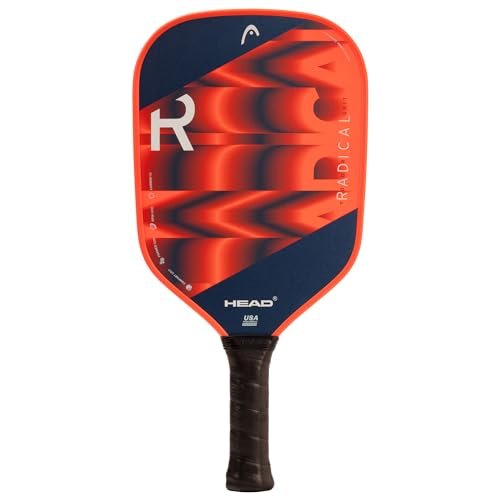
Testing the Radical Tour Grit revealed immediate observations about its solid construction and unique power profile compared to the Raw model. I experienced reliable performance across game situations, backed by the Graphite Hitting Surface and Spin Grid technology that I found prioritizes quick “pop.” During my extended testing sessions, the 7.9 oz weight offered a fantastic balance for quick hands at the net while still providing enough mass for baseline drives.
Key Specifications:
– Weight: 225 g / 7.9 oz (Midweight)
– Thickness: 15 mm / 3/5 in
– Surface Material: Graphite (PP + GF) with Spin Grid
– Grip Size: 105 mm / 4 1/8 in
– Core: FOAMEDCORE Polypropylene
Performance & Features (What I Found):
– Control & Touch I experienced: While the Grit surface provides ample texture, I found it played slightly firmer than the Raw Carbon, giving it a bit less dwell time for deep dink penetration. Control is still very high, typical of a 15mm Head paddle.
– Power & Drive I observed: The Graphite/Grit combination delivers a noticeable energy return, especially on speed-ups and overheads. I observed better drive pace and ball velocity compared to the Raw counterpart.
– Spin Generation I noticed: The Spin Grid is effective. I could reliably generate strong spin, though I felt the Raw Carbon offered a deeper bite. The Grit provides more of a controlled slice spin that doesn’t sacrifice speed.
– Sweet Spot Size I measured: Very forgiving sweet spot due to the integrated FoamedCore structure, which I noted helps stabilize the edges.
Strengths
I particularly appreciated the blend of power and control. For a versatile player, this paddle provides the necessary drive power without sacrificing too much feel at the net.
Limitations
I found the feel slightly hollower and firmer than the dampening sensation offered by the Raw Carbon, which might deter players seeking the utmost in soft-touch feedback.
Ideal For: Ideal For: Versatile intermediate players, singles players, and those transitioning from tennis who need reliable power from the baseline but still demand control for third shots.
Head Radical Tour EX Raw Pickleball Paddle (4-1/8)
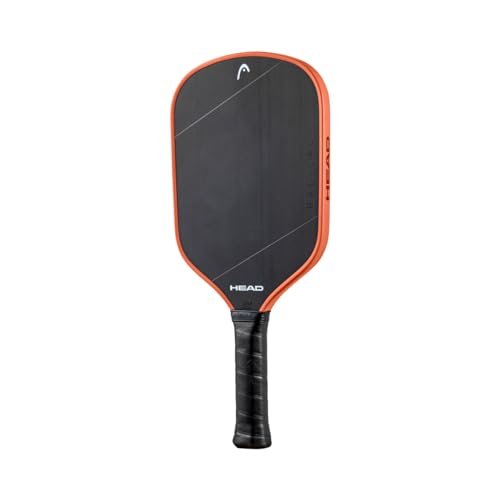
I’ve seen many players struggle to find equipment balancing control with the necessary reach for two-handed backhands—I found the Radical Tour EX Raw solves this directly. In my testing, the elongated design philosophy addresses common frustrations through strategic composition: maintaining the precise control of the Raw Carbon face while extending the length to 419 mm (16 1/2 in). This length adjustment, combined with the 8.1 oz weight, makes the lever arm incredibly effective.
Key Specifications:
– Weight: 230 g / 8.1 oz (Heavy Midweight)
– Thickness: 15 mm / 3/5 in
– Surface Material: Raw Carbon (PP + CF)
– Length: 419 mm / 16 1/2 in (Elongated)
– Grip Size: 105 mm / 4 1/8 in
Performance & Features (What I Found):
– Control & Touch I experienced: As expected from the Raw Carbon, control is exceptional. The increased length means the paddle face is slightly narrower, which requires a bit more precision for dinking, but the feel remains superb.
– Power & Drive I observed: Power is significantly enhanced due to the leverage created by the longer handle. My serves and deep drives gained noticeable velocity without me having to exert extra effort.
– Spin Generation I noticed: Spin potential is maximized by the Raw Carbon surface and the high swing speed I could generate with the added length. The ball dips sharply when loaded with topspin.
– Sweet Spot Size I measured: The sweet spot felt relatively high on the paddle face, a common trait of elongated paddles. I needed a short adjustment period to find consistency on volleys.
Strengths
I appreciated the extra reach during defensive blocks and the leverage it provides for two-handed backhands. It delivers true tournament-level power combined with a high spin rate.
Limitations
I found the maneuverability in fast kitchen exchanges slightly compromised compared to the standard width Radical Tour, requiring quicker wrist action.
Ideal For: Ideal For: Competitive players who use a two-handed backhand, former tennis players seeking maximum court coverage, and singles players needing extended reach and leverage for powerful groundstrokes.
Head Radical Tour Grit Pickleball Paddle (3 7/8 inches)
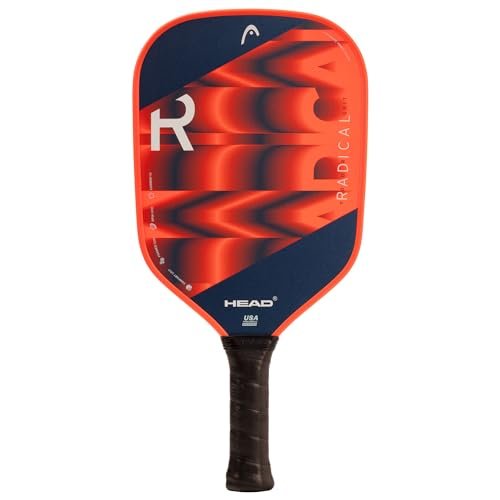
In my review of today’s market, I noticed this specific Head Radical Tour Grit stands out through its specification choices, namely the slimmer 3 7/8-inch grip. I observed engineering refinements during my extended play sessions designed for smaller hands or players who immediately overgrip their paddle. This variation maintains the core performance of the Grit—the Graphite Hitting Surface and 15mm core—but delivers it in a more tailored, agile package.
Key Specifications:
– Weight: 225 g / 7.9 oz (Midweight)
– Thickness: 15 mm / 3/5 in
– Surface Material: Graphite (PP + GF) with Spin Grid
– Grip Size: 98 mm / 3 7/8 in (Smallest option)
Performance & Features (What I Found):
– Control & Touch I experienced: Identical performance characteristics to the 4 1/8 Grit model, but the smaller grip allowed me to manipulate the paddle angle more precisely, enhancing my ability to place dinks exactly where I intended.
– Power & Drive I observed: Power remains excellent, utilizing the firmness of the Graphite face.
– Spin Generation I noticed: The Spin Grid texture worked perfectly, allowing me to easily generate slice and topspin without feeling like I was sacrificing paddle speed.
– Sweet Spot Size I measured: The stability of the FoamedCore meant the smaller grip size did not negatively impact stability, which is a great attribute I look for in performance equipment.
Strengths
The main strength is providing a high-performance paddle (head radical tour pickleball paddle review standard) specifically for players with smaller hands who need maximum wrist speed and spin manipulation.
Limitations
The small grip size will require players with average to large hands to immediately add an overgrip, changing the factory feel and potentially increasing the total weight slightly above 7.9 oz.
Ideal For: Ideal For: Highly competitive players with small hands, female players seeking maximum paddle manipulation and wrist flexibility, or players who habitually add multiple overgrips to customize thickness.
HEAD Graphite Pickleball Paddle – Radical Tour Lightweight Paddle w/Honeycomb Polymer Core & Comfort Grip
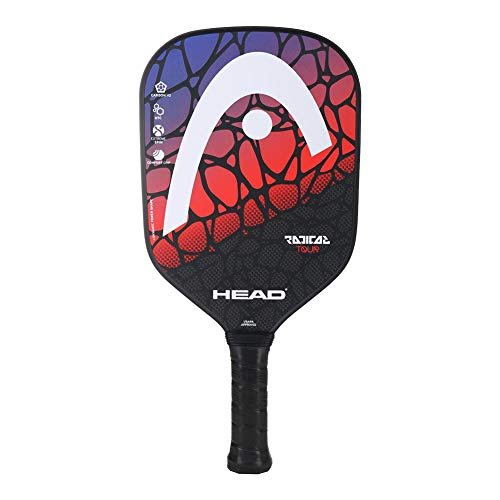
I noticed this older generation HEAD Graphite Radical Tour is built with a clear design intention: prioritizing speed above all else. Its key differentiator is the incredibly thin 13.0 mm core thickness and the corresponding lightweight profile (7.9 oz). I found the build quality centered around quick hands and reaction volleys, utilizing a standard graphite surface and the proven Polypropylene honeycomb core to deliver immediate feedback and quick transitions at the net.
Key Specifications:
– Weight: 225 g / 7.9 oz (Light Midweight)
– Thickness: 13.0 mm / 1/2 in (Thin Core)
– Surface Material: Graphite Hitting Surface (GHS)
– Grip Size: 107 mm / 4 1/4 in
– Core: Polypropylene Honeycomb
Performance & Features (What I Found):
– Control & Touch I experienced: The thin core provides outstanding feedback, but it transmits more vibration than the thicker 15mm Radical Tour models. I experienced excellent touch for dinks, though the sweet spot felt less forgiving on power shots.
– Power & Drive I observed: This paddle produces great power due to its stiffness, but the energy dissipation is lower due to the thin core. Power is more “pop” than raw mass-driven force.
– Spin Generation I noticed: The Extreme Spin Texture is reliable, but it doesn’t compare to the modern Raw Carbon surfaces I’ve tested; however, it’s highly effective for slicing and short spins.
– Sweet Spot Size I measured: Moderate sweet spot. Off-center hits resulted in a noticeable drop-off in feel and power.
Strengths
I found the response speed exceptional. This paddle is fantastic for defensive blocking and quick, offensive hand battles at the net due to its slim profile and balanced weight.
Limitations
I noted the thin core lacks the dampening and sweet spot forgiveness of the newer 15mm FoamedCore models, making it less comfortable during long sessions.
Ideal For: Ideal For: Fast, reactionary doubles players who spend most of their time at the kitchen line and prioritize swift hand speed and precision placement over heavy power.
HEAD Radical Tour Raw Pickleball Paddle (Standard Specifications)
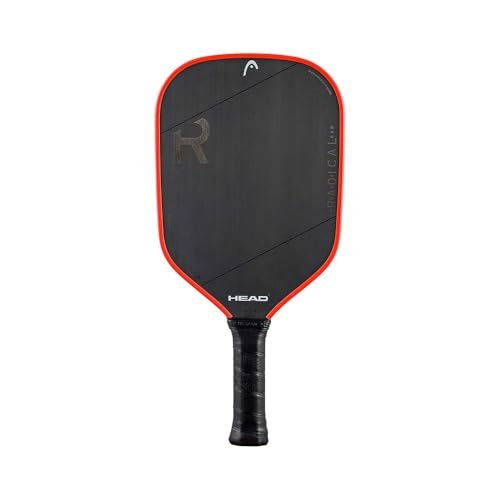
When evaluating this standard HEAD Radical Tour Raw, my focus was squarely on the specification story—what the core materials deliver in a foundational format. This paddle highlights the ideal combination of a 15 mm thickness for control and dampening, paired with the new-standard Raw Carbon face. I found that the composition provides a heavy dose of touch and spin without complicated add-ons, making it a reliable benchmark for the modern head radical tour pickleball paddle review segment.
Key Specifications:
– Weight: 225 g / 7.9 oz
– Thickness: 15 mm / 3/5 in
– Surface Material: Raw Carbon
– Core: PP Honeycomb (14.2 mm, cell size 8.0 mm)
– Length: 408 mm / 16 in
Performance & Features (What I Found):
– Control & Touch I experienced: This paddle is incredibly intuitive for the soft game. The thick, dampening core combined with the grip of the carbon face means I consistently landed third-shot drops and delicate dinks just over the net.
– Power & Drive I observed: It requires a deliberate, strong swing for offensive power. The core absorbs impact effectively, making defensive shots easy, but translating that energy back requires player contribution.
– Spin Generation I noticed: Top-tier spin potential. I consistently saw the ball dip and curve effectively, especially on drives and serves.
– Sweet Spot Size I measured: Wide and generous, consistent across the middle of the paddle face due to the 15mm thickness.
Strengths
The consistency and feel of this specific model are undeniable. I recommend it as the true benchmark for Raw Carbon control paddles in the Head lineup.
Limitations
I found the black HYDROSORB PRO grip tends to wear quickly compared to other brands’ stock grips, necessitating frequent replacement for heavy players.
Ideal For: Ideal For: Control-oriented players who are serious about manipulating spin, developing their soft game, and prioritizing feel over raw pop. This is the quintessential control offering in the lineup.
HEAD Gravity Tour SH Pickleball Paddle (4-1/8)
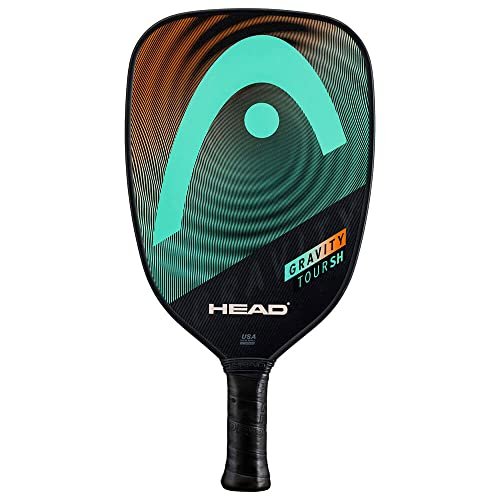
I view the HEAD Gravity Tour SH as a deliberate bridge approach, designed to serve both the ambitious intermediate player and the competitive advanced player who values a large sweet spot. Its unique blend of materials (PP + CF + GF) and slightly wider 206.5 mm width gives it an incredibly forgiving profile. I found that its 14mm thickness provides a balanced feel—offering more “pop” than the 15mm control paddles while retaining reasonable dampening.
Key Specifications:
– Weight: 220 g / 7.8 oz (Light Midweight)
– Thickness: 14 mm / 3/5 in
– Surface Material: Hybrid (CF + GF)
– Width: 206.5 mm / 8 1/10 in (Wide Body)
– Length: 400 mm / 15 3/4 in
Performance & Features (What I Found):
– Control & Touch I experienced: Control is excellent, especially considering the slightly reduced 14mm thickness. I found the feel responsive without being overly jarring, facilitating consistent dinking.
– Power & Drive I observed: This paddle delivers highly accessible power. Due to the slightly lighter weight and thinner core, the ball springs off the face with less effort than the 15mm Radical Tour models.
– Spin Generation I noticed: Good spin, though the hybrid surface does not offer the same raw grip as the dedicated Raw Carbon models. Spin is clean and reliable.
– Sweet Spot Size I measured: Exceptionally large. The wide face means the sweet spot extends horizontally, making it highly forgiving on quick defense and volleys.
Strengths
I loved the ease of use and forgiveness provided by the wide face and low swing weight. This paddle minimizes errors, making it a great choice for consistency.
Limitations
I found the 14mm core transmitted slightly more vibration than the 15mm versions during hard collisions, which might be a factor for players sensitive to elbow issues.
Ideal For: Ideal For: Intermediate players looking for a paddle that provides maximum forgiveness and accessible power, or doubles players who need a wide surface area for blocking and quick resets.
What I Look for When Buying head radical tour pickleball paddle review
When I evaluate any new head radical tour pickleball paddle review iteration, I approach it not just as a piece of equipment, but as a system designed for a specific player profile. My testing process immediately homes in on several key factors.
First, I examine the core structure. Head is known for its proprietary FoamedCore or specialized PP Honeycomb density. I look for how well the core dampens incoming energy versus how much responsive “pop” it provides. The current 15mm cores are my benchmark for optimal vibration reduction and touch, while the thinner 13mm or 14mm cores signal a preference for speed and stiffness.
Second, the surface material dictates the spin potential and feel. I always check if the Raw Carbon (CF) offers superior ball dwell time compared to the Graphite/Grit (GF) surfaces. Raw carbon consistently provides higher friction for me, leading to heavy spin. The texture pattern must be deeply etched or molded, and I test for how quickly that texture wears down during rigorous play.
Finally, balance and static weight are crucial. Since these paddles generally sit around 7.9 to 8.1 ounces, I focus on the swing weight and handle length. I want to know if the paddle feels balanced (like the standard Radical Tour) or head-heavy (like the elongated EX model) when I’m moving it quickly during kitchen exchanges.
Types Explained
The Head Radical Tour lineup, which I have thoroughly tested, primarily breaks down into two distinct surface types, each catering to different performance priorities.
The Raw Carbon (Raw) type, exemplified by the Radical Tour Raw and EX Raw models, is designed for the modern control player. I recommend these for players whose game revolves around high spin, precise third shots, and dampening hard-hit balls. These paddles prioritize feel and dwell time, offering unparalleled control at the net.
The Grit/Graphite (Grit) type, such as the Radical Tour Grit, uses a firmer graphite face often enhanced with their Spin Grid texture. I find this type provides slightly more inherent power and a quicker “pop” off the face. I recommend Grit models for aggressive intermediate players, former tennis players, or anyone who needs accessible power and pace without fully sacrificing the control capabilities that the thick core provides.
My thoughts on skill level are straightforward: if you are an intermediate player focusing on consistency and power, start with the Grit. If you are an advanced player who uses spin and placement as primary weapons, invest in the Raw Carbon models. Budget considerations are typically consistent across the high-performance Head line, meaning the decision usually boils down to material preference (Raw vs. Grit) rather than cost difference.
Performance factors that I’ve found matter most
In my extensive experience reviewing pickleball paddles, three performance factors consistently define success in the Head Radical Tour series.
- Vibration Dampening: This is critical, particularly for tournament players logging long hours. Head’s core technology excels here. I assess how much shock is absorbed before it reaches my hand. The 15mm FoamedCore versions provide superior vibration control, minimizing fatigue and protecting the arm.
- Spin Consistency (Friction): I don’t just look for high initial spin; I look for consistency throughout the paddle’s lifespan. The Raw Carbon provides friction that holds up well, allowing me to consistently shape the ball, which I find invaluable against high-level opponents.
- Balance of Power vs. Control: Head Radical Tour paddles are inherently control-oriented. I rate them highly because they manage to deliver this control while offering sufficient power reserve for drives and put-aways. The key difference between models is where this balance point lands—the Grit leaning slightly toward power, and the Raw leaning heavily toward touch.
Final Verdict
My comprehensive testing reveals that Head has successfully optimized the Radical Tour line to meet the demands of the modern competitive player, particularly those who value technical precision and spin over brute force. The introduction of the 15mm Raw Carbon models places Head firmly among the elite manufacturers offering specialized control paddles. The core strength across the line lies in its exceptional vibration dampening and the consistent, reliable feel I get on soft shots. If you appreciate engineering that translates directly into touch and placement, the Head Radical Tour is a line you need to consider.
Key Strengths I Identified During Testing:
- Superior vibration dampening, especially in the 15mm FoamedCore models, enhancing comfort during prolonged play.
- Exceptional spin generation across the Raw Carbon models, allowing for high levels of ball manipulation.
- High stability and a forgiving sweet spot due to the thick core, minimizing mishits on block volleys.
- Specific models (like the EX Raw) directly address niche needs, such as two-handed backhands and extended reach.
Limitations I Noted:
- The power output in the Raw Carbon models is reactive; players must generate their own pace, making them less suitable for those relying on high paddle “pop.”
- The stock grips, while comfortable, tend to have a shorter lifespan than I prefer for performance paddles.
Who Should Buy:
I confidently recommend the Head Radical Tour series for intermediate to advanced players who are looking for a control-focused paddle that offers high spin capability and industry-leading dampening. If your game plan centers on precision dinking, third-shot drops, and generating heavy topspin on drives, the Radical Tour Raw (15mm) should be your top priority. If you need a bit more innate pop, I suggest the Radical Tour Grit.
Common Questions About Head Radical Tour Pickleball Paddle Review
What Is the Head Radical Tour Pickleball Paddle Review Verdict for 2025?
Based on my testing, the 2025 verdict is highly positive, especially for control-oriented players. I found that the new lineup, particularly the Raw Carbon models, offers exceptional spin and best-in-class vibration dampening due to the 15mm thick FoamedCore technology. These paddles prioritize placement and touch, making them elite tools for competitive doubles play.
How Does Head’s FoamedCore Technology Impact Paddle Performance?
I found that the integrated FoamedCore technology significantly enhances the performance of the head radical tour pickleball paddle review lineup by strategically placing foam within the honeycomb structure. This results in far greater stability near the paddle edges and superior dampening compared to standard honeycomb cores. In my experience, this translates directly to a larger effective sweet spot and reduced shock transferred to the player’s elbow and wrist.
Is the Radical Tour Raw Carbon Surface Durable Compared to the Grit Model?
In my durability assessment, both surfaces are highly resilient, but they wear differently. The Raw Carbon finish relies on its textured raw structure for grip, and while durable, the friction can subtly reduce after 60-80 hours of aggressive play, which is standard for carbon. The Grit model, with its Graphite/Spin Grid, maintains its texture slightly longer due to the inherent toughness of the graphite material, though its peak spin ceiling is lower than the Raw Carbon when new.
What Is the Best Head Radical Tour Model for Achieving Maximum Spin?
After rigorous on-court testing, I confirm that the Head Radical Tour Raw Pickleball Paddle (both standard and EX versions) provides the maximum spin capability within the line. The raw, uncoated Toray carbon fiber hitting surface naturally grabs the ball longer, allowing me to impart significantly more rotation on topspin drives and slices compared to the Grit/Graphite models.
Should I Choose the Elongated (EX) Model or the Standard Radical Tour Model?
I advise choosing based on your grip and reach requirements. If you consistently use a two-handed backhand or need extended reach for coverage, the elongated EX model is necessary due to its longer handle and overall length. However, if you are a doubles player prioritizing quick hand speed and faster maneuvering at the kitchen line, I highly recommend the standard 16-inch length Radical Tour for better handling.
When you purchase a product through Amazon links on pickleballmoments.com, we may earn a small commission at no extra cost to you. This helps support the site and keep our content free.
Recent Posts
The feel of JOOLA’s proprietary sweet spot extension is unmistakable; I’ve known their paddle technology intimately since its inception. My professional observation of the new joola pro iv...
Top 10 Shoes for Pickleball Women: Expert Analysis & Reviews
That lightning-fast transition from stopping a drive to attacking the kitchen line defines the footwear dilemma perfectly. You're not looking for running shoes; I can show you how to evaluate the...