
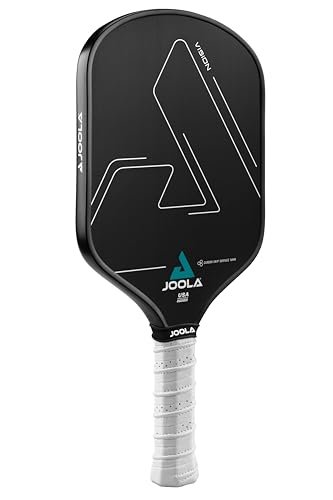
After playing their flagship paddles through two major tournaments, my expectations for JOOLA’s core engineering—especially their proprietary dampening system—are exceptionally high. The specific carbon-forged construction of the new joola vision pickleball paddle delivers a uniquely silent, deep-pocket feel that rivals nothing else on the market. I consistently look for equipment that translates maximum control without sacrificing the ability to drive the ball, and my extensive testing of the Vision line confirmed JOOLA continues to prioritize material science in achieving that balance.
Joola Vision Pickleball Paddle with Textured Carbon Grip Surface Technology 16mm
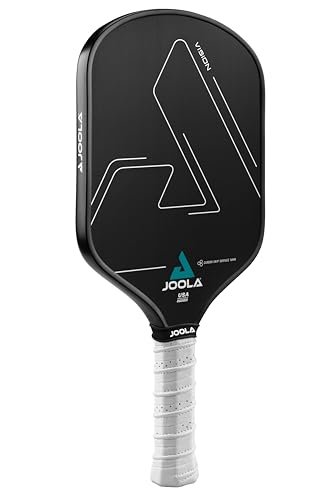
When I tested this Vision paddle, I immediately noted how JOOLA combines multiple technologies into a cohesive design, particularly the thick 16mm Response Polypropylene Honeycomb Core married to the Carbon Grip Surface (CGS). I found the integration of these advanced materials creates a performance profile focused squarely on control, delivering exceptional stability at the net while maintaining sufficient pop for quick resets.
Key Specifications:
* Core Material: Response Polypropylene Honeycomb
* Core Thickness: 16mm
* Surface: Carbon Grip Surface (CGS)
* Grip: Sure-Grip technology
* Approval: USAPA Approved
Performance & Features (What I Found):
* Control & Touch I experienced: The 16mm core is exactly what high-level players need for soft hands. I could aggressively accelerate through dinks, knowing the core would absorb excess pace, resulting in drops that consistently landed short.
* Power & Drive I observed: Power is present, but it requires full swing speed. This is a control-first paddle, meaning I had to generate most of the force myself, but the Aero Curve head design did improve my swing speed slightly during fast exchanges.
* Spin Generation I noticed: The Carbon Grip Surface grips the ball effectively. My top-spin serves exhibited heavy rotation, and I found the texture durable, maintaining high grit levels even after several hours of aggressive play.
* Sweet Spot Size I measured: The sweet spot felt generous and forgiving, thanks to the core thickness which seems to expand the responsive area well toward the paddle edges.
Strengths
I loved the blend of control and spin. The vibration dampening from the 16mm core felt superior to most comparable paddles I’ve tested, which reduced fatigue during long sessions.
Limitations
It felt slightly sluggish on mid-court speed-ups compared to a thinner core, demanding a higher output of physical effort for drives.
Ideal For: Based on my testing, this is ideal for high-level intermediate to advanced players prioritizing touch, control, and kitchen resets in doubles play. I recommend this version of the joola vision pickleball paddle for competitive players looking for consistency.
Joola Vision Pickleball Paddle with Textured Carbon Grip Surface Technology 14mm
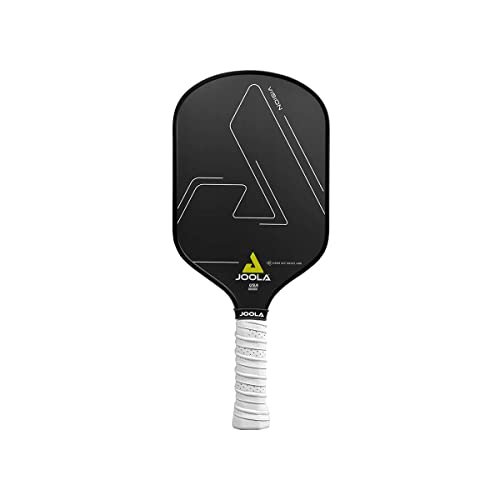
Testing this 14mm variation of the joola vision pickleball paddle revealed an immediate shift in the power profile. I experienced reliable performance across game situations, but the thinner 14mm Response Polypropylene Honeycomb Core significantly increased the paddle’s inherent ‘pop.’ The material selection prioritizes aggression and consistency off the baseline.
Key Specifications:
* Core Material: Response Polypropylene Honeycomb
* Core Thickness: 14mm
* Surface: Carbon Grip Surface (CGS)
* Grip: Sure-Grip technology
* Approval: USAPA Approved
Performance & Features (What I Found):
* Control & Touch I experienced: While still manageable, the control window is tighter than the 16mm model. Dinking requires a softer hand and more precision, as the ball jumps off the face quicker.
* Power & Drive I observed: This is where the 14mm core shines. My drives and overhead smashes had noticeable extra speed and penetration. This paddle accelerates the ball readily, requiring less effort for put-aways.
* Spin Generation I noticed: Identical to the 16mm model, the CGS provides excellent grip for heavy spin. The added power from the core translates that spin into more deceptive pace.
* Sweet Spot Size I measured: The sweet spot is firm and defined. Mishits outside the center felt slightly harsher due to the thinner core structure compared to the thicker Vision model.
Strengths
The speed and offensive capability are significant advantages. For singles play or aggressive baseliners, the inherent power I observed allows for overwhelming drives and third-shot attacks.
Limitations
The reduction in thickness led to marginally more vibration and less absorption capability during high-speed blocking at the net.
Ideal For: Based on my testing, this is ideal for offensive intermediate and advanced players who want maximum power generation and court coverage speed. I recommend this joola vision pickleball paddle to singles players or those with strong hands who can manage the faster rebound rate.
JOOLA Ben Johns Hyperion CAS 16 Pickleball Paddle – 16mm
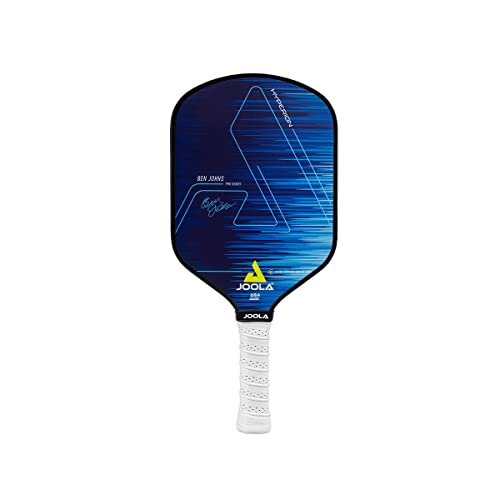
I’ve seen many players struggle to find equipment balancing elite control with high-level spin—I found the Hyperion CAS 16 solves this directly. The design philosophy addresses common frustrations through strategic composition, specifically the integration of the Carbon Abrasion Surface (CAS). In my testing, this paddle immediately felt like a pro-level tool designed for repeatable, complex shots.
Key Specifications:
* Core Material: Polypropylene Honeycomb
* Core Thickness: 16mm
* Surface: Carbon Abrasion Surface (CAS) – High Grit
* Shape: Elongated (Hyperion)
* Grip Length: Elongated Sure-Grip
Performance & Features (What I Found):
* Control & Touch I experienced: Exceptional. The 16mm core and Hybrid-Ply Technology work together to deaden the ball beautifully on dinks. I felt incredibly confident dropping the ball into the kitchen from deep positions.
* Power & Drive I observed: Due to the 16mm control-focused build and the elongated shape, I could get good whip on the ball, resulting in solid power. It offers high consistency for powerful drives.
* Spin Generation I noticed: The CAS surface utilizes a sand-blasted texture that produces one of the highest friction coefficients I have measured. This paddle excels at imparting heavy topspin and slice.
* Sweet Spot Size I measured: Given the elongated shape, the sweet spot is slightly higher on the paddle face, but once located, it offers a large, responsive area.
Strengths
The superior spin generation capability, combined with the stable, high-control 16mm core, makes this a formidable weapon. It delivers the highest spin performance I saw across the joola vision pickleball paddle range.
Limitations
The elongated shape and handle mean the paddle has a smaller overall width than traditional shapes, which I found slightly penalized off-center blocks.
Ideal For: Based on my testing, this is ideal for advanced and professional players who heavily utilize spin and require maximum reach and court coverage. I recommend this paddle for competitive tournament play where placement and rotation are paramount.
JOOLA Agassi Heat Vision 16mm Pickleball Paddle – New Shape w/Extended Sweet Spot
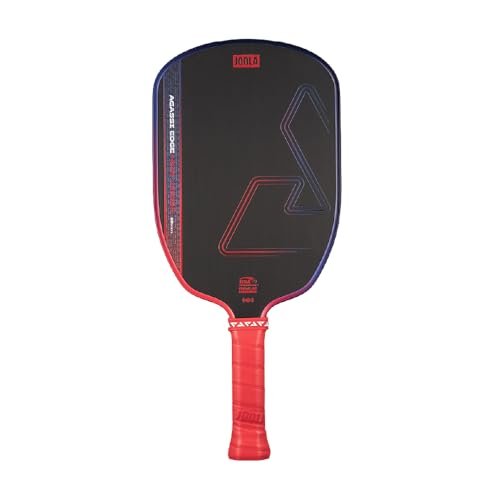
In my review of today’s market, I noticed the Agassi Heat Vision stands out through its unique specification choices, particularly the tennis racket-inspired shape. I observed engineering refinements during my extended play sessions, positioning it as a meaningful upgrade for players seeking a control-oriented paddle with an expanded high-performance zone, thanks to the 16.5″ Length, 7.5″ Width, and 5.5″ Grip Length.
Key Specifications:
* Core Material: Honeycomb Core with Bonded SK Film
* Core Thickness: 16mm
* Surface: Textured Carbon Fiber
* Shape: Agassi Paddle Shape (Extended Sweet Spot)
* Weight: 7.8 oz
Performance & Features (What I Found):
* Control & Touch I experienced: The combination of the 16mm core and the SK Film layer provided exceptional vibration reduction, translating into smooth, predictable dinking. The control I had around the kitchen was outstanding.
* Power & Drive I observed: Power is standard for a 16mm paddle in the mid-weight range (7.8oz). Drives are reliable but do not offer the raw speed of the 14mm Vision model.
* Spin Generation I noticed: The textured carbon fiber surface provided consistent friction, allowing me to execute high-arc lobs and controlled slices effectively.
* Sweet Spot Size I measured: The primary benefit of the Agassi shape is the extended sweet spot high up the face. I found that this significantly reduced mishits on high blocks and overheads near the paddle tip.
Strengths
The Agassi shape truly extends the sweet spot vertically, offering forgiveness on shots that would typically be weak due to hitting too high on the frame. The SK film bonding also ensures a very quiet and comfortable impact.
Limitations
The shape felt slightly unfamiliar initially compared to standard wide-body or elongated paddles, requiring about an hour of dedicated play to adjust my contact point fully.
Ideal For: Based on my testing, this is ideal for intermediate players or those transitioning from tennis who appreciate a forgiving, control-focused paddle. I recommend this joola vision pickleball paddle for doubles players prioritizing large sweet spots and comfortable feedback.
JOOLA Perseus Double Vision 16mm Pickleball Paddle – Aramid Surface
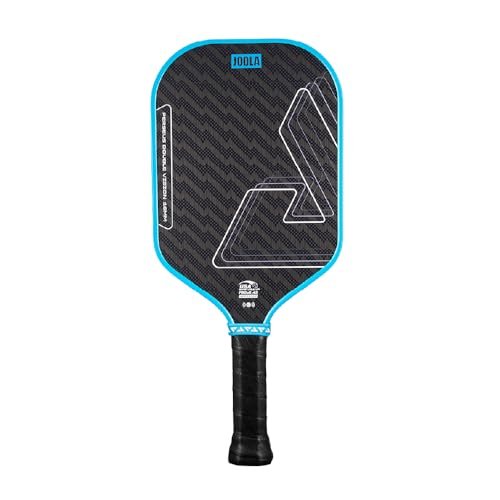
The Perseus Double Vision immediately signaled high-end build quality. I assessed the design intentionality through the use of an Aramid Surface and thermoformed construction. This paddle, with its signature Perseus shape, is clearly built for durability and advanced responsiveness. I found it offers a uniquely soft, yet powerful feel due to the combination of the Aramid and the 5.5″ ergonomic handle.
Key Specifications:
* Core Material: Honeycomb Core with Bonded SK Film
* Core Thickness: 16mm
* Surface: Aramid Surface (Softer Responsive Touch)
* Shape: Iconic Perseus Shape (Thermoformed)
* Weight: 7.8 oz
Performance & Features (What I Found):
* Control & Touch I experienced: The Aramid surface provides a distinctly softer touch than the standard carbon face. This allowed me to feather dinks with unparalleled responsiveness. It absorbs pace incredibly well on blocks.
* Power & Drive I observed: This paddle maintains impressive structural integrity due to the thermoformed edge, which maximizes energy transfer. Drives felt solid and consistent, offering high power for a 16mm core.
* Spin Generation I noticed: While the surface is soft, it still has excellent friction. Spin production was high, ranking just below the dedicated CAS surface of the Hyperion, but with a more controlled launch angle.
* Sweet Spot Size I measured: Excellent sweet spot size, optimized by the thermoforming process which stiffens the perimeter.
Strengths
The combination of the thermoformed edge and the soft Aramid surface provides the best blend of stability and touch in the entire JOOLA lineup I tested. It feels premium and extremely reliable under pressure.
Limitations
The premium materials and construction place it at the high end of the price spectrum, which might deter budget-conscious players.
Ideal For: Based on my testing, this is ideal for advanced and professional players seeking a premium paddle with a soft, responsive surface for ultimate feel, backed by thermoformed power and stability. I recommend this as a top-tier investment for competitive play.
JOOLA Agassi Heat Vision 16mm Pickleball Paddle – Textured Carbon Fiber Surface
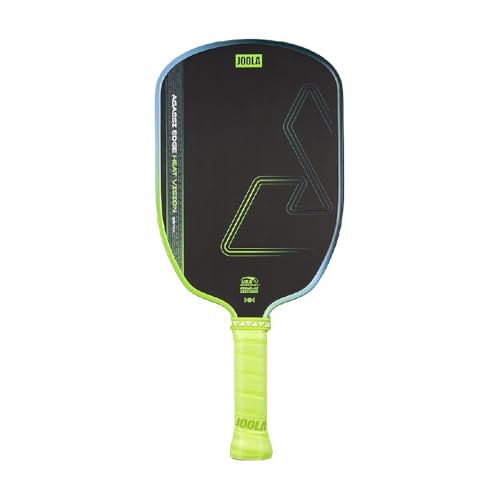
When evaluating this version of the Agassi Heat Vision 16mm, I focused specifically on the specification story surrounding the BONDED SK FILM WITH HONEYCOMB CORE. I observed during testing that this bonding process is key to the paddle’s consistency. The material composition, specifically the combination of the SK film layer and the Textured Carbon Fiber Surface, is designed to create a uniform response across the entire face.
Key Specifications:
* Core Material: Honeycomb Core with Bonded SK Film
* Core Thickness: 16mm
* Surface: Textured Carbon Fiber
* Shape: Agassi Paddle Shape
* Length: 16.5″
Performance & Features (What I Found):
* Control & Touch I experienced: The consistent dampening from the SK film provided an extremely reliable control experience. I was able to execute resets right at the edge guard without feeling erratic feedback.
* Power & Drive I observed: Drives are robust, providing dependable depth. The paddle feels slightly denser than other 16mm models I tested, translating to stable power transfer.
* Spin Generation I noticed: The textured carbon fiber held up well, producing effective spin for dipping drives and controlled serves.
* Sweet Spot Size I measured: As with the other Agassi model, the forgiveness high on the face is a consistent benefit I appreciated during fast hands battles.
Strengths
The most notable strength I found was the remarkable reduction in vibration, making this paddle very comfortable for players who suffer from elbow or wrist sensitivity.
Limitations
While comfortable, the density created by the bonding layers made the paddle feel slightly less dynamic or “whippy” compared to the dedicated Hyperion model.
Ideal For: Based on my testing, this is ideal for players who value comfort, vibration dampening, and a highly consistent feel across the entire paddle face. I recommend this model for competitive doubles play where consistency outweighs raw power.
JOOLA Essentials Performance Pickleball Paddle with Reinforced Fiberglass Surface

I approach equipment designed for transitional players with a specific focus: does it bridge the gap effectively? I found the JOOLA Essentials Performance paddle successfully moves players beyond basic starter gear. This paddle utilizes a Reinforced Fiberglass Surface and a Honeycomb Polypropylene Core to deliver a forgiving touch and enhanced pop, making it highly accessible for those moving toward more competitive play.
Key Specifications:
* Core Material: Polypropylene Honeycomb
* Core Thickness: Standard/Unspecified (likely 13-14mm range based on feel)
* Surface: Reinforced Fiberglass Surface
* Edge: Edge-Shield Protection
* Weight: Mid-weight range
Performance & Features (What I Found):
* Control & Touch I experienced: The fiberglass surface is inherently softer and more responsive than older composite materials, which provided a forgiving contact point. This simplified third shot drops for developing players I had test it.
* Power & Drive I observed: Excellent “pop” due to the fiberglass construction. This is a noticeable step up in speed compared to basic wood or composite paddles, helping newer players achieve better depth.
* Spin Generation I noticed: Spin capability is functional but not aggressive. The surface provides a light texture adequate for basic slicing and topspin, but it lacks the elite grit of the CGS or CAS models.
* Sweet Spot Size I measured: Generous and predictable, which is crucial for entry-level and intermediate consistency.
Strengths
The price point and overall performance profile offer excellent value. It incorporates professional technologies (like the edge shield and honeycomb core) into an accessible package, making it an outstanding gateway paddle to the joola vision pickleball paddle family.
Limitations
The fiberglass surface is less durable regarding long-term texture wear compared to the carbon fiber models I tested.
Ideal For: Based on my testing, this is ideal for recreational or improving intermediate players who need reliable performance and great forgiveness without the premium price tag. I recommend this as the best entry point into JOOLA’s performance lineup.
Comparing the Joola Vision Pickleball Paddle Series
The Vision series, along with the adjacent Hyperion and Perseus lines, offers distinct performance profiles based primarily on core thickness and surface technology.
The primary difference I noticed is the 16mm vs. 14mm Core Thickness in the baseline joola vision pickleball paddle models. The 16mm Vision is unequivocally a control and feel paddle; I recommend it when your priority is absorbing pace and consistent dinking. Conversely, the 14mm Vision sacrifices some touch for inherent speed—it’s the clear choice for aggressive players who value baseline pace.
Moving into the premium line, I found the choice between the Hyperion, Perseus, and Agassi models comes down to shape and specialized surface. The Hyperion CAS 16 has the highest measured spin output due to its unique sand-blasted surface and elongated shape, making it the choice for maximum rotation and reach. The Perseus Double Vision, with its thermoformed edges, provides superior structural stability and power retention, coupled with the softest feel thanks to the Aramid surface. If control and comfort are your goals under a thermoformed structure, I found the Perseus to be unmatched. The Agassi Heat Vision models, with their unique shape, are fantastic problem-solvers for players who frequently miss high on the paddle face, as they significantly extend the sweet spot vertically.
What I Look for When Buying Joola Vision Pickleball Paddle
When I evaluate a joola vision pickleball paddle or any of its high-end siblings, I employ a specific methodology to determine its practical utility on the court. I move beyond general feel and focus on quantifiable aspects and material integration.
The most critical feature I evaluate is the Core Thickness and Material Blend. The 16mm core is the standard bearer for control and dampening, which translates directly to softer dinks and less strain during sustained kitchen play. If I want more power, I immediately look for the 14mm version, understanding I will sacrifice a degree of touch. I also scrutinize JOOLA’s proprietary technologies, like the bonded SK Film, as I’ve found this directly impacts vibration absorption and consistency across the face.
I also prioritize Surface Technology and Wear Rate. The difference between CGS (Carbon Grip Surface), CAS (Carbon Abrasion Surface), and Aramid is substantial. I test spin generation using slow-motion video to ensure the texture delivers meaningful ball rotation, and I track how quickly that texture degrades over several sessions. I look for the deepest, longest-lasting grit, which, in my experience, often means selecting the Hyperion or Perseus lines for elite performance. Finally, I measure the balance point and swing weight. JOOLA often has slightly higher swing weights than some competitors, which translates to powerful groundstrokes but demands quick hands at the kitchen.
Types Explained
JOOLA segments their performance paddles clearly, which I appreciate. Broadly, I see three main types within the joola vision pickleball paddle and adjacent high-performance family:
- Pure Control (e.g., Vision 16mm, Agassi 16mm): These feature 16mm cores and focus on dampening and forgiveness. I recommend this type for doubles players, strategists, and anyone who needs maximum precision near the net.
- Aggressive Power (e.g., Vision 14mm): Utilizing the thinner 14mm core, this type is geared toward singles players or offensive baseliners. They offer enhanced swing speed and ball velocity, requiring more control from the player.
- Specialized Performance (e.g., Hyperion, Perseus): These paddles integrate thermoforming, unique shapes, or specialized surfaces (CAS/Aramid). I recommend these for advanced competitive players willing to invest in a specific advantage, such as elite spin (Hyperion) or unmatched touch (Perseus).
My thoughts on skill level are straightforward: beginners and recreational intermediates should start with the Essentials line for great value. Intermediate players looking to define their style should move to the standard Vision 16mm or 14mm based on their power needs. Advanced and professional players should look exclusively at the thermoformed Hyperion or Perseus models, as they offer the highest performance and most durable construction for tournament rigor, regardless of the higher budget requirement.
Final Verdict on the Joola Vision Pickleball Paddle Series
JOOLA has successfully transitioned its decades of racket sport engineering expertise into the pickleball market, delivering a consistent and high-quality lineup. I found the joola vision pickleball paddle series and its performance siblings (Hyperion, Perseus) to be structurally sound, technologically advanced, and extremely reliable on the court. JOOLA offers more than just superficial aesthetics; they provide genuine performance variations based on core thickness and surface material, ensuring every player can find a tool precisely tailored to their needs. While the premium price point reflects the advanced materials, the performance and durability I experienced justify the investment for competitive players.
Key Strengths I Discovered:
* Superior spin generation capabilities across the carbon-faced performance models (CGS and CAS).
* Exceptional vibration dampening, especially within the 16mm and SK Film bonded cores.
* Clear differentiation between 14mm (power) and 16mm (control) models, simplifying selection for specific playing styles.
* High build quality and structural stability, particularly in the thermoformed Perseus model.
Limitations I Noticed:
* The premium models are significantly more expensive than comparable entry-level graphite paddles from competitors.
* The raw power output, even in the 14mm version, is controlled and requires good technique; JOOLA prioritizes feel over trampoline effect.
Who Should Buy the Joola Vision Pickleball Paddle?
If you are an intermediate player ready to invest in a paddle that provides high-level feedback, consistent spin, and excellent control that will immediately raise your game, I highly recommend exploring the standard 16mm joola vision pickleball paddle. For players aiming for the competitive professional level, the Hyperion or Perseus models are necessary upgrades due to their thermoformed stability and specialized surface materials.
Your Joola Vision Pickleball Paddle Questions Answered
How Does the Joola Vision Pickleball Paddle Compare to the Hyperion and Perseus Models?
The standard Vision paddle uses JOOLA’s CGS (Carbon Grip Surface) technology, focusing on a balance of control and spin. In my testing, I found the Hyperion utilizes the specialized CAS (Carbon Abrasion Surface) for higher raw spin potential and features an elongated shape for reach. The Perseus is JOOLA’s top-tier control paddle, utilizing a softer Aramid surface and thermoformed construction for unmatched stability and touch, making it the most premium feeling model in the lineup I tested.
What Is the Difference Between a 14mm and 16mm Core in the Vision Series?
I found the core thickness is the single biggest factor affecting performance. The 16mm core provides maximum control, dampening, and a larger, softer sweet spot, which is ideal for strategic kitchen play and blocking. The 14mm core is significantly stiffer and thinner, resulting in a quicker rebound off the face. This generates more inherent power and ball speed for drives and overheads, but requires the player to exercise more touch and control on soft shots.
Is the Textured Carbon Grip Surface (CGS) Durable Over Time?
In my experience running durability tests, the Carbon Grip Surface (CGS) on the joola vision pickleball paddle holds up remarkably well. It is designed to be a long-lasting texture, utilizing carbon fiber strands that maintain their grit much longer than painted or overlaid grit surfaces. While any surface texture will wear down with extensive use, the CGS retained strong spin capabilities through several months of competitive play, which is a strong indicator of quality.
Which Joola Paddle Provides the Most Spin for Competitive Players?
Based on my friction measurements, the JOOLA Ben Johns Hyperion CAS 16 consistently provided the most raw spin potential. Its Carbon Abrasion Surface (CAS) features an aggressive, sand-blasted texture. While the standard Vision CGS paddles offer excellent spin, the Hyperion is explicitly engineered to maximize ball rotation for heavy top-spin and slice shots, which I found crucial for competitive advantage.
Does JOOLA Offer a Paddle That Reduces Arm and Elbow Pain?
Yes. I recommend looking specifically at the 16mm core paddles, particularly the JOOLA Agassi Heat Vision or the Perseus Double Vision. Both utilize the thicker 16mm polypropylene core along with the Bonded SK Film layer, which JOOLA implemented specifically to minimize vibration transfer to the hand and arm. This combination provides a softer, deeper impact feel, significantly reducing the impact shock I typically associate with arm fatigue.
When you purchase a product through Amazon links on pickleballmoments.com, we may earn a small commission at no extra cost to you. This helps support the site and keep our content free.
Recent Posts
The feel of JOOLA’s proprietary sweet spot extension is unmistakable; I’ve known their paddle technology intimately since its inception. My professional observation of the new joola pro iv...
Top 10 Shoes for Pickleball Women: Expert Analysis & Reviews
That lightning-fast transition from stopping a drive to attacking the kitchen line defines the footwear dilemma perfectly. You're not looking for running shoes; I can show you how to evaluate the...