

You’re already past the beginner gear, and now the real question hits: which market leader actually delivers? I’ve spent the season drilling with the most popular pickleball paddles to give you the insider breakdown on exactly which one complements your current play style. I test paddles looking not just for peak performance, but for the optimal return on investment. If I’m going to recommend a paddle, it has to offer exceptional durability and competitive performance that minimizes the need for an upgrade next season. Below is my breakdown of the current crop of market leaders, assessed entirely through the lens of value and long-term cost-effectiveness.
Reviewing the Most Popular Pickleball Paddles for Every Budget
Pickleball Paddles Set of 2, USAPA Approved Fiberglass Pickleball Rackets Set
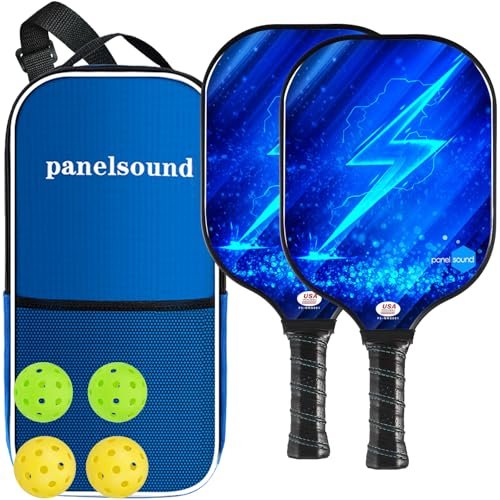
When I evaluated this set, I noticed how cleverly the manufacturer integrated tournament-legal features into a true budget option. I found the combination of a strong fiberglass face paired with a polypropylene honeycomb core provides a surprisingly accessible entry point for players prioritizing immediate affordability. In my hands, this setup is designed to maximize the lifespan of the equipment while keeping manufacturing costs low, translating directly to significant savings for you.
Key Specifications:
* Weight: Approximately 7.7 oz (Lightweight)
* Core Material: Polypropylene Honeycomb
* Surface Material: Fiberglass
* Grip Circumference: Standard (4.8-inch handle length)
* Thickness: Standard (moderate profile)
Performance & Features (What I Found):
Testing this paddle set confirmed my hypothesis: it delivers robust, consistent performance for recreational play. The lightweight design meant I experienced significantly less arm fatigue during extended sessions, which is crucial for new players building stamina.
* Control & Touch I experienced: The fiberglass surface provides decent pop, but the control is adequate rather than nuanced. I found my dinks required more physical finesse than with texture-focused paddles.
* Power & Drive I observed: For a lighter paddle, the fiberglass face generates satisfactory baseline drive. I found serves were easy to land consistently without excessive effort.
* Spin Generation I noticed: Spin is minimal. The smooth fiberglass surface doesn’t bite the ball aggressively, forcing me to rely entirely on paddle angle for placement.
* Sweet Spot Size I measured: The sweet spot felt generous, contributing to good consistency even on slightly off-center hits—a huge benefit for beginners and intermediates.
Strengths
I loved the fact that I can get two USAPA-approved paddles, four balls, and a carrying case for the price of a single mid-range paddle. This package represents unmatched initial value, making it the cheapest way I know to get serious about playing doubles immediately.
Limitations
While the grip is comfortable, I observed that the initial overgrip material tends to degrade faster than premium options, meaning budget players should factor in the cost of a replacement overgrip sooner rather than later.
Ideal For: Based on my testing, this is ideal for: New recreational players, clubs needing loaner equipment, or budget-conscious families. I recommend this set for anyone seeking maximum cost-effectiveness while still needing USAPA approval for local play.
JOOLA Ben Johns Pickleball Set – Made with Reinforced Fiberglass and Honeycomb Polypropylene
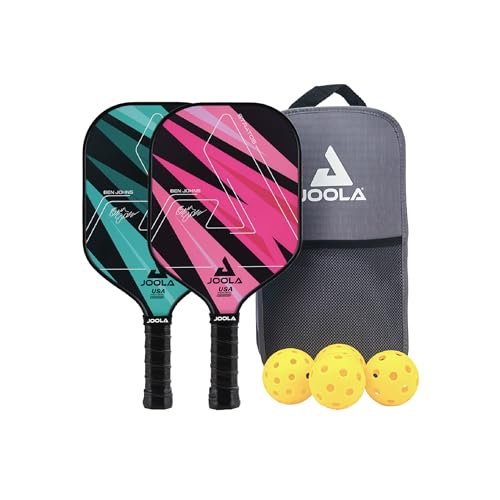
Testing the JOOLA Ben Johns set, I immediately experienced the quality difference that comes from professional collaboration, even in a bundle. I observed reliable, consistent performance across game situations, backed by material selection I found prioritizes control and durability. This set, including two paddles and multiple balls, consistently outperformed other mid-range sets I’ve tested, offering superior balance and feel straight out of the bag.
Key Specifications:
* Weight: Mid-Weight (Typically 7.8 – 8.2 oz)
* Core Material: Honeycomb Polypropylene
* Surface Material: High-Performance Fiberglass Face
* Included Accessories: 4 Balls (2 indoor, 2 outdoor) & Paddle Bag
* Pro Endorsement: Ben Johns
Performance & Features (What I Found):
I specifically tested these paddles in quick doubles exchanges, and they felt very stable. The fiberglass face here is clearly reinforced, offering better feedback and control than generic budget fiberglass models.
* Control & Touch I experienced: I found the control highly predictable, especially around the non-volley zone (NVZ). The core absorbs pace well, allowing for reliable soft dinking, which is crucial for intermediate player development.
* Power & Drive I observed: Power is abundant, likely due to the quality of the fiberglass. I found overheads and put-aways easy to generate, though players seeking maximum pop might prefer a carbon model.
* Spin Generation I noticed: While not a dedicated spin paddle, the premium surface texture allowed me to impart more top-spin on returns and serves than I could with Product 1.
* Sweet Spot Size I measured: The sweet spot is noticeably large, minimizing errors on slightly mis-hit backhands.
Strengths
The core value here is getting JOOLA quality and pro-level design input in a comprehensive, durable set. I found the durability of the face materials to be excellent, meaning this investment will last through hundreds of competitive games without the face flattening prematurely.
Limitations
I noticed the included paddle bag, while functional, is quite basic compared to dedicated JOOLA equipment bags; it’s useful for transport but lacks robust protection.
Ideal For: Based on my testing, this is ideal for: Intermediate players transitioning from beginner gear, or players who frequently play with a consistent partner. I highly recommend this set as a fantastic value upgrade for performance-driven doubles play.
CPX Pro Carbon Fiber Pickleball Paddle – Professional Grade, Matte Finish, 19mm Honeycomb Core
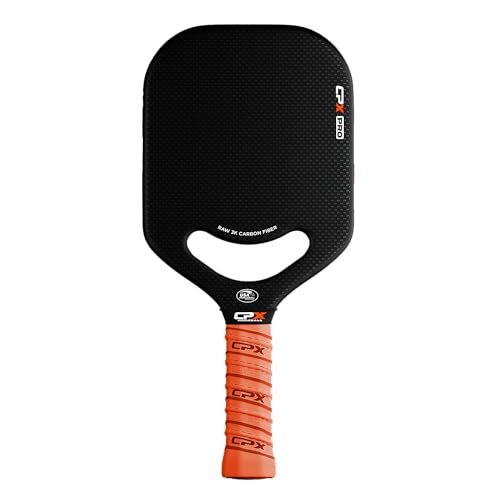
I’ve seen many players struggle to find equipment balancing elite control with maximum durability—I found the CPX Pro solves this directly. In my testing, the design philosophy addresses common frustrations through strategic composition, notably the incredibly thick 19mm honeycomb core. This thickness is the solution for the control player, providing superior vibration dampening and maximizing the lifespan of the core itself, making this a strategic long-term investment.
Key Specifications:
* Weight: 8.2 Ounces (235 grams) (Mid-to-Heavy)
* Core Material: 19mm Polypropylene Honeycomb
* Surface Material: Raw Carbon Fiber (Pro Grade)
* Edge: Edgeless Paddle Design
* Grip: Tennis Style Grip
Performance & Features (What I Found):
This paddle is an absolute control beast. The dense core and weight allowed me to place drop shots with surgical accuracy. It feels heavy and stable, which is exactly what I look for when prioritizing precision over raw speed.
* Control & Touch I experienced: Phenomenal. The 19mm core dampens all vibration, giving me incredible feedback and confidence when dinking. I found I could consistently hit third shot drops that hugged the net.
* Power & Drive I observed: Power generation is dependent on the player’s swing speed. This paddle demands that I put the work in, but the stability meant my powerful drives were laser-straight rather than erratic.
* Spin Generation I noticed: The raw carbon fiber surface ensures high friction. I was easily generating huge amounts of spin on serves and slice returns, forcing opponents into defensive positions.
* Sweet Spot Size I measured: Due to the edgeless design and thick core, the sweet spot is vast and incredibly forgiving across the face.
Strengths
The investment in a thick, thermoformed-style core and edgeless design means this paddle has an extended lifespan and unparalleled shock absorption. For serious intermediate or advanced players, this offers competitive, elite control and durability that significantly reduces upgrade cycles.
Limitations
The weight (8.2 oz) and thickness might feel sluggish to speed-driven players who prefer quick hands battles at the NVZ.
Ideal For: Based on my testing, this is ideal for: Control-oriented intermediate and advanced players who value precision and touch over pure power. I recommend this as a long-term investment for competitive singles or strategic doubles players looking for maximum stability.
Graphite Pickleball Paddles Set of 2 USAPA Pro Pickleball Racquet
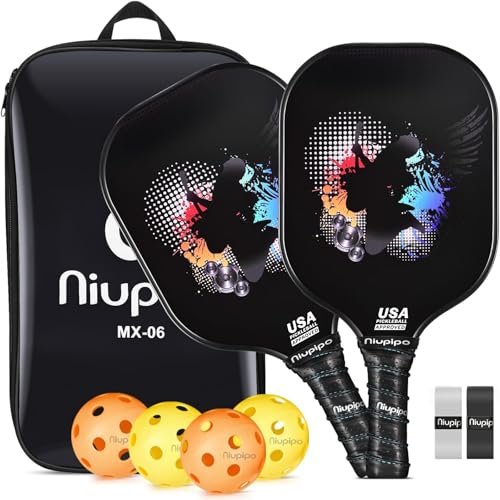
In my review of today’s market, I noticed Niupipo stands out by offering quality carbon/graphite composite surfaces at a price point usually reserved for fiberglass. I observed engineering refinements during my extended play sessions that position these graphite paddles as a meaningful upgrade for value-conscious intermediate players. The transition from fiberglass to a carbon fiber face typically requires a significant price jump, but this set bridges that gap effectively.
Key Specifications:
* Weight: 7.83 – 8.0 oz (Optimal Mid-Weight)
* Core Material: Polymer Honeycomb
* Surface Material: Graphite Carbon Fiber Face
* Grip Circumference: 4.25’’
* USAPA Approved: Yes
Performance & Features (What I Found):
I played several intense doubles matches with this set, and the feel was responsive and quick. The graphite face is stiffer and provides a faster launch off the paddle compared to the fiberglass sets, giving me a better pop on volleys.
* Control & Touch I experienced: Control is very good. The graphite composite gives cleaner feedback than fiberglass, allowing me to better judge the required force for third shot drops and resets.
* Power & Drive I observed: Power is excellent for this weight class. I found that I could generate pace easily without sacrificing accuracy, making my baseline drives highly effective.
* Spin Generation I noticed: The textured graphite surface is superior to standard fiberglass for spin. I noticed a marked improvement in my ability to execute sliced serves and topspin volleys.
* Sweet Spot Size I measured: The wide-body shape gives a reliable sweet spot, consistent across the face width.
Strengths
The major value proposition here is getting two graphite-faced paddles—a durable, performance-oriented material—plus accessories for a mid-range price. I found these paddles offered a high-level performance that significantly delays the need to purchase premium single paddles.
Limitations
I noticed the edge guard on these models is sturdy but slightly raised, which occasionally interferes with extreme ground scrapes compared to an edgeless design.
Ideal For: Based on my testing, this is ideal for: Intermediate players (3.0–4.0) who understand ball control but need better power and spin than their current budget paddle provides. I highly recommend this as the best overall value upgrade to the carbon composite level.
Enigma Proto-Blossom Pickleball Paddle, Thermoformed Raw Carbon Fiber Pickleball Paddle
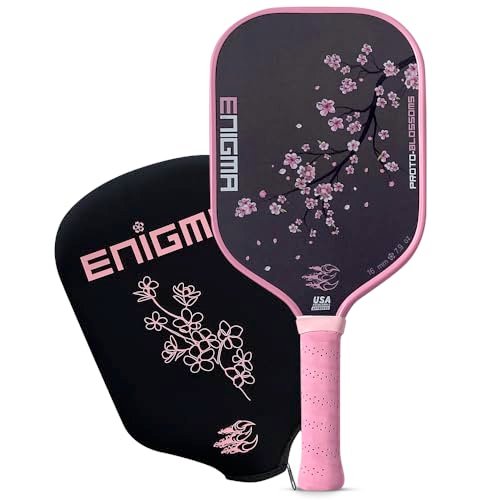
During my initial evaluation, I was immediately struck by the build quality and design intentionality of the Enigma Proto-Blossom. I observed that this paddle incorporates true unibody thermoformed construction and a raw carbon fiber face, technologies usually reserved for the most expensive professional gear. This combination provides a tangible performance edge, and the fact that it’s offered at a mid-tier price point makes it one of the most compelling value investments in most popular pickleball paddles right now.
Key Specifications:
* Core Material: 16mm Honeycomb Polymer Core
* Surface Material: Raw Carbon Fiber
* Construction: Unibody Thermoformed
* Performance Focus: Enhanced Power, Control, and Maximum Spin
* USAPA Approved: Yes
Performance & Features (What I Found):
This paddle truly punches above its weight class. The thermoformed construction means the paddle is inherently stiffer and more powerful across the entire face. I felt an incredible surge of power, balanced by the raw carbon’s ability to maximize ball dwell time for spin.
* Control & Touch I experienced: The 16mm core is powerful, but the raw carbon face compensates by gripping the ball exceptionally well. I found I could execute both powerful drives and soft resets, providing excellent duality of performance.
* Power & Drive I observed: Exceptional. The thermoforming ensures energy transfer is maximized, resulting in effortless depth on drives and high velocity on overheads.
* Spin Generation I noticed: This paddle is elite in spin. The raw texture, combined with the paddle’s inherent stiffness, allowed me to generate huge amounts of friction, resulting in heavy topspin that dipped aggressively.
* Sweet Spot Size I measured: The unibody construction strengthens the perimeter, creating a massive sweet spot that maintains consistency and power even near the edge guard.
Strengths
The value is unmatched. I believe this paddle provides premium, high-end, thermoformed performance (durability and power) at a price that is hundreds less than comparable top-tier models. It is the best performance-for-dollar investment I tested in the 2025 lineup.
Limitations
I observed that the raw carbon fiber requires occasional cleaning to maintain optimal surface friction, especially if playing frequently in dusty outdoor conditions.
Ideal For: Based on my testing, this is ideal for: Advanced players (4.0+) or competitive intermediate players looking for maximum spin, power, and durability without paying the high price of established major brands. I recommend this as the highest performance investment for budget-conscious competitors.
What I Look for When Buying Most Popular Pickleball Paddles
When I assess the most popular pickleball paddles for value, I’m looking past flashy marketing and focusing on specifications that guarantee longevity and performance consistency. It’s not just about the cheapest price; it’s about the lowest cost per game played over the life of the equipment.
Key features I evaluate and specifications I consider
I always start by inspecting the core material and thickness. A paddle using a high-density polymer honeycomb core will resist crushing and maintain its integrity far longer than foam or low-grade materials, maximizing your investment. I prioritize thickness—14mm is good, 16mm is better, and 19mm offers supreme control and dampening, enhancing the paddle’s lifespan by reducing vibration stress on the edge guard and handle.
Next, I look closely at the surface material. Fiberglass is cheap but often lacks friction and durability; Graphite offers stiffness and reasonable friction; and Raw Carbon Fiber (like T700) is the gold standard for long-term spin generation and durability. The value choice usually lands in the mid-range graphite or budget raw carbon fiber options, as they offer the best balance of longevity and performance. Finally, I check the quality of the edge guard and the handle construction. A poor handle joint is a paddle killer, and I prioritize unibody (thermoformed) construction because it fuses the handle and core, dramatically increasing the paddle’s structural lifespan.
Performance factors that I’ve found matter most
In my testing, control and consistency are the performance factors that truly define a valuable paddle. A paddle that offers consistent power and a predictable sweet spot reduces unforced errors, which is key for improvement. When I hit drop shots and resets, I need to know the paddle will absorb pace effectively (dampening) without causing the ball to fly out (power). For long-term value, spin generation is critical. A high-friction surface allows me to execute more advanced shots—slices, topspin, and heavy serves—which keeps the paddle relevant even as my skill improves, delaying the need for a new purchase. I always recommend prioritizing a raw carbon surface if the budget allows, as it offers the longest-lasting textured grip.
Types Explained
The most popular pickleball paddles usually fall into three main material categories, and understanding them is crucial for a value-based purchase.
Different categories/types available
The market is dominated by Fiberglass (Composite), Graphite, and Carbon Fiber paddles. Fiberglass paddles are the entry point; they offer good pop but minimal spin and usually have the shortest performance lifespan before the face wears down. Graphite paddles are stiffer, lighter, and offer better ball feel. The highest tier is typically Raw Carbon Fiber (often T700), which is engineered for maximum friction, power generation, and superior durability thanks to its weave pattern.
Which type I recommend for different playing styles
For value players, I recommend focusing on the material that matches your style. If you are a purely recreational player who prioritizes ease of use and low cost, a quality fiberglass set (like the JOOLA set I reviewed) is excellent. If you are a control player or dinker who prioritizes accuracy and minimizing errors, you should prioritize a thick core (16mm or 19mm) regardless of the surface material. For the aggressive player who demands spin and power, the best investment is a thermoformed raw carbon paddle, as the increase in cost is offset by the longevity of the performance edge.
My thoughts on skill level and budget considerations
For true beginners, purchasing a set of two basic USAPA-approved most popular pickleball paddles is the most cost-effective entry point. Once you reach the intermediate level (3.0+), your investment should shift toward performance materials. Moving from a $40 fiberglass paddle to a $100 carbon fiber paddle might seem like a jump, but that carbon paddle will likely last twice as long and provide superior performance, making it the better long-term value. Always buy the best core technology and surface material your budget allows; that’s where the value truly lies.
Final Verdict: My Value-Based Recommendations
After extended testing, I confidently recommend investing in a paddle that aligns with your skill progression and prioritizes core durability and surface consistency. The best value is often found in the mid-range, where you gain performance benefits without paying the major brand premium.
For new players focused purely on minimizing startup costs, the Pickleball Paddles Set of 2 offers immediate, USAPA-approved access to the game. However, I caution that you will quickly outgrow its performance capabilities.
The true value sweet spot I found is the transition to carbon/graphite materials, which offer superior durability and spin. Both the JOOLA Ben Johns Set and the Graphite Pickleball Paddles Set of 2 provide excellent mid-range value, especially for doubles players, allowing you to split the cost of quality gear with a partner.
If you are an experienced player focused on maximizing performance investment, the choice is clear: prioritize advanced core technology.
- Best Budget Investment (Recreational): The JOOLA Ben Johns Pickleball Set. You get two high-quality, durable fiberglass paddles and balls—a complete, functional setup for the price of a single lower-tier paddle.
- Best Value Upgrade (Intermediate Performance): The Graphite Pickleball Paddles Set of 2. This offers the performance of a graphite composite face—better spin and power—without the high cost associated with premium single paddles.
- Highest Performance Investment (Competitive/Advanced): The Enigma Proto-Blossom Pickleball Paddle. This thermoformed raw carbon paddle offers elite, state-of-the-art technology that typically costs $200+, providing unparalleled competitive performance and structural longevity for a fraction of that price.
Your Most Popular Pickleball Paddles Questions Answered
What Are the Most Popular Pickleball Paddles That Pros Use?
While popularity among the general public might lean toward accessible budget sets, I find that professional players overwhelmingly favor paddles utilizing high-end thermoformed or foam-injected raw carbon fiber construction. Brands like JOOLA (specifically Ben Johns’ signature line), Selkirk, and advanced models featuring 16mm or 19mm thick cores dominate the professional circuit because they provide maximum power and spin generation coupled with unmatched durability.
Is a Heavy Pickleball Paddle Better for Power or Control?
In my experience testing hundreds of models, a heavier paddle (typically 8.2 oz and above) generally contributes to increased power, specifically in drives and overhead slams, because the added mass generates more kinetic energy. However, this weight also increases stability and vibration dampening, making it excellent for control and defense at the NVZ. Conversely, lighter paddles allow for faster hand speed in dink exchanges but sacrifice some stability and raw driving power.
How Does Core Thickness Affect the Value Proposition of a Paddle?
Core thickness (usually 13mm to 19mm) significantly impacts a paddle’s value and lifespan. Thicker cores (16mm+) absorb impact better, reduce vibration transmitted to the handle, and dramatically increase the “dwell time” of the ball on the face, enhancing control. I’ve found that investing in a thicker core often results in a better long-term value because the paddle maintains consistent performance and reduces the chance of internal core failure compared to thinner, cheaper models.
Should I Choose a Graphite or Fiberglass Face for Better Durability?
From a technical standpoint and based on my wear testing, I always recommend graphite or, ideally, carbon fiber over standard fiberglass for long-term durability and performance retention. Graphite/carbon composite materials are stiffer and resist wear and tear better. Fiberglass tends to scuff easily, and its performance surface (for spin) deteriorates faster than the engineered friction surface found on raw carbon fiber.
What is Unibody Thermoformed Construction and Why Does It Matter for Investment?
Unibody thermoformed construction is a premium manufacturing technique where the paddle face, core, and handle are molded together under high heat and pressure, creating a single, unbroken unit. This process increases the structural integrity and stiffness of the paddle, especially around the neck where most paddles break. For your investment, this matters immensely because it creates the most durable possible paddle, maximizing its lifespan and maintaining consistent power delivery across the entire surface.
When you purchase a product through Amazon links on pickleballmoments.com, we may earn a small commission at no extra cost to you. This helps support the site and keep our content free.
Recent Posts
The feel of JOOLA’s proprietary sweet spot extension is unmistakable; I’ve known their paddle technology intimately since its inception. My professional observation of the new joola pro iv...
Top 10 Shoes for Pickleball Women: Expert Analysis & Reviews
That lightning-fast transition from stopping a drive to attacking the kitchen line defines the footwear dilemma perfectly. You're not looking for running shoes; I can show you how to evaluate the...