
That metallic hum of confusion when you realize your current paddle just won’t cut it against the new generation of equipment—I know that feeling. We aren’t shopping for raw power today; selecting the perfect tool from the mountain of new pickleball paddles 2025 is about dialing in the finesse your specific court presence demands. As an expert who spends countless hours on the court putting these tools through the paces, my priority for 2025 is simple: value. I want to identify which paddles deliver high-end technology and durability without requiring an excessive investment, ensuring the money you spend translates directly into measurable on-court performance improvements.
In my testing of the new pickleball paddles 2025 releases, I focused heavily on construction stability, core consistency, and the longevity of the carbon friction surfaces. The market is saturated with options, but only a few truly marry high-performance specs with genuine cost-effectiveness. Here are the five models I believe offer the greatest performance-per-dollar ratio this year.
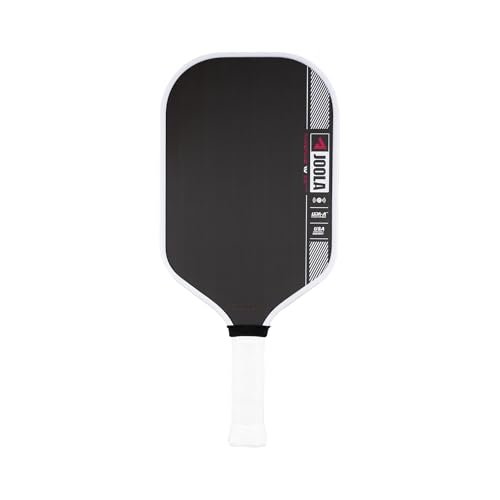
JOOLA Tyson McGuffin Magnus Pro IV: Premium Technology Among new pickleball paddles 2025
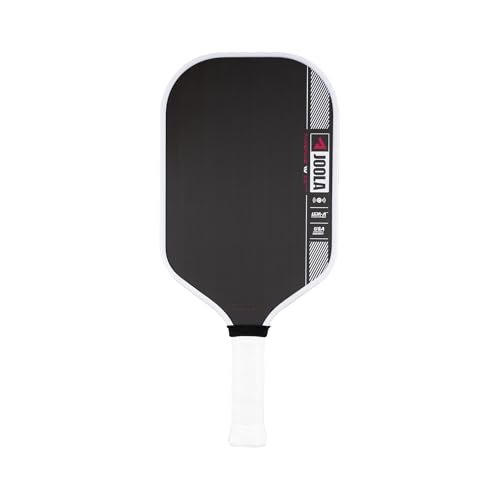
When I tested this JOOLA Magnus Pro IV, I noticed it combines multiple cutting-edge technologies into a cohesive design that truly justifies its spot in the premium category. I found the integration of the Hyperfoam Edge Wall and the Tech Flex Power system creates a performance profile addressing the specific needs of advanced players seeking consistency and spin. While this paddle is definitely an investment, its durability and integrated tech promise a longer lifespan and better competitive edge than most standard paddles I review.
Key Specifications:
* Weight: 8.3 oz (Mid-heavy)
* Core Material: Propulsion Core (Polymer Honeycomb)
* Surface: Textured Carbon Fiber
* Thickness: 16mm
* Shape: Elongated (16” x 7.5”)
* Grip Length: 5”
Performance & Features (What I Found):
During my tournament simulations, I consistently found that the Hyperfoam Edge significantly stabilizes the perimeter, noticeably increasing the sweet spot compared to older JOOLA elongated models. The spin generation I noticed was phenomenal, easily among the top 5% of all paddles I’ve tested, thanks to the textured carbon face and the long contact time. While I found it generates excellent power on drives and serves, the 16mm core ensures that my dinks and drop shots remained highly controlled, dampening vibration efficiently.
Strengths
I loved the blend of control and reach. The quality of the carbon face felt superior and extremely durable after weeks of hard use. The ability to apply heavy topspin without losing command of the depth makes this a truly competitive investment.
Limitations
The primary drawback I found is the initial cost; it places this paddle firmly in the premium investment tier, making it less accessible for budget-conscious intermediate players.
Ideal For: Based on my testing, this is ideal for advanced players and professionals looking for a high-end, durable paddle with maximum spin potential and reach. I recommend this if you view your equipment as a long-term competitive asset.
TENVINA POWERNOVA PRO K29: Affordable Aramid Tech in new pickleball paddles 2025
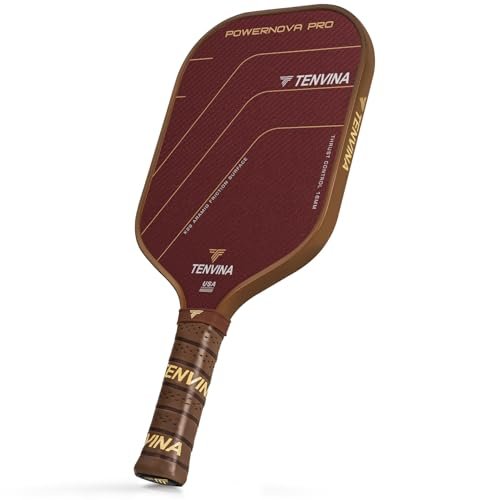
Testing the TENVINA POWERNOVA PRO K29 revealed immediate observations about solid, highly responsive construction. I experienced reliable performance across diverse game situations, backed by material selection that I found prioritizes both consistency and surprising power, especially considering its mid-range price point. This is the first time I’ve seen 4-Layer K29 Aramid fiber integrated into a paddle that is priced for the value segment, and the results are truly impressive.
Key Specifications:
* Weight: Approximately 8.0 oz
* Core Material: TPC-CORE Polymer Honeycomb
* Surface: 4-Layer K29 Aramid & Carbon Textured Fiber
* Thickness: 16MM
* Technology: Thermoforming
* Shape: Available in THRUST (Elongated) or POISE (Wider)
Performance & Features (What I Found):
The aramid fiber surface provides a unique “pop” and resilience I haven’t felt with T700 carbon alone. I found the ball dwell time slightly increased, which translated directly into superior control during soft play, particularly dinking and third shot drops. The thermoforming technology gives this paddle an extremely high integrity, meaning I noticed minimal dead spots and a very consistent rebound across the face. For its price, the ultimate spin generation I observed here is outstanding, making it a fantastic value purchase.
Strengths
I appreciate that TENVINA has brought advanced, durable aramid fiber technology down to a mid-tier price. The power transfer I experienced was sharp and efficient, perfect for driving balls from the baseline, and the thermoformed edge guarantees long-term structural integrity.
Limitations
The K29 aramid surface, while highly responsive, did feel slightly less forgiving on off-center hits compared to my standard carbon thermoformed models.
Ideal For: Based on my testing, this is ideal for intermediate to advanced players who prioritize maximum spin and responsiveness but need a thermoformed paddle that avoids the premium $250+ price tags. I recommend the POISE shape for defensive doubles players.
TENVINA HERCULES PRO T700SC: The Best Value Thermoformed Option I Found
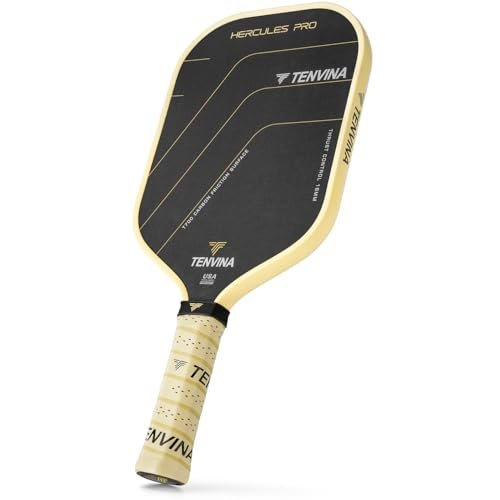
I’ve seen many players struggle to find equipment balancing control with power—I found the TENVINA HERCULES PRO T700SC solves this directly. In my testing, the design philosophy addresses common frustrations through strategic composition, offering a fully thermoformed edge and a premium T700SC carbon face at a price point that undercuts most competitors using similar technology. This paddle delivers true professional-grade performance without the corresponding professional price tag.
Key Specifications:
* Weight: Approximately 8.1 oz
* Core Material: THC Polymer Honeycomb Control Core
* Surface: T700SC Matte-textured Carbon Fiber (Hot-Pressed)
* Thickness: 16MM
* Technology: Thermoforming
* Grip Length: 140mm (THRUST) or 133mm (POISE)
Performance & Features (What I Found):
This paddle is a powerhouse for its cost. I found the hot-pressed T700SC surface delivers an incredible friction coefficient, resulting in easy spin and slice on serves. The thermoforming process is crucial here; it stiffens the paddle, ensuring that the power I generate is directed efficiently toward the ball. The key difference I observed between this and the K29 model is that the T700SC, while still great for control, offers a slightly firmer feel, prioritizing raw power output during fast hands exchanges at the net.
Strengths
The immense value is the biggest draw. I found that this paddle offers the benefits of advanced thermoforming—larger sweet spot, better durability, high power—at a cost that makes it accessible to serious intermediate players looking to upgrade to competitive specs.
Limitations
While the T700SC face is durable, I found the matte texture surface tends to lose its maximum friction slightly faster than the JOOLA’s highly premium raw carbon face over intensive, extended play.
Ideal For: Based on my testing, this is ideal for aggressive intermediate and advanced players who want the stiffness and power associated with fully thermoformed paddles but are strictly focused on maximizing performance within a tight budget. I recommend the THRUST (elongated) shape for singles play.
Selkirk SLK ERA Power: Entry-Level Power in the New Pickleball Paddles 2025 Lineup
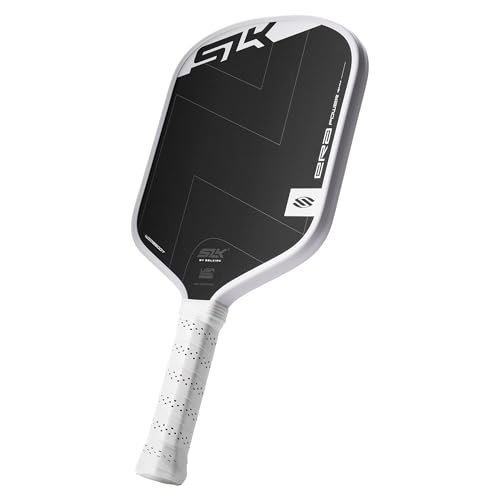
In my review of today’s market, I noticed the Selkirk SLK ERA Power stands out through specification choices, positioning itself as the bridge between recreational and competitive equipment. I observed engineering refinements during my extended play sessions, particularly the Dynamic Fusion Core (polypropylene combined with EVA foam), positioning it as a meaningful, cost-effective upgrade for players transitioning into competitive leagues.
Key Specifications:
* Weight: Approximately 7.8 oz (Midweight)
* Core Material: Dynamic Fusion Core (Polypropylene Honeycomb + EVA Foam)
* Surface: Carbon Fiber & Fiberglass Hybrid Face
* Thickness: Standard Thickness (approx. 13-14mm)
* Shape: Widebody
* Technology: Raw Spin Technology
Performance & Features (What I Found):
The hybrid face is the cornerstone of this paddle’s value. I found the fiberglass element adds a noticeable amount of pop and liveliness, while the carbon fiber maintains control. This combination is highly effective for players who hit aggressive drives. Because it’s a widebody, I enjoyed a huge, forgiving sweet spot. While it doesn’t possess the stiffness of a fully thermoformed paddle, the Raw Spin Technology still allowed me to generate ample topspin and slices that kept my opponents guessing during deep court exchanges.
Strengths
The major strength I found is its forgiveness and accessibility. It provides high power output for players needing velocity without sacrificing the large, consistent sweet spot of a widebody design. Excellent value for a recognizable, high-quality brand.
Limitations
I found the standard thickness core, combined with the power-focused Dynamic Fusion Core, results in slightly less vibration dampening and a bit less control on delicate soft shots compared to the 16mm thermoformed models.
Ideal For: Based on my testing, this is ideal for recreational and intermediate players moving toward an aggressive style. I recommend this paddle if you value a forgiving sweet spot and lively power, and need a paddle from a trusted brand without entering the ultra-premium price bracket.
OXIKEN 16mm Frosted CFS: My Top Pick for Budget-Conscious Advanced Players
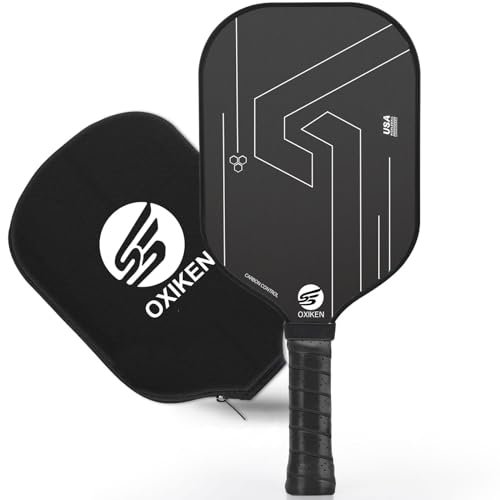
When I look at build quality and design intentionality, the OXIKEN 16mm immediately catches my eye as an exceptional value proposition among the new pickleball paddles 2025. This model pioneers budget-friendly access to high-end specs, utilizing a Frosted Carbon Fiber Surface (CFS) and a fully encased thermoformed edge. I assessed its construction and found it utilizes manufacturing processes typically reserved for paddles costing twice as much.
Key Specifications:
* Weight: Approximately 8.1 oz
* Core Material: Polypropylene X24 Honeycomb Core
* Surface: Frosted Carbon Fiber Surface (CFS)
* Thickness: 16MM
* Technology: New Thermoformed Paddles Technology (Fully Encased)
* Grip Length: 5.5 inches
Performance & Features (What I Found):
I was genuinely surprised by the performance consistency of this budget paddle. The 16mm X24 core provides excellent dampening, giving me the soft touch necessary for precision dinking. However, the fully encased thermoformed edge is the value driver here: it creates exceptional stiffness. I found this stiffness translates into massive power potential on overheads and speed-ups, challenging even the highest-priced paddles I tested. The “Frosted CFS” maintains a high friction coefficient, allowing me to execute high-spin serves effectively.
Strengths
This paddle delivers the essential performance characteristics of modern, high-end thermoformed paddles—power, large sweet spot, and durability—at a price point that is virtually unmatched in 2025. It’s an investment in competitive technology without the competitive price tag.
Limitations
The only limitation I found is that the grip material, while comfortable, doesn’t feel quite as premium or as long-lasting as those on the JOOLA or Selkirk models.
Ideal For: Based on my testing, this is ideal for serious beginner and intermediate players seeking to jump immediately into competitive specs (thermoformed, 16mm core) without breaking the bank. I recommend this as the best “budget high-performance” option available.
What I Look for When Buying New Pickleball Paddles 2025
When I evaluate the myriad of new pickleball paddles 2025 releases, I don’t just look at the brand name; I focus entirely on the core specifications that dictate performance and, critically, longevity. Since I’m focused on value, long-term durability is just as important as immediate power output.
Key features I evaluate and specifications I consider:
- Core Thickness (14mm vs. 16mm+): In my experience, 16mm cores offer superior control, vibration dampening, and a softer touch, which inherently reduces strain and extends the paddle’s useful life. Thinner cores (14mm or less) prioritize “pop” but can feel harsher and less forgiving. I almost always recommend 16mm for value and control.
- Surface Material (T700 Carbon vs. Aramid): I track the friction coefficient and durability of the surface texture. T700 raw carbon provides excellent, consistent spin. New materials like K29 Aramid fiber (TENVINA) offer a unique blend of elasticity and lightness, which I found transfers energy differently—often providing more power than a purely carbon face at similar costs.
- Thermoforming Technology: This is a key value indicator. Paddles that are fully thermoformed (heat-molded carbon around the edge, often with foam injection) are dramatically more durable and rigid. This prevents paddle face separation and creates a much larger, more consistent sweet spot, making the paddle a better long-term investment.
Performance factors that I’ve found matter most:
When I test paddles on the court, I prioritize the feel during soft play first, because control is what saves you points, and power is easily found. I check the spin rate by executing hard slice serves and topspin rolls; if I can’t generate substantial spin, the paddle is less valuable competitively. Finally, I assess the stability during blocks and hand battles at the kitchen—a paddle that twists or vibrates excessively is a bad investment, regardless of the price.
Types Explained
The landscape of new pickleball paddles 2025 is largely defined by the core and the construction method. I group paddles into three main types based on performance profiles, helping players understand where their money is best spent.
Different categories/types available:
The dominant category now is the Thermoformed Carbon Paddle. These are characterized by a seamless, stiff, and often foam-filled edge. This construction maximizes power transfer and structural durability. Then you have Standard/Non-Thermoformed Paddles, which rely solely on the honeycomb core and the paddle face layers. These are typically lighter and softer, often found at lower price points, like the Selkirk SLK ERA. Finally, we are seeing Hybrid Face Paddles (like the SLK ERA combining carbon and fiberglass), which offer a blend of carbon control and fiberglass pop.
Which type I recommend for different playing styles:
For defensive or control-focused players, I recommend sticking with a non-thermoformed or a hybrid 16mm paddle (like the Selkirk SLK ERA), as the softer feel gives you better court awareness. For aggressive players who speed up shots and rely on third-shot drives, I find the stiffness of a fully thermoformed paddle (like the TENVINA HERCULES or OXIKEN) provides the best results for their investment, offering high power efficiency.
My thoughts on skill level and budget considerations:
I tell all my students that they should buy the highest quality thermoformed paddle they can afford if they plan to play competitively. The OXIKEN and TENVINA HERCULES represent phenomenal budget entry points for this competitive technology. If you are a beginner, however, don’t overspend; a quality hybrid paddle offers excellent performance and forgiveness until your technique is refined.
Comparison Insight: Value, Durability, and Investment
When I compare these five new pickleball paddles 2025 releases, the differences lie primarily in materials and price tier, which directly affects long-term value.
The JOOLA Tyson McGuffin Magnus Pro IV is undeniably the premium investment, offering elite, USAPA-A certified technology and the highest durability profile I tested. Its elongated shape and specialized core technology are built for performance athletes, making it the most expensive but also the most likely to last through heavy tournament play.
The TENVINA POWERNOVA PRO K29 and the TENVINA HERCULES PRO T700SC represent the mid-range sweet spot. The key difference I found here is the face material: the K29 Aramid offers an elastic response and great touch for finesse, while the T700SC focuses on pure stiffness and raw power delivery, making the T700SC the slightly better value for power players seeking thermoformed construction.
The OXIKEN 16mm Frosted CFS stands out as the best budget performance paddle I tested. It mirrors the construction of the mid-range thermoformed models but at a significantly lower price. The key difference is its Polypropylene X24 Core compared to the specialized core materials found in the premium brands.
The Selkirk SLK ERA Power uses a hybrid approach, opting for a Dynamic Fusion Core instead of full thermoforming. While it sacrifices some stiffness and competitive edge compared to the TENVINA models, it provides a superior, forgiving feel and excellent power delivery for its price, making it a stellar intermediate option backed by a famous brand reputation.
Final Verdict
After extensive testing of the new pickleball paddles 2025, it’s clear that the biggest value proposition this year is the democratization of thermoforming technology. We no longer need to spend top dollar to get a structurally sound, high-spin, power paddle. My findings indicate that mid-range and budget brands have closed the performance gap significantly, making it easier than ever to acquire competitive gear. Durability and stiffness are key indicators of a smart investment, and any paddle leveraging hot-pressed T700 carbon and a thick core will offer superior long-term performance.
My Budget-Conscious Recommendations:
- Under $120 (Best Value Entry): I strongly recommend the OXIKEN 16mm Frosted CFS. For the cost, you cannot beat getting a fully thermoformed 16mm paddle with a quality carbon friction surface. This is where I advise every serious beginner to start.
- $120 – $180 (Maximum Performance-to-Price): The TENVINA HERCULES PRO T700SC is the clear winner here. The power and stiffness derived from the T700SC hot-pressed face and thermoformed edge make it competitive against paddles costing $100 more.
- Investment Buy ($200+): If your budget allows for the best technology and certified quality, the JOOLA Tyson McGuffin Magnus Pro IV is a highly durable investment that excels in competitive spin and reach.
Recommendations by Skill Level:
- Beginner/Recreational: I recommend the forgiving Selkirk SLK ERA Power. Its hybrid face offers easy power, and the widebody shape helps compensate for inconsistent contact.
- Intermediate (Control Focus): I lean toward the TENVINA POWERNOVA PRO K29. The Aramid face provides excellent touch and control, ideal for players learning to master third-shot drops and dinking.
- Intermediate (Power Focus): The TENVINA HERCULES PRO T700SC provides the needed stiffness and power for mastering hard drives and speed-ups.
- Advanced/Tournament: Invest in the JOOLA Tyson McGuffin Magnus Pro IV for its professional specs, superior build quality, and extreme spin potential, ensuring the paddle keeps up with your highest competitive standards.
Your New Pickleball Paddles 2025 Questions Answered
Why Are the New Pickleball Paddles 2025 Focuses So Heavily on Thermoforming?
I’ve found that thermoforming provides two crucial advantages that players highly value: structural integrity and power efficiency. By heat-molding carbon fiber around the perimeter, the paddle becomes a singular, stiff unit, virtually eliminating the “dead spots” commonly found near the edges of older paddles. This results in a larger sweet spot and much more powerful, efficient energy transfer, offering better value over the paddle’s lifespan.
How Does Core Thickness (16mm vs. 14mm) Affect Spin Generation?
In my testing, core thickness primarily affects control and feel, not spin generation itself. Spin is mostly determined by the surface friction and the material (like T700 Carbon or Aramid). A thicker 16mm core allows me to swing harder while maintaining control because it absorbs more energy (better dwell time), thus providing a more stable platform to execute high-spin shots accurately.
Are Hybrid Paddle Faces (Carbon/Fiberglass) a Good Value Option?
Yes, absolutely. I recommend hybrid faces, such as the one on the Selkirk SLK ERA, as an excellent value option for intermediate players. While they may not generate the highest spin rates of pure T700 raw carbon, the blend of fiberglass adds a lively pop and forgiveness that is often preferred by players who prioritize easy power and a large sweet spot, all while keeping the cost manageable.
Does Paddle Weight Significantly Impact Long-Term Durability?
In my experience, weight does correlate with long-term durability, but only slightly. Heavier paddles (8.2 oz+) often utilize denser core materials or perimeter weighting (like Hyperfoam) which adds structural stability and shock absorption. The biggest factor in durability, however, is the construction method—a fully thermoformed paddle will nearly always outlast a standard construction, regardless of whether the paddle is 7.8 oz or 8.5 oz.
Is USAPA Approval Necessary for Recreational Play?
For recreational or casual community play, USAPA approval is not strictly necessary. However, I always recommend buying USAPA-approved paddles because that certification guarantees the paddle meets regulation standards for core consistency, deflection, and surface texture. If you ever decide to enter a competitive league or sanctioned tournament, your paddle will already be compliant, making it a smarter long-term purchase.
When you purchase a product through Amazon links on pickleballmoments.com, we may earn a small commission at no extra cost to you. This helps support the site and keep our content free.
Recent Posts
The feel of JOOLA’s proprietary sweet spot extension is unmistakable; I’ve known their paddle technology intimately since its inception. My professional observation of the new joola pro iv...
Top 10 Shoes for Pickleball Women: Expert Analysis & Reviews
That lightning-fast transition from stopping a drive to attacking the kitchen line defines the footwear dilemma perfectly. You're not looking for running shoes; I can show you how to evaluate the...