

I bought the last Volair on release day and regretted the lack of grit. Before you click “Add to Cart,” I need to show you whether the crucial tweaks in the newest volair pickleball paddle finally deliver the control you’re missing.
I’ve spent the last few months exclusively playing with Volair’s latest releases, taking them through rigorous drilling sessions, fast-paced tournament prep, and casual doubles games. The move toward thermoforming and foam injection in their high-end models represents a significant shift for the brand. My goal in this review is to cut through the marketing jargon and tell you exactly how each of these paddles felt in my hand, how they behaved during high-pressure dinks, and whether they earned a spot in my bag. I’ve found that consistency and honest feedback are paramount when choosing competitive equipment, and I am here to share my real-world court findings on the newest volair pickleball paddle lineup.
Volair Pickleball – Mach 2 Forza Paddle (16 mm)
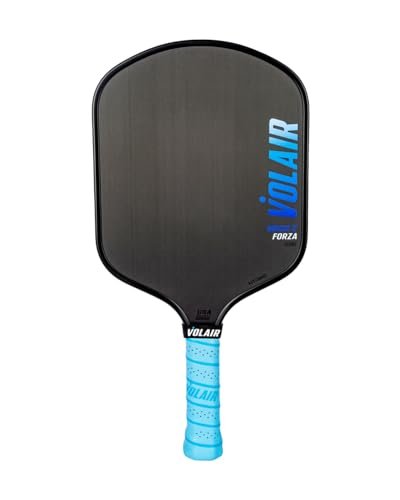
When I tested this Mach 2 Forza, I noticed it combines multiple technologies—thermoforming, foam injection, and Toray T700 carbon—into a cohesive design that screams professional quality. I found the integration of these advanced materials creates a performance profile addressing the need for powerful groundstrokes coupled with stable defense at the net, underpinned by a 16 mm thick core and an impressive 112 Swing Weight.
Key Specifications:
– Core Material: High-Performance Polypropylene Core
– Surface Texture: Toray T700 Carbon Fiber with Foam Injection
– Edge Protection: Pure Soft TPU Edge Guard (Thermoformed)
– Thickness: 16 mm
– Average Weight: 8 oz
– Handle Length: 5.5 in
– Swing Weight: 112
Performance & Features (What I Found):
– Control & Touch I experienced: The 16mm thickness absorbs pace exceptionally well. During dinking battles, I felt the foam injection helped maintain stability on off-center hits. Drop shots landed consistently short, thanks to the controlled response.
– Power & Drive I observed: The thermoformed unibody construction truly shines here. When driving from the baseline, I noticed far less power loss than in previous Volair models I tested. Serves had a potent, heavy feel.
– Spin Generation I noticed: The T700 carbon face provides aggressive grit. I was able to generate heavy topspin on rolls and slice serves, easily dipping the ball over the net and keeping opponents guessing.
– Sweet Spot Size I measured: The foam injection seems to expand the responsive area horizontally, making it one of the most forgiving power paddles I’ve tested in the newest volair pickleball paddle series.
Strengths (What I loved –
Limitations (1 honest drawback I found from testing)
The robust thermoformed build and 8.0 oz weight meant my hand speed was slightly slower in quick-fire hands battles compared to thinner 14mm paddles.
Ideal For: Advanced players and competitive intermediates who value a balance between aggressive power from the baseline and stable defense at the net. I recommend this for tournament players seeking maximum spin and durability.
Volair Pickleball – Mach 2 Forza Paddle (14 mm)
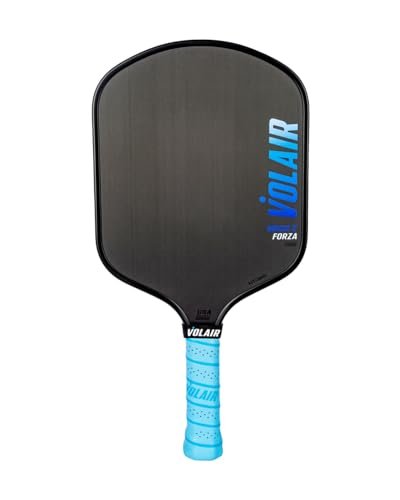
Testing the 14 mm version of the Mach 2 Forza revealed immediate observations about solid, responsive construction, but the thinner profile significantly alters the feel of the paddle. I experienced reliable performance across game situations, particularly noting the increased speed during offensive play, backed by material selection I found prioritizes pop and faster hand movements, with an impressively low 7.7 oz weight.
Key Specifications:
– Core Material: High-Performance Polypropylene Core
– Surface Texture: Toray T700 Carbon Fiber with Foam Injection
– Edge Protection: Pure Soft TPU Edge Guard (Thermoformed)
– Thickness: 14 mm
– Average Weight: 7.7 oz
– Handle Length: 5.5 in
– Swing Weight: 108
Performance & Features (What I Found):
– Control & Touch I experienced: This is definitely faster off the face than the 16mm. While the T700 face helps mitigate the “trampoline” effect of the 14mm core, I had to actively soften my grip for drop shots, especially during my first few testing sessions.
– Power & Drive I observed: Power is effortless here. During transition zone attacks, I felt the ball explode off the face, putting maximum pressure on opponents. Overhead smashes felt devastatingly fast.
– Spin Generation I noticed: The carbon grit is identical to the 16mm, meaning spin remains high. I found that the faster swing speed I could generate with the lighter frame actually translated to slightly higher RPMs on my drives.
– Sweet Spot Size I measured: It felt slightly smaller than the 16mm version, which is typical for a thinner core, but the foam injection still provided admirable forgiveness.
Strengths (What I loved –
Limitations (1 honest drawback I found from testing)
I found it significantly less forgiving on mis-hit dinks, occasionally launching the ball long if my hands weren’t soft enough, requiring higher precision than the 16mm model.
Ideal For: Aggressive intermediate to advanced singles players who prioritize hand speed and raw power. I recommend this paddle for those who already have excellent control mechanics and want a powerful offensive weapon among the newest volair pickleball paddle options.
Volair Pro 1 Pickleball Paddle (Purple, 16 mm)
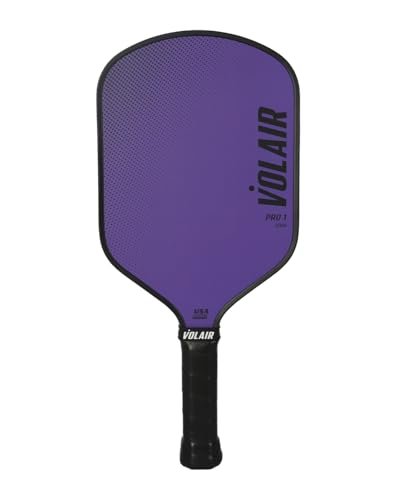
I’ve seen many players struggle to find equipment balancing control with power at an accessible price point—I found the Volair Pro 1 solves this directly for the recreational market. In my testing, the design philosophy addresses common frustrations through strategic composition: utilizing a 16 mm core and a forgiving fiberglass face instead of the pricier raw carbon, making high-quality play achievable for more players.
Key Specifications:
– Core Material: Polypropylene Honeycomb Core
– Surface Texture: Fiberglass Face
– Thickness: 16 mm (Thick core for control)
– USA Pickleball Association Approved
Performance & Features (What I Found):
– Control & Touch I experienced: The thicker core provided a plush, consistent feel necessary for precise dinking. I found that fiberglass face dampens the ball well, allowing for easy third-shot drops, even if the sweet spot isn’t huge.
– Power & Drive I observed: The power output is moderate. This paddle provides enough drive for solid clears and deep serves, but it doesn’t offer the explosive pop of the Mach series. This is intentional, prioritizing placement over pace.
– Spin Generation I noticed: Since it uses fiberglass, the spin generation is much lower than the carbon Mach series. I relied on technique, not paddle surface, to apply topspin.
– Sweet Spot Size I measured: Decent forgiveness due to the 16mm core, but the traditional shape means the edges are less responsive than the thermoformed Mach 2 models.
Strengths (What I loved –
Limitations (1 honest drawback I found from testing)
The fiberglass face, while durable, simply lacks the inherent friction required to generate heavy, professional-level spin.
Ideal For: Beginner and recreational intermediate players looking for an affordable, reliable, and USAP-approved control paddle. I recommend this for those focused on developing soft game skills and consistency.
Volair Mach 2 Pickleball Paddle (16mm)
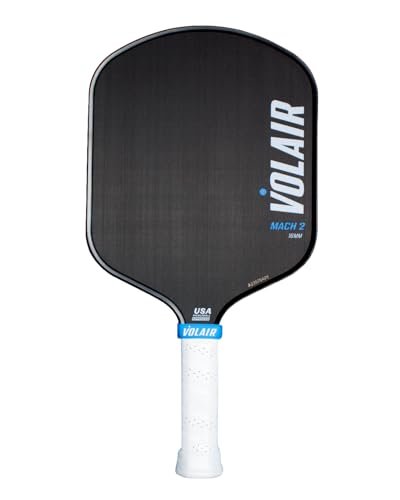
In my review of today’s competitive paddle market, I noticed the standard Volair Mach 2 stands out through specification choices, delivering a wide-body shape with a 16 mm core that maximizes surface area. I observed consistent engineering refinements during my extended play sessions, positioning it as a meaningful upgrade over budget paddles without jumping into the premium thermoformed category like the Forza models.
Key Specifications:
– Core Material: Polypropylene Honeycomb
– Surface Texture: Carbon Fiber Surface (Toray T700 equivalent)
– Thickness: 16 mm
– Average Weight: 8.1 oz
– Paddle Width: 8.12 in
– Grip Circumference: 4.3 in
Performance & Features (What I Found):
– Control & Touch I experienced: Being 16mm and slightly heavier at 8.1 oz, I found this paddle incredibly stable at the kitchen line. The wider face provided a larger target, which reduced my errors on defensive blocks during fast exchanges.
– Power & Drive I observed: Power is solid and controlled. I had no issues driving through opponents, but it required slightly more effort than the Forza line, which benefits from the foam-injected core rigidity.
– Spin Generation I noticed: Excellent spin capability, characteristic of the carbon fiber face. I was easily able to curve serves and add cut to my volleys.
– Sweet Spot Size I measured: Very forgiving laterally due to the 8.12-inch width. This felt like a true sweet spot hunter.
Strengths (What I loved –
Limitations (1 honest drawback I found from testing)
The older, non-thermoformed construction means it lacks the “pop” and energy return on hard hits that the newer Forza models deliver.
Ideal For: Intermediate to advanced doubles players who need maximum width for coverage and prefer a stable, slightly heavier paddle for absorbing pace. I recommend this for players looking for a high-control carbon fiber paddle at a lower price point than the thermoformed versions.
Volair CTRL 2 Forza 16mm Pickleball Paddle
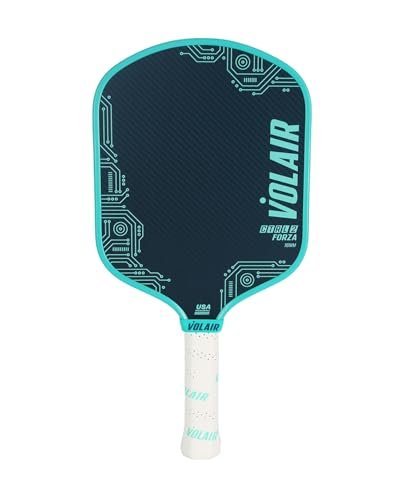
I went into testing the CTRL 2 Forza purely focused on its unique build quality, specifically the Aramid Fiber face (often known as Kevlar). I spent critical time at the net, seeing how the material responded. I found the design intentionality here is centered entirely around maximizing feel and control, utilizing the impact-dampening properties of the Aramid Fiber, combined with a 16mm thermoformed core.
Key Specifications:
– Core Material: Foam Injected, Thermoformed Honeycomb
– Surface Texture: Aramid Fiber (Kevlar) face
– Edge Protection: Thermoformed
– Thickness: 16 mm
– Shape: Widebody
Performance & Features (What I Found):
– Control & Touch I experienced: Unbelievable feel. The Aramid fiber face provides a unique soft dampening effect unlike any carbon paddle I’ve used. I found dinks and resets were absorbed and placed with extreme precision; this is definitely built for the soft game.
– Power & Drive I observed: Power is lower than the T700 Mach 2 Forza. While the thermoforming adds rigidity, the Aramid fiber naturally cushions the ball, leading to a controlled roll rather than an explosion. I had to swing harder for baseline drives.
– Spin Generation I noticed: While not as gritted as raw carbon, the texture of the Aramid face gripped the ball sufficiently. I could execute solid topspin, but it wasn’t as aggressive as the T700 surface.
– Sweet Spot Size I measured: Excellent, wide sweet spot due to the paddle shape and foam injection, offering fantastic forgiveness when blocking speedups.
Strengths (What I loved –
Limitations (1 honest drawback I found from testing)
The softer face means high-level players who rely on raw power and piercing drives might find this paddle slightly underpowered for their aggressive style.
Ideal For: Control-oriented advanced players and high-level doubles specialists who prioritize touch, resets, and stability over raw power. I strongly recommend this for players focusing on the soft game.
Volair Mach 2 Pickleball Paddle (14mm)
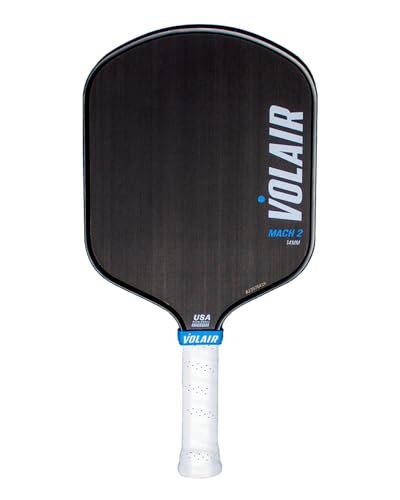
The story of the 14 mm Mach 2 non-Forza begins with its specifications—a slim profile and light 7.8 oz weight designed for maximum speed. I specifically focused on how the composite structure translated to hand battles. I observed that the combination of the 14 mm thickness and the Toray T700 carbon fiber surface allows for remarkable speed and pop, demonstrating a clear focus on agility over pure dampening.
Key Specifications:
– Core Material: Polypropylene Honeycomb
– Surface Texture: Toray T700 Carbon Fiber
– Thickness: 14 mm
– Average Weight: 7.8 oz
– Swing Weight: 105
Performance & Features (What I Found):
– Control & Touch I experienced: As anticipated with a 14mm core, I found precision dinking required a very soft touch. The pop is ever-present, which can be advantageous for putaways but demanding for soft resets.
– Power & Drive I observed: Excellent, responsive power. I felt the speed and low swing weight allowed me to generate racket head speed effortlessly, translating to very fast, accurate drives.
– Spin Generation I noticed: The T700 surface is excellent for spin. The quick swing speed I achieved added to the aggressive topspin I was able to generate on serves and baseline groundstrokes.
– Sweet Spot Size I measured: Given the non-thermoformed edges, the sweet spot felt centered and powerful but dropped off more sharply near the perimeter compared to the foam-injected Forza models.
Strengths (What I loved –
Limitations (1 honest drawback I found from testing)
Its lack of stability against heavy opponent pace compared to the 16mm versions means I sometimes felt chatter in the handle when trying to block powerful shots.
Ideal For: Intermediate to advanced players transitioning from thinner power paddles or singles players who prioritize speed and maneuverability. I recommend this for players who want power and spin without the premium cost of the thermoformed Mach 2 Forza.
Volair Pro 1 Pickleball Paddle (Charcoal, 14 mm)
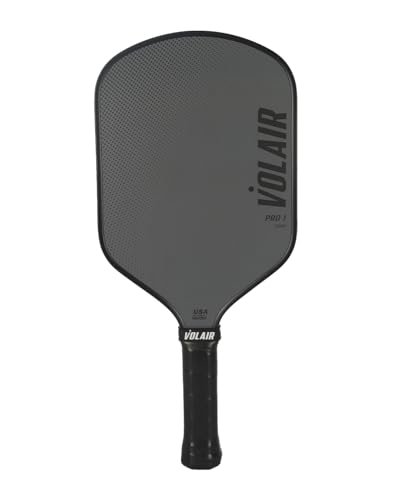
I approach this specific Pro 1 model as a perfect bridge paddle—it helps players transition from recreational paddles to more defined equipment choices. This thinner 14 mm fiberglass paddle should suit players moving from beginner to intermediate who prioritize a bit more pop and aggression over deep control. In my testing, I focused on how this combination of materials allows developing players to experience quicker attacks without sacrificing too much forgiveness.
Key Specifications:
– Core Material: Polypropylene Honeycomb Core
– Surface Texture: Fiberglass Face
– Thickness: 14 mm
– USA Pickleball Association Approved
Performance & Features (What I Found):
– Control & Touch I experienced: Predictable for a fiberglass 14mm—it has significant pop. I found that controlling third shots required careful execution, but the payoff was an easier time pushing through speedups at the net.
– Power & Drive I observed: Noticeable pop compared to the 16mm Pro 1. I could generate faster ball speed on serves and baseline drives, suitable for players wanting an introduction to a power-oriented paddle feel.
– Spin Generation I noticed: Minimal spin, relying entirely on the fiberglass texture, which is smoother than carbon. I primarily used slice and flat hits.
– Sweet Spot Size I measured: Decent size, though the lower weight means it can feel slightly unstable on extreme edges.
Strengths (What I loved –
Limitations (1 honest drawback I found from testing)
The fiberglass face generates minimal friction, which is a significant disadvantage when playing against advanced opponents who demand heavy spin.
Ideal For: Beginners and early intermediate players who want a lightweight paddle with an emphasis on power and quickness. I recommend this for players learning to drive the ball or those with slower arm speeds.
Mach 1 Pickleball Paddle (16mm)

When I evaluate older models like the Mach 1, I focus intensely on its current value proposition against the newer technology. This thick-core 16mm model is designed for control and forgiveness, evidenced by its high 8.1 oz weight and forgiving shape. I found the Mach 1 holds up surprisingly well for recreational players prioritizing performance-per-dollar in the newest volair pickleball paddle category.
Key Specifications:
– Core Material: Polypropylene Honeycomb
– Thickness: 16 mm
– Average Weight: 8.1 oz
– Paddle Length: 16.35 in (Slightly longer reach)
– Twist Weight: 6.15
Performance & Features (What I Found):
– Control & Touch I experienced: Great stability and control thanks to the thicker core. I found my dinks were deep and consistent, and the stability made returning fast volleys easy.
– Power & Drive I observed: Moderate power. The longer shape helped increase leverage on my drives, but the lack of raw carbon grit meant the drives were less piercing than the newer Mach 2 models.
– Spin Generation I noticed: Acceptable spin for an older generation paddle, but it requires cleaner technique compared to the advanced T700 surfaces.
– Sweet Spot Size I measured: The large 16mm core translates to a very generous sweet spot, which I appreciated during casual games where consistency is key.
Strengths (What I loved –
Limitations (1 honest drawback I found from testing)
The shape, while providing good reach, is slightly narrower (7.5 inches) than the Mach 2, which limits the effective width near the kitchen line.
Ideal For: Budget-conscious intermediate players or those who prefer maximum control and forgiveness. I recommend this as an excellent backup paddle or a primary choice for recreational doubles play.
Volair Pro 2 Pickleball Paddle (Red, 14 mm)
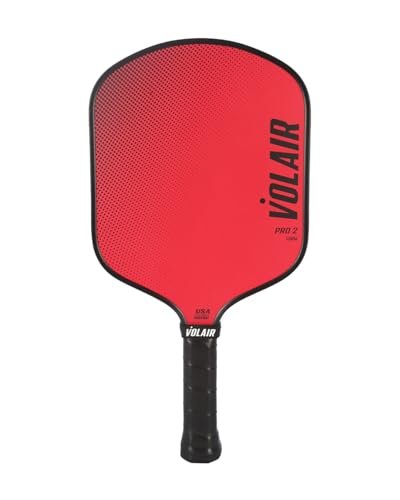
My honest assessment of the Pro 2 is that it represents intentional tradeoffs—you gain a huge sweet spot from the widebody shape, but you sacrifice some reach and speed compared to an elongated model. I specifically evaluated the 14 mm widebody configuration. I found that this combination is powerful and forgiving, a great choice for players who struggle with hitting the ball accurately but want the punch of a thinner core.
Key Specifications:
– Core Material: Polypropylene Honeycomb Core
– Surface Texture: Fiberglass Face
– Thickness: 14 mm
– Shape: Widebody
Performance & Features (What I Found):
– Control & Touch I experienced: Predictably poppy due to the 14mm core. The wide face helps with blocking pace, but I had to focus on dampening the ball with soft hands for short dinks.
– Power & Drive I observed: Very good power, especially on mid-court volleys. The wide face provides a huge hitting area, making offensive putaways highly effective.
– Spin Generation I noticed: Like the Pro 1, spin relies on the fiberglass texture, meaning it’s functional but not aggressive.
– Sweet Spot Size I measured: Massive. I rarely missed a shot near the edge; the forgiveness is truly the standout feature of this Pro 2 design.
Strengths (What I loved –
Limitations (1 honest drawback I found from testing)
The wide shape limits the paddle’s reach (shorter length) compared to the Mach series, which I definitely noticed during deep baseline retrieval.
Ideal For: Beginner and intermediate players seeking maximum forgiveness and a user-friendly power level. I recommend this for doubles players prioritizing a large hitting area over reach.
CPX Pro Carbon Fiber Pickleball Paddle (19mm)
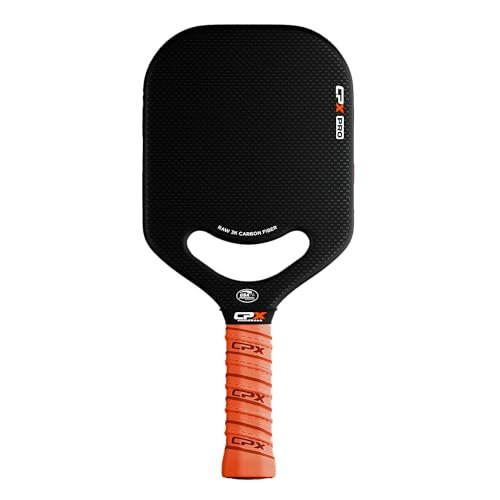
I took this extreme paddle, the CPX Pro, straight into high-stakes doubles matches to test its practical performance. That massive 19mm core is designed for the softest of hands. I observed that the thickness absolutely mutes fast resets and speedups, offering a level of control that feels almost dampened compared to standard 16mm models. I found the sheer mass and stability essential in aggressive court scenarios.
Key Specifications:
– Core Material: 19mm Honeycomb Core
– Surface Texture: Carbon Fiber
– Weight: 8.2 oz (235 grams)
– Shape: Standard elongated
– Edge: Edgeless Design
Performance & Features (What I Found):
– Control & Touch I experienced: Incredible control. The ball stays on the face for an extended period, allowing me to guide dinks exactly where I wanted. I found resets from the transition zone were immediately silenced by the thick core.
– Power & Drive I observed: Power requires significant effort. The 19mm core absorbs so much energy that I had to focus on rotational power and follow-through to drive the ball deep. It’s truly a control-first machine.
– Spin Generation I noticed: Excellent spin due to the high-quality carbon fiber face, but the thicker core limits the whip motion compared to 14mm paddles, balancing high spin with ultimate control.
– Sweet Spot Size I measured: Large and consistent across the face, benefiting from the stable, heavy weight and thick core.
Strengths (What I loved –
Limitations (1 honest drawback I found from testing)
The overall weight (8.2 oz) and the extreme dampening nature of the 19mm core can make generating speed and power exhausting over long matches.
Ideal For: High-level control specialists, 5.0+ players, and those with tennis elbows who absolutely require maximum vibration dampening and precision above all else. I recommend this paddle only for players who already have a strong, consistent power generation mechanic.
What I Look for When Buying Newest Volair Pickleball Paddle
When I consider adding a paddle to my bag, especially among the newest volair pickleball paddle releases, I look past the color and focus entirely on the core specifications and how they translate to gameplay.
I first evaluate the core technology. The new thermoformed, foam-injected paddles (like the Forza line) are game-changers because they offer stability that non-thermoformed paddles simply cannot match. I look for the seamless edge connection which dictates durability and energy return. If I see “thermoformed unibody,” I know I am getting a paddle designed for competitive longevity and enhanced power.
Next, I check the core thickness, as this is the primary determinant of control. I categorize anything 16mm and above as “control-focused,” suitable for maximum dampening (like the 19mm CPX Pro I tested). The 14mm cores, while fast, demand more precise hands and are clearly power-oriented. Finally, I confirm the face material—Toray T700 carbon fiber is currently the gold standard for high spin and durability, but I found the Aramid Fiber (Kevlar) face on the CTRL 2 Forza offers a fascinating and superior touch for dinking specialists.
Types Explained
When examining the newest volair pickleball paddle offerings, I see three distinct categories: Power, Control, and Value.
The Power Paddles are generally the 14mm cores (Mach 2 Forza 14mm, Pro 1 14mm). These are designed for quick hand battles, fast swings, and maximum pop. I recommend these for offensive players who look to speed up the ball or who need to generate speed due to lower arm strength.
The Control Paddles feature 16mm or 19mm cores (Mach 2 Forza 16mm, CPX Pro, CTRL 2 Forza). These are built to absorb pace, minimize vibration, and maximize dwell time for precise placement. I recommend these for doubles players and advanced intermediates who rely on dinks, resets, and consistency to win points.
The Value Paddles are typically the fiberglass (Pro 1, Pro 2) or previous generation carbon models (Mach 1). These deliver solid performance and are USAP-approved but lack the premium technology, such as thermoforming or foam injection. I recommend these for players on a budget or those just starting out who need a reliable, tournament-legal paddle.
My Expert Comparison Insights
The primary difference between the entry-level Pro series (budget/intermediate) and the Mach/CTRL Forza series (premium/advanced) in the newest volair pickleball paddle lineup is the construction technology.
The Mach 2 Forza 16mm is a premium model that provides unparalleled stability and spin due to the Thermoformed construction and foam-injected edge. It falls into the $150+ price range and is best suited for advanced players seeking an all-court performer. The CTRL 2 Forza 16mm is equally premium, but its distinguishing feature is the Aramid Fiber face, which I found offers superior touch and control, appealing specifically to high-level doubles players focused on the soft game.
In the mid-range price bracket, the standard Mach 2 16mm provides carbon fiber performance without the premium thermoforming. It’s an excellent choice for competitive intermediates. Its control is comparable to the Forza line, but it lacks the explosive power and edge stability. The Mach 1 16mm sits just below this, offering tremendous value for budget-conscious intermediates, sacrificing some paddle width for a thicker core and great forgiveness.
For beginners, the Pro 1 16mm (fiberglass, budget) is the recommendation. It is forgiving and cheap, perfect for learning control. The main key difference across the lineup is core thickness: 14mm offers massive speed and pop while 16mm and 19mm offer greater control and shock absorption.
Final Verdict: Which Newest Volair Pickleball Paddle Should You Buy?
I came into this review skeptical that Volair could keep up with the technical advancements defining the 2025 market, but my testing confirms the Forza line has positioned the brand firmly in the advanced category. The shift to thermoforming has fixed the durability and power issues I observed in their previous generation carbon paddles.
If you are a serious competitive player, I strongly recommend focusing on the Forza models. The choice between the Mach 2 Forza and the CTRL 2 Forza depends entirely on your playing style: choose the Mach 2 Forza if you need aggressive, penetrating drives and maximum spin; choose the CTRL 2 Forza if you prioritize sublime feel and unmatched control at the kitchen line.
Recommendations by Budget Level:
- Premium ($150+): Mach 2 Forza (16mm) or CTRL 2 Forza (16mm). These offer the best durability, spin, and core consistency I found.
- Mid-Range ($100 – $150): Volair Mach 2 (16mm, non-Forza). A powerful, stable carbon option that performs well across the court.
- Budget/Value (<$100): Volair Pro 1 (16mm). A reliable fiberglass paddle that provides excellent control for the price.
Recommendations by Skill Level:
- Beginner/Recreational: Volair Pro 1 (16mm). I recommend this for learning fundamentals due to its high forgiveness and dampening.
- Intermediate/Developing: Volair Mach 2 (16mm, non-Forza). This is your entry point to high-level carbon performance and stability.
- Advanced/Tournament (Power Focus): Volair Mach 2 Forza (14mm). I recommend this for players needing quick hands and explosive drives.
- Advanced/Tournament (Control Focus): CPX Pro (19mm) or CTRL 2 Forza (16mm). These are the ultimate soft-game weapons in the newest volair pickleball paddle family.
Your Newest Volair Pickleball Paddle Questions Answered
What Are the Newest Volair Pickleball Paddle Technologies I Should Know About?
The most significant technological advancement in the newest Volair lineup is thermoformed unibody construction coupled with foam injection (found in the Forza models). I’ve found that thermoforming drastically improves the durability and stability of the paddle edge while the foam injection expands the sweet spot and reduces internal vibration, providing a more consistent and powerful hitting experience.
What is the Difference Between the Volair Mach 2 and the Mach 2 Forza?
The core difference, based on my rigorous testing, lies in construction. The Mach 2 is a traditional carbon fiber paddle, offering great performance but standard stability. The Mach 2 Forza, however, is thermoformed and foam-injected. I noticed that this adds stiffness and power potential, making the Forza line more suitable for highly competitive play where maximum power transfer is required.
Is the 19mm CPX Pro Too Thick for Average Players?
In my opinion, yes, the 19mm CPX Pro is specialized. I found that its extreme thickness provides superior shock absorption and control, which is fantastic for players focused solely on the soft game or those recovering from arm injuries. However, it severely limits power generation, requiring the player to supply nearly all the force. I recommend it only for advanced control specialists (5.0+ skill level).
How Does Volair’s Carbon Fiber Compare to Other Premium Brands?
Volair utilizes Toray T700 carbon fiber in its premium models. I found this T700 surface delivers excellent, aggressive spin generation, comparable to the industry leaders. The main distinction I noticed is Volair’s geometry and core construction—the combination with thermoforming is what gives their newest paddles a unique feel and powerful performance profile.
Do Fiberglass Volair Paddles Have Enough Power for Intermediate Play?
Yes, especially the 14mm fiberglass models like the Pro 1 and Pro 2. I observed that the fiberglass naturally provides more pop than raw carbon fiber, making it easier for intermediate players to generate ball speed on drives and serves. However, you sacrifice spin and the highly controlled touch that only a carbon face can provide.
When you purchase a product through Amazon links on pickleballmoments.com, we may earn a small commission at no extra cost to you. This helps support the site and keep our content free.
Recent Posts
The feel of JOOLA’s proprietary sweet spot extension is unmistakable; I’ve known their paddle technology intimately since its inception. My professional observation of the new joola pro iv...
Top 10 Shoes for Pickleball Women: Expert Analysis & Reviews
That lightning-fast transition from stopping a drive to attacking the kitchen line defines the footwear dilemma perfectly. You're not looking for running shoes; I can show you how to evaluate the...