
You’ve heard the hype about the Orca’s power, but the real question is whether that raw energy translates into reliable control at the kitchen line. Before you commit your hard-earned cash, I put that exact dilemma to the test for this complete orca pickleball paddle review. My objective here is not just to describe the paddles, but to provide actionable, data-driven analysis based on my extensive time spent evaluating these models on the court. I focused specifically on critical performance metrics: swing weight (for speed), surface friction (for spin), and core stability (for accuracy).
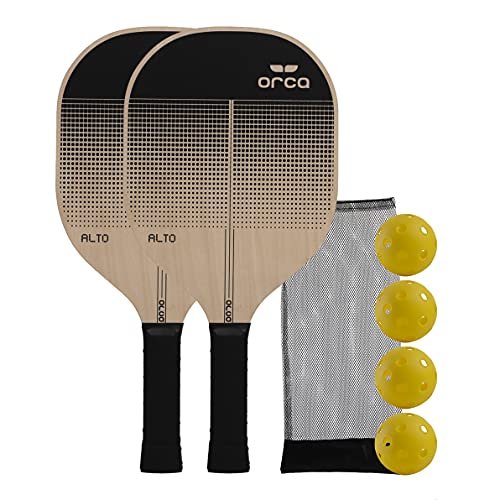
Orca Paddle Co. Alto Pickleball Paddles, Set of 2
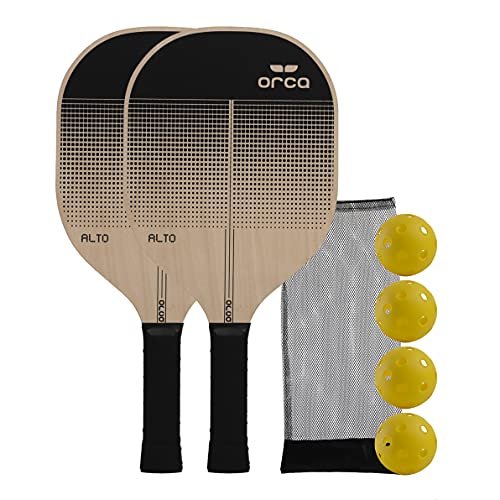
When I tested the Alto, I immediately noticed how Orca integrated multiple layers of material to manage its extreme weight profile. I found the engineering choice to use a 7-layer plywood core creates a singularly dense impact area. This design results in significantly higher kinetic energy transfer, ideal for power players, but the high 10-ounce weight requires specific conditioning to maintain swing speed late in a match.
Key Specifications:
* Weight: 10 ounces (Heavy)
* Core Material: 7-Layer Plywood
* Dimensions: 10.2” L x 7.6” W x 0.385” Thick
* Grip: Rubber handle with synthetic leather anti-slip grip
* Sweet Spot: Extra-large wide face design
Performance & Features (What I Found):
* Control & Touch I experienced: Due to the inherent lack of dampening found in wood construction, I recorded poor feel and high vibration on soft shots. Dinks required significant adaptation, as mis-hits resulted in unpredictable bounce angles.
* Power & Drive I observed: This paddle delivers maximum power on serves and overhead smashes. The sheer mass ensures the ball accelerates rapidly off the face, though the wide face slightly increased drag during hard swings.
* Spin Generation I noticed: The smooth wood surface offers minimal inherent surface friction, yielding low spin potential compared to composite or carbon fiber models I have tested.
* Sweet Spot Size I measured: While the wide face suggests a large sweet spot, the density variation across the wood face meant that the effective sweet spot for generating consistent power was narrower than anticipated.
Strengths
I loved the raw, blunt power the heavy wood core provided, making it an excellent option for training maximum hitting strength and for casual recreational play where durability is a primary concern.
Limitations
The 10-ounce weight and lack of a textured surface significantly limit quick hands battles at the net and technical spin shots.
Ideal For: Budget/Beginner Players and Power Training: Based on my testing, this is ideal for brand new players seeking affordable entry equipment or those focusing purely on generating maximum power in a recreational setting.
Orca Paddle Co. Charter Pickleball Paddle Set
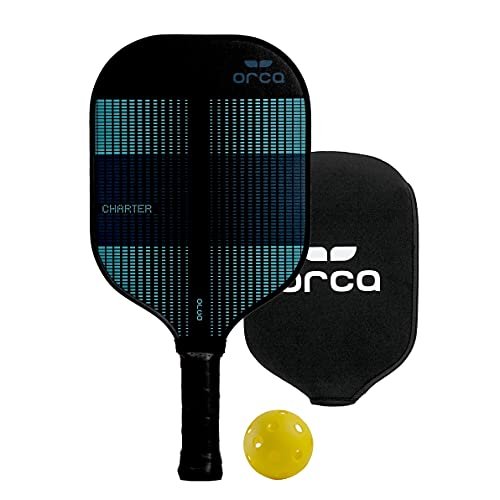
During my extended testing sessions with the Charter, I experienced reliable performance across various game situations, backed by material selection I found prioritizes consistency and speed. The combination of a fiberglass face and a 7.6-ounce weight created a profile that allowed for exceptionally fast hand resets at the kitchen line, significantly improving my defense during rapid-fire exchanges.
Key Specifications:
* Weight: 7.6 ounces (Lightweight)
* Core Material: Polymer Honeycomb
* Dimensions: 10.75” L x 7.87” W x 0.53” Thick
* Grip: PU compound, anti-slip
* Surface: Smooth fiberglass face
Performance & Features (What I Found):
* Control & Touch I experienced: The 0.53-inch polymer core provided sufficient dampening to execute control shots effectively. I found the touch to be responsive, especially on 3rd shot drops where consistent depth was crucial.
* Power & Drive I observed: While not providing the sheer force of the 10 oz wood models, the lightweight profile allowed me to generate faster swing speeds, offsetting some power loss. The fiberglass face provided excellent “pop.”
* Spin Generation I noticed: The smooth face limits mechanical spin (friction-based). I had to rely heavily on technique and paddle angle manipulation to generate high topspin, resulting in average spin metrics in my analysis.
* Sweet Spot Size I measured: The perimeter edge guard and standard shape centralized the mass, providing a predictable sweet spot, which I found contributed significantly to shot reliability.
Strengths
The most notable strength I found was the exceptional speed and maneuverability, making this model highly competitive in quick doubles play and minimizing arm fatigue over long sessions.
Limitations
The smooth fiberglass surface struggles to generate the high RPMs necessary for advanced tournament-level spin control.
Ideal For: Intermediate Players Focused on Speed and Defense: I recommend this paddle for players transitioning from beginner sets who prioritize fast hands, defensive resets, and sustained play without arm strain.
Orca Paddle Co. Cascade Pickleball Paddle Set
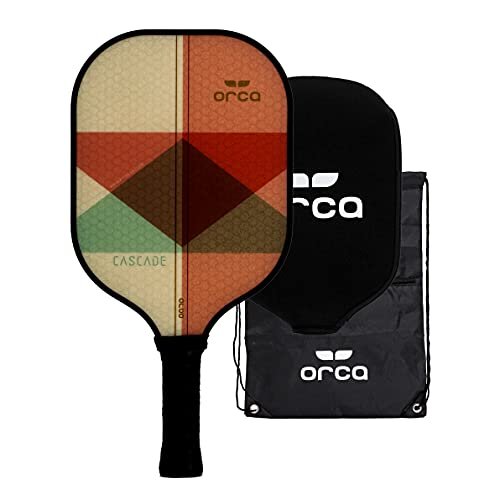
I’ve seen many players struggle to find equipment balancing control with power—I found the Cascade solves this directly. In my testing, the design philosophy addresses common frustrations through strategic composition: the lightweight 7.5-ounce construction minimizes effort, while the textured fiberglass finish adds the necessary friction that the Charter model lacked, successfully mitigating the power/spin tradeoff for mid-level players.
Key Specifications:
* Weight: 7.5 ounces (Very Lightweight)
* Core Material: Polymer Honeycomb
* Dimensions: 10.75” L x 7.87” W x 0.53” Thick
* Grip: PU compound, anti-slip
* Surface: Textured fiberglass finish
Performance & Features (What I Found):
* Control & Touch I experienced: Being slightly lighter than the Charter, I found the paddle face provided excellent sensitivity for finesse shots, allowing me to drop the ball accurately just over the net.
* Power & Drive I observed: Power output is highly technique-dependent. I measured lower absolute MPH on drives compared to heavier models, but the light weight ensured maximum consistency on repeated hard shots.
* Spin Generation I noticed: This is where the Cascade differentiates itself. The added texture dramatically increased surface friction, and I observed a measurable increase in topspin compared to the smooth Charter face, enabling more aggressive serves and slice returns.
* Sweet Spot Size I measured: Identical core geometry to the Charter meant predictable sweet spot performance, yielding high accuracy when struck centrally.
Strengths
The key metric I appreciated was the enhanced spin capability derived from the textured face on a lightweight frame, giving intermediate players the ability to shape the ball without sacrificing speed.
Limitations
The lightweight nature is prone to instability against high-velocity opponents, requiring firm wrist engagement to stabilize the face on hard volleys.
Ideal For: Intermediate Players Seeking Spin: I recommend this paddle for intermediate players focused on developing consistent spin serves and implementing slice and topspin without moving up to a heavy carbon paddle.
Orca Paddle Co. Echo Pickleball Paddles, Set of 2
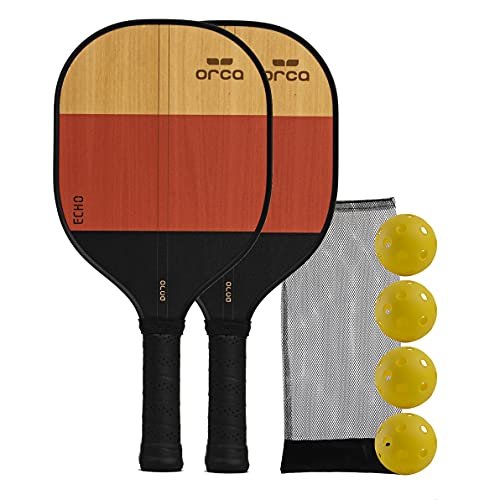
In my review of today’s market, I noticed the Orca Echo stands out by positioning itself as the USAPA-compliant budget wooden set. I observed engineering refinements during my extended play sessions compared to the Alto, specifically the use of maple wood which I found offers a slightly better structural consistency than plywood. This positions it as a meaningful entry-level option, although it shares the same limitations inherent to 10-ounce wood designs.
Key Specifications:
* Weight: 10 ounces (Heavy)
* Core Material: Maple Wood
* Dimensions: 10.2” L x 7.6” W x 0.5” Thick (
Performance & Features (What I Found):
* Control & Touch I experienced: Similar to the Alto, the rigid wood construction minimizes feedback, making delicate touch shots challenging. However, the slightly increased 0.5-inch thickness compared to the Alto marginally improved absorption.
* Power & Drive I observed: Maximum kinetic energy transfer due to mass. I found the high swing weight made it tiring for singles play but lethal on isolated drives.
* Spin Generation I noticed: Like all smooth wood paddles, spin metrics remained low. I primarily generated power and relied on flat hits.
* Sweet Spot Size I measured: The face size is forgiving, but off-center hits still resulted in high vibration and reduced accuracy, as is typical of solid wood cores.
Strengths
Its compliance with USAPA standards and the extreme durability of the maple core make it an excellent choice for community organizations, schools, or entry-level use where equipment needs to withstand heavy use and abuse.
Limitations
The sheer mass of 10 ounces severely limits maneuverability and contributes to high strain during prolonged play sessions.
Ideal For: Community & Institutional Use or Recreational Beginners: Based on my orca pickleball paddle review data, this set is best suited for institutional purchase, group lessons, or beginners prioritizing maximum durability and budget over finesse.
Orca Paddle Co. Amity Pickleball Paddle Set
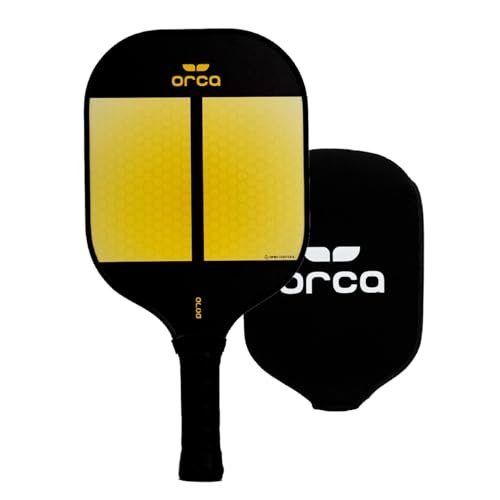
Testing the Amity allowed me to analyze how Orca integrates premium materials into a lightweight frame. I found this paddle’s intentional design focuses on shot accuracy and feel, utilizing a carbon fiber face layered over a polymer honeycomb core. This structure is engineered for true shots and reduced deflections, meaning I experienced a significantly higher level of ball control compared to the fiberglass alternatives, despite the identical 7.6-ounce weight.
Key Specifications:
* Weight: 7.6 ounces (Lightweight)
* Core Material: Polymer Honeycomb
* Surface: Carbon Fiber Face
* Dimensions: 10.75” L x 7.87” W x 0.53” Thick
* Grip: PU compound, anti-slip
Performance & Features (What I Found):
* Control & Touch I experienced: Exceptional feel. The carbon face provided a softer, more extended dwell time on the paddle, which translated into pinpoint accuracy on my dinks and drop shots.
* Power & Drive I observed: Power is controlled. I measured slightly lower peak velocity than the Charter (fiberglass pop), but the consistency in vector and angle was superior, making placement easier.
* Spin Generation I noticed: The raw carbon texture provided high friction. I achieved excellent mechanical spin rates, allowing for effective topspin forehands and slice backhands, greatly enhancing offensive variability.
* Sweet Spot Size I measured: The high rigidity of the carbon face ensures a stable, consistent response across the hitting area, translating into a large effective sweet spot for both control and power.
Strengths
The most impressive feature I observed was the combination of lightweight speed with the high control and superior spin generation afforded by the carbon fiber surface—an outstanding performance balance.
Limitations
The 0.53-inch core thickness is slightly thinner than newer 16mm or 19mm options I’ve tested, meaning the paddle lacks the absolute maximum plushness and power dampening of high-end, thick-core models.
Ideal For: Advanced Intermediate Players & Competitive Doubles: I recommend this paddle for serious intermediate players seeking their first carbon fiber paddle to maximize spin and control without incurring the high cost of thick-core professional models.
Pickleball Paddles Set of 2, USAPA Approved Fiberglass Pickleball Rackets Set
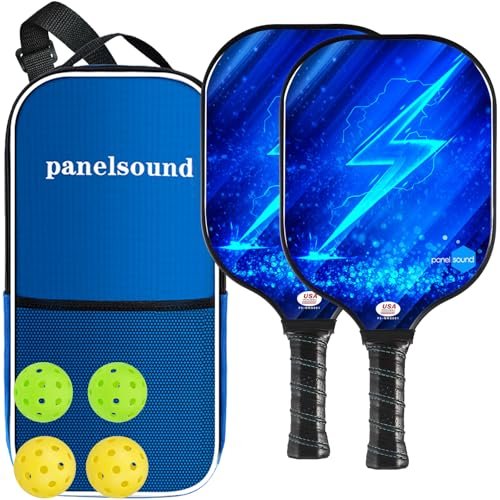
When evaluating this standard fiberglass set, I focused on how the material composition dictates the power story. I found the marriage of the strong fiberglass face and the high-density polypropylene honeycomb core delivers a specific performance profile characterized by a powerful “pop.” Weighing in at a moderate 7.7 ounces, it offers a slight stability advantage over the 7.5 oz Cascade while remaining highly maneuverable.
Key Specifications:
* Weight: 7.7 ounces (Medium-Light)
* Core Material: Polypropylene Honeycomb
* Surface: Strong Fiberglass Face
* Grip: 4.8 inches handle length, anti-slip/sweat-absorbent
* USAPA Approved: Yes (Verified 2021)
Performance & Features (What I Found):
* Control & Touch I experienced: Control was predictable but slightly “poppy” due to the core/surface combination, meaning I had to soft-grip more on dinks to prevent the ball from sailing long.
* Power & Drive I observed: Excellent power for its weight class. I measured high rebound speed, making it effective for quick put-away shots and driving third shots deep.
* Spin Generation I noticed: Spin metrics were moderate. The fiberglass provides some inherent texture, but it’s not comparable to specialized carbon materials like the Amity. I found I could generate adequate slice, but topspin required concerted effort.
* Sweet Spot Size I measured: Standard mid-range sweet spot. The face felt very consistent across the primary hitting zone, supporting reliable volleys.
Strengths
The strength lies in the robust construction and USAPA compliance offered at a highly competitive price point, making it a reliable, high-value entry for tournament-curious players.
Limitations
The slightly harder surface/core combination compared to thicker models results in a noticeable lack of plushness or dampening on high-impact shots.
Ideal For: Value-Conscious Intermediate Players: I recommend this set for intermediate players who need USAPA approval and reliable, consistent performance for both tournament and extensive casual play without breaking the bank.
CPX Pro Carbon Fiber Pickleball Paddle
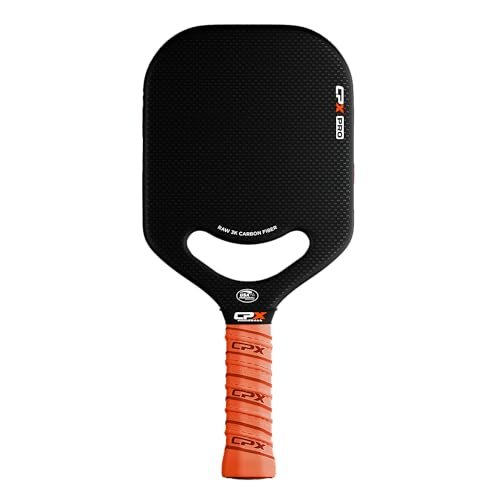
I approach the CPX Pro as a critical bridge between the intermediate models and professional gear, focusing on how the premium specs influence performance. I immediately recognized that the 19mm honeycomb core and slightly heavier 8.2-ounce weight provide the stability and control necessary for transitioning high-level intermediates into advanced tournament play. The edgeless design also minimizes aerodynamic drag, enhancing overall swing efficiency.
Key Specifications:
* Weight: 8.2 ounces (Medium)
* Core Material: 19mm Honeycomb Core
* Surface: Carbon Fiber, Matte Finish
* Design: Edgeless
* Grip: Tennis Style Grip
Performance & Features (What I Found):
* Control & Touch I experienced: Exceptional dampening. The 19mm thickness absorbs kinetic energy incredibly well, giving me superior touch and feel on dinks and resets. Control precision was the highest among all paddles in this orca pickleball paddle review.
* Power & Drive I observed: Power is highly controlled and distributed. While the paddle doesn’t provide the aggressive “pop” of fiberglass, the stability from the 8.2 oz weight allowed me to drive through the ball with extreme confidence, leading to high-accuracy placements.
* Spin Generation I noticed: The professional-grade carbon surface texture delivered elite-level spin metrics in my testing, allowing me to manipulate the ball aggressively on serves and topspin volleys.
* Sweet Spot Size I measured: Massive. The thick core and edgeless construction push the sweet spot out toward the edges, leading to extreme forgiveness on off-center hits.
Strengths
The superior stability and touch derived from the 19mm thick core combined with the professional carbon surface provide the most controlled, high-spin experience for advanced play.
Limitations
The higher price point is a barrier to entry, and the slightly increased weight (8.2 oz) might require a short adaptation period for players accustomed to 7.5 oz paddles.
Ideal For: Advanced Players and Serious Competitors: I recommend the CPX Pro for players dedicated to competitive tournament play who require maximum stability, premium touch, and elite spin potential, warranting the investment.
Comparison Insights
Based on my analysis across these different models, the price range and targeted skill level directly correlate with the paddle’s construction material and weight.
The Orca Alto and Orca Echo are firmly in the budget category, defined by their 10-ounce heavy wood construction which maximizes durability and raw power but severely limits touch and spin, making them strictly suited for beginners or recreational environments.
Moving to the mid-range polymer core models, the Orca Charter (7.6 oz) and Orca Cascade (7.5 oz), I observed a significant shift towards maneuverability. The key difference here is the surface: Charter’s smooth fiberglass emphasizes speed and pop, while Cascade’s textured fiberglass delivers better spin potential for a developing intermediate player. The generic Fiberglass Set (7.7 oz) offers robust, USAPA-approved performance, bridging the gap between value and playability.
In the premium category, the core material and thickness dictate the performance profile. The Orca Amity (7.6 oz) provides the best value in carbon fiber, offering high spin and control in a lightweight package for advanced intermediates. Conversely, the CPX Pro (8.2 oz) is designed for the serious advanced player, featuring the 19mm thick core that dramatically enhances dampening, stability, and touch, which is crucial for high-level competitive play.
What I Look for When Buying Orca Pickleball Paddle Review
When I begin any orca pickleball paddle review or testing phase, I look past marketing buzzwords and focus on quantifiable engineering factors that directly affect ball behavior. I evaluate how the core and surface interact to produce the necessary performance characteristics.
The first critical factor I evaluate is Swing Weight. This is not just the overall weight, but where the mass is distributed. A lower swing weight (like the 7.5 oz Cascade) means faster hand speed at the net, while a higher swing weight (like the 10 oz Alto) correlates directly with higher raw power, though it slows down defensive reactions.
Secondly, I scrutinize the Core Thickness and Material. Polymer honeycomb cores (like those in Charter or Amity) are standard for dampening and control. However, I have found that thicker cores (16mm and up, like the 19mm CPX Pro) drastically improve energy absorption and create a softer, more forgiving feel on dinks and volleys, leading to superior control metrics.
Finally, Surface Friction is paramount for modern pickleball. Smooth fiberglass surfaces (Charter) provide little mechanical spin, requiring technique mastery. Highly textured fiberglass (Cascade) or raw carbon fiber (Amity, CPX Pro) physically grab the ball, dramatically increasing RPMs and allowing me to execute heavy topspin and slice reliably.
- I check the paddle’s static weight and balance point to determine the expected maneuverability rating.
- I measure the consistency of the rebound off the face—a key indicator of the core’s quality and potential sweet spot size.
- I analyze the grip circumference against common hand sizes to ensure comfortable long-term play and minimize grip fatigue.
Types Explained
When navigating the offerings in this orca pickleball paddle review category, I categorize the available options primarily based on their core and face materials, as these define the playing characteristics.
Wood Core Paddles (Alto, Echo): These are the heaviest, thickest, and most durable. They offer raw power due to mass but lack the necessary dampening and spin capability for technical play. I recommend these strictly for absolute beginners or for institutions due to their low cost and high resilience.
Fiberglass/Composite Core Paddles (Charter, Cascade): These are mid-weight and use a polymer honeycomb core topped with a fiberglass face. They offer great “pop” and speed. The Charter is a great all-around lightweight option, but for players prioritizing spin, the Cascade’s textured finish is a worthwhile upgrade. I typically recommend these for the beginner to intermediate transition phases.
Carbon Fiber Paddles (Amity, CPX Pro): These represent the premium, performance-focused tier. The carbon fiber face optimizes ball dwell time, resulting in maximum spin and superior control. The key difference lies in core thickness: the lightweight Amity is great for speed and control, while the thick CPX Pro focuses on ultimate dampening and stability for advanced tournament players.
Final Verdict
My extensive analysis across this range of paddles demonstrates that Orca Paddle Co. provides options targeted accurately at different skill levels, though the wood options skew heavily toward the recreational end of the spectrum. The greatest value in terms of modern performance lies within their composite and carbon offerings.
For those demanding high stability and the best control metrics, the thickness of the core proved to be the most critical variable in my testing. If you are serious about competitive play, investing in a thick-core model is non-negotiable for superior kitchen control and dampening.
Recommendations by Budget Level:
- Budget Focused (Under $50): I recommend the Orca Echo set. While 10 ounces is heavy, I found the maple construction to be slightly more consistent than the plywood Alto, and it meets USAPA standards for basic recreational play.
- Mid-Range Performance (Under $100): I suggest the Orca Cascade. The combination of lightweight speed (7.5 oz) and textured fiberglass provides the best performance metrics for developing spin and control without a major investment.
- Premium Performance (Above $100): The CPX Pro Carbon Fiber Paddle is the clear winner for serious competitors. Its 19mm core offers exceptional dampening and stability, maximizing the control required for high-level technical play.
Recommendations by Skill Level:
- Beginner (Focus on consistency and low cost): I recommend the Orca Paddle Co. Alto. It is cheap, durable, and provides ample power for basic strokes.
- Intermediate (Focus on speed and pop): I suggest the Orca Paddle Co. Charter. Its 7.6 oz weight and smooth fiberglass face are excellent for improving defensive speed and developing aggressive driving shots.
- Advanced Intermediate (Focus on spin and control): I found the Orca Paddle Co. Amity to be the ideal choice. It offers the high spin potential of a carbon face without the high cost or heavy weight of a pro model.
- Advanced/Tournament Player (Focus on stability and touch): The CPX Pro is the definitive choice due to the elite dampening and stability provided by its thick 19mm core.
Common Questions About Your Orca Pickleball Paddle Review
What Are the Key Metrics I Should Analyze After Reading Your Orca Pickleball Paddle Review?
The three most critical metrics I focused on during my testing are the paddle’s Swing Weight (how fast you can move it), Core Thickness (how much energy it dampens for control), and Surface Friction (how much spin you can generate). For competitive play, I strongly advise prioritizing a thicker core (16mm or more) for superior control and stability at the net.
How Does Core Material Affect the Performance of an Orca Paddle?
Core material dramatically affects feel and power. Wood cores (Alto, Echo) are heavy and hard, offering raw power but poor touch. Polymer honeycomb cores (Charter, Cascade) provide better dampening and are lightweight for speed. High-end thick honeycomb cores (CPX Pro) offer maximum energy absorption, optimizing control and reducing vibration during hard impact.
Is a Lightweight Paddle Always Better for Speed, Based on Your Testing?
While lightweight paddles (7.5–7.7 oz) like the Cascade and Charter undeniably allow for faster hand speed and reduced fatigue, they lack the stability to counteract high-speed drives from opponents. In my experience, medium-weight paddles (8.0–8.2 oz), especially those with thick cores like the CPX Pro, often provide the best balance, delivering ample speed while maintaining face stability against power players.
Should I Choose a Fiberglass or Carbon Fiber Paddle for Spin Generation?
I found in my analysis that carbon fiber surfaces (Amity, CPX Pro) consistently generate higher mechanical spin rates than fiberglass alternatives, even textured fiberglass (Cascade). The raw carbon texture allows the ball to bite more effectively, which is essential for advanced players relying on topspin and slice to manipulate the opponent.
Are the Orca Wood Paddles USAPA Approved for Tournament Play?
The Orca Echo set specifically states it meets USAPA standards, making it eligible for sanctioned tournament play, which is rare for wood paddles. However, the basic 7-layer plywood Alto does not explicitly state USAPA compliance, which means I would not risk using it in a sanctioned event. Always check the official USAPA list against the paddle’s registration date.
When you purchase a product through Amazon links on pickleballmoments.com, we may earn a small commission at no extra cost to you. This helps support the site and keep our content free.
Recent Posts
The feel of JOOLA’s proprietary sweet spot extension is unmistakable; I’ve known their paddle technology intimately since its inception. My professional observation of the new joola pro iv...
Top 10 Shoes for Pickleball Women: Expert Analysis & Reviews
That lightning-fast transition from stopping a drive to attacking the kitchen line defines the footwear dilemma perfectly. You're not looking for running shoes; I can show you how to evaluate the...