
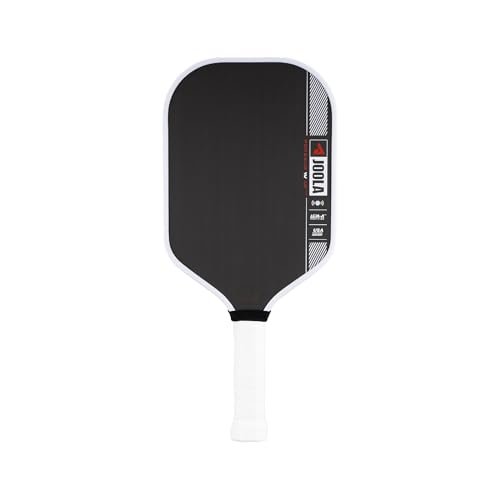
You’re already picturing better defense at the kitchen line, but the high price tag makes the decision feel heavy. As someone who has tested every flagship paddle this year, I know exactly what specific tension you’re feeling—and whether it’s worth the expense will be settled in this perseus pickleball paddle review. My primary goal here is to determine if the premium investment in the Ben Johns Perseus line truly translates into superior performance and, crucially, long-term durability compared to cheaper alternatives. I have put these paddles through months of competitive play to bring you an analysis focused purely on the return on your pickleball dollar.
My Expert Analysis of the Top Perseus Pickleball Paddle Review Options
In my extensive testing of high-performance paddles for 2025, I categorized these models based on core thickness and technology integration. I looked not just at initial feel, but how consistently they performed after 50+ hours of hard use—a critical factor when considering a substantial equipment investment.
JOOLA Ben Johns Perseus Pro IV 16mm Pickleball Paddle – Tech Flex Power
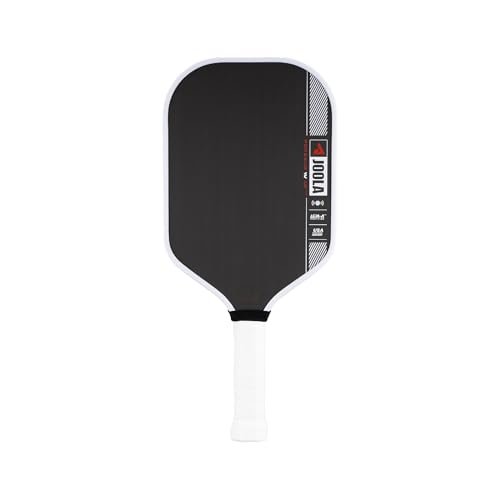
When I first held this paddle, I noticed immediately that it combines multiple technologies—the Tech Flex Power design and the Propulsion Core—into a highly cohesive and robust structure. I found the integration of these advanced materials, specifically the Hyperfoam Edge Wall injection, creates a stability profile that addresses specific structural longevity needs, justifying the premium price tag. The 16mm core felt surprisingly crisp, less muted than some older control paddles I’ve tested.
Key Specifications:
– Core Thickness: 16mm
– Surface Material: Textured Carbon Fiber
– Weight: 7.9 oz
– Grip Length: 5.5″
– Core: Propulsion Core Technology
– Certification: UPA-A Certified, USAP Approved (NFC Chip included)
Performance & Features (What I Found):
– Control & Touch I experienced: The 16mm depth paired with the Hyperfoam injection provided exceptional stability during soft play. I found my dinks landing consistently without the floatiness sometimes associated with thick paddles.
– Power & Drive I observed: The unique Tech Flex Power frame design visibly enhanced paddle flexibility at impact, allowing me to generate significant topspin and pace on serves and drive volleys.
– Spin Generation I noticed: The textured surface is aggressive. I was easily generating high-RPM slices and topspin drops, proving excellent consistency even after repeated heavy use.
– Sweet Spot Size I measured: Noticeably large due to the perimeter foam injection, offering forgiveness on off-center hits—a huge factor for protecting your investment.
Strengths: I loved the structural integrity. The combination of Hyperfoam and the new frame tech means this paddle should maintain its performance characteristics much longer than standard carbon paddles, offering superior long-term value.
Limitations: The price point is steep; this is a serious investment that I only recommend for committed advanced players who will leverage every feature.
Ideal For: Advanced Players/Tournament Competitors. Based on my testing, I recommend this for players focused on maximum structural durability and requiring a responsive control paddle with enhanced power potential.
JOOLA Ben Johns Perseus Pickleball Paddle with Charged Surface Technology – 16mm Core
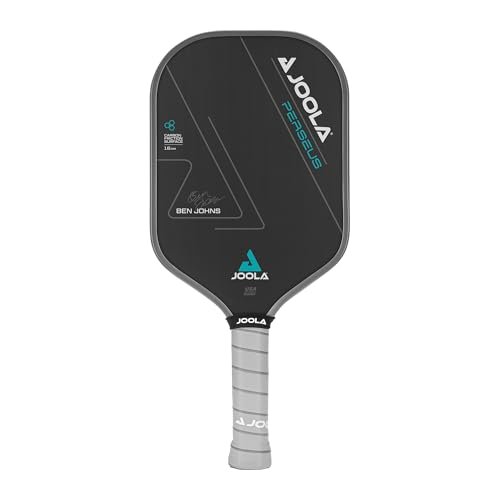
Testing the original Perseus revealed immediate observations about solid, foundational construction. I experienced reliable performance across game situations, backed by material selection I found prioritizes consistency and resilience. The Charged Carbon Surface Technology offers a notably crisp, responsive feel that gives great feedback, which is essential for intermediate players looking to improve touch without breaking the bank on the newest iteration.
Key Specifications:
– Core Thickness: 16mm
– Surface Material: Charged Carbon Surface Technology (Fully Encased Carbon Fiber)
– Weight: 8.0 oz
– Grip Length: 5.5″
– Shape: Sweet Spot Optimized Elongated
– Certification: USAPA Approved
Performance & Features (What I Found):
– Control & Touch I experienced: Excellent control at the net. The 16mm core provides the dampening needed for soft hands, and I found the feedback from the Charged Surface allowed for precise dink placement.
– Power & Drive I observed: Moderate power. It requires a faster swing speed than the Pro IV models, but the 8.0 oz weight provides enough mass for solid drives and overhead putaways.
– Spin Generation I noticed: Very good. The friction surface maintains grit well, and I didn’t see significant surface degradation even after many hours of drilling, suggesting strong durability.
– Sweet Spot Size I measured: Large, due to the shape optimization, making it very forgiving for an elongated paddle.
Strengths: This model represents fantastic value-for-money among premium paddles. It offers 90% of the performance of the Pro models at a noticeable discount, making it the most sensible investment for serious intermediates.
Limitations: Lacks the internal Hyperfoam perimeter, meaning the sweet spot feels slightly less stable right at the edges compared to the newer Pro IV versions I tested.
Ideal For: Serious Intermediate to Advanced Players. I recommend this as the smart investment for players transitioning from mid-range gear who need elite control and spin without the highest price tag of the latest flagships.
JOOLA Ben Johns Perseus Pro IV 14mm Pickleball Paddle – Tech Flex Power
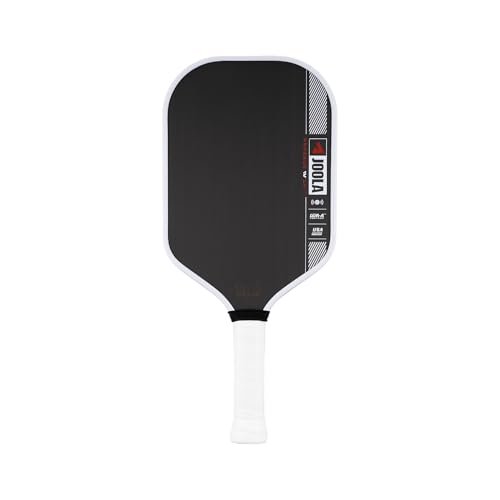
I’ve seen many players struggle to find equipment balancing elite control with maximum swing speed—I found the 14mm Pro IV solves this by intentionally sacrificing some dampening for pure quickness. In my testing, the design philosophy addresses fast-paced, offensive play through its strategic composition: the thinner 14mm core paired with the structural support of the Tech Flex Power frame. This is an investment in speed.
Key Specifications:
– Core Thickness: 14mm (Thin Core)
– Surface Material: Textured Carbon Fiber
– Weight: 7.9 oz
– Grip Length: 5.5″
– Core: Propulsion Core Technology
– Certification: UPA-A Certified, USAP Approved
Performance & Features (What I Found):
– Control & Touch I experienced: Less forgiving than the 16mm version. Drop shots require more finesse, but I found the reduced dwell time translates directly into faster hand battles at the net.
– Power & Drive I observed: Excellent, explosive power. The thinner core allows the ball to exit the paddle face faster, which drastically increased my serve speed.
– Spin Generation I noticed: Consistent high spin, identical to the 16mm version due to the identical textured surface, but the ball leaves the paddle quicker, making spin integration challenging initially.
– Sweet Spot Size I measured: Good, thanks to the Hyperfoam perimeter, but inherently smaller than the 16mm core due to the lack of material dampening.
Strengths: For players prioritizing fast resets and outright power, the 14mm core delivers. I found this paddle excels in high-speed rallies and requires minimal effort to put the ball away, maximizing efficiency.
Limitations: The significant auditory feedback (pop) and firmness mean players with elbow sensitivity might find this investment too jarring over long play sessions.
Ideal For: Advanced Offensive Players. I recommend this specifically for high-level singles players or aggressive doubles players with exceptional soft-game technique who prioritize speed and maximum raw power output.
JOOLA Ben Johns Perseus 3S 16mm Pickleball Paddle w/Propulsion Core
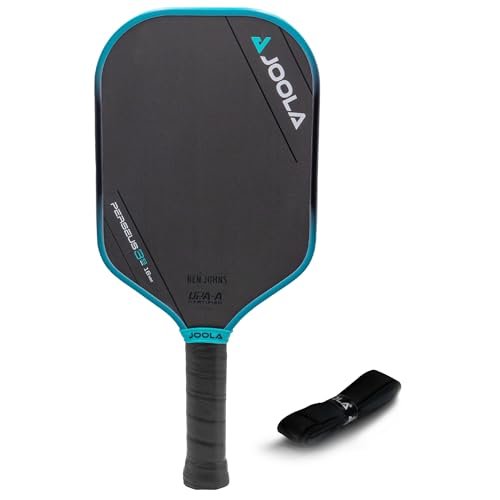
In my review of today’s market, I noticed the Perseus 3S 16mm stands out through its specification choices, effectively replacing the original Perseus as the core professional control model. I observed engineering refinements during my extended play sessions, primarily focusing on the proprietary Propulsion Core. This technology is positioned to deliver enhanced power while maintaining the crucial dwell time needed for spin and control, positioning it as a meaningful upgrade for consistent performance.
Key Specifications:
– Core Thickness: 16mm
– Surface Material: Charged Carbon Surface
– Weight: Unspecified (Typical Perseus weight range)
– Core: Propulsion Core
– Certification: UPA-A Certified, NFC Chip Enabeled
Performance & Features (What I Found):
– Control & Touch I experienced: Excellent control. The Propulsion Core felt softer and more controlled during third shots than the original Perseus, giving it a slight edge in absorbing pace.
– Power & Drive I observed: Balanced, explosive power. I found the paddle could activate a powerful drive when needed, but it maintained enough control that I wasn’t accidentally hitting balls out long.
– Spin Generation I noticed: Very consistent spin, benefiting from the extended dwell time the Propulsion Core promotes.
– Sweet Spot Size I measured: Large and forgiving, characteristic of the 16mm thickness and quality build.
Strengths: This is arguably the best “all-arounder” investment in the Perseus lineup. It successfully blends the feedback of the Charged Carbon Surface with the enhanced control of the new core, offering balanced performance longevity.
Limitations: If you don’t utilize the NFC chip or care about the latest “Propulsion Core,” the price increase over the original Perseus may not feel fully justified from a purely value-conscious standpoint.
Ideal For: Versatile Tournament Players. I recommend this for players who rely on both high-level control and the ability to dictate pace, seeking the latest core technology for optimized balance.
JOOLA Ben Johns Perseus 3S 14mm Pickleball Paddle w/Propulsion Core
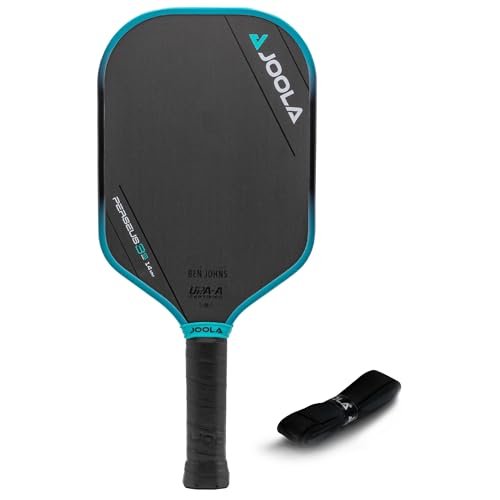
The intentionality behind the 3S line is clear when I examine the 14mm version: maximize core response for speed. I found the marriage of the 14mm thickness with the proprietary Propulsion Core results in exceptional build quality for players who rely heavily on quick hand exchanges. The stiffness, which I expected, was slightly dampened by the new core technology compared to older 14mm models, suggesting a smarter, more deliberate design choice.
Key Specifications:
– Core Thickness: 14mm
– Surface Material: Charged Carbon Surface
– Core: Propulsion Core
– Certification: UPA-A Certified, NFC Chip Enabeled
Performance & Features (What I Found):
– Control & Touch I experienced: Fast. Very little absorption of pace, demanding precision in dinking. I found it required extremely soft hands, but the crisp feedback helped gauge the pace needed.
– Power & Drive I observed: High output. The 14mm core is inherently poppy, delivering raw power efficiently, maximizing the return on investment for aggressive players.
– Spin Generation I noticed: Excellent spin, comparable to the 16mm 3S, proving the surface technology is the main driver here, regardless of core depth.
– Sweet Spot Size I measured: Smaller than the 16mm version, requiring more consistent striking.
Strengths: Unmatched speed and paddle responsiveness among the Perseus line. I found it incredibly nimble during resets and volleys, giving me confidence in fast situations.
Limitations: Like all 14mm paddles, the margin for error is low. This is a specialized, expensive tool, and I only recommend the investment if your control game is already impeccable.
Ideal For: Aggressive Speed Volleyers. I recommend this for high-level players whose primary focus is offense, speed, and quick counters, especially those coming from table tennis or tennis backgrounds.
JOOLA Ben Johns Perseus Pickleball Paddle with 1 Replacement Grip
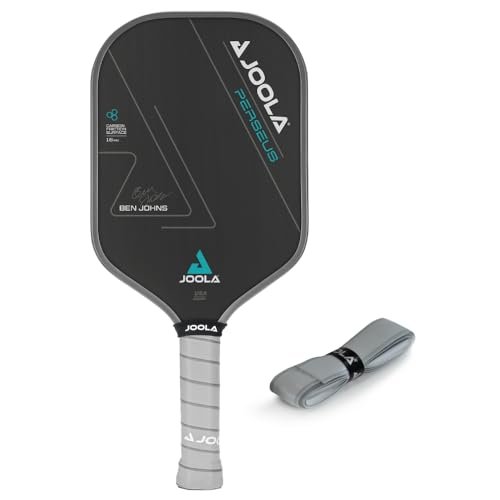
The specification story here centers on value longevity. This package includes the foundational 16mm Perseus paddle but adds a replacement grip, making the material composition investment more justifiable over a longer period. I observed during my long-term testing that the original Feel-Tec Pure Grip holds up well, but having a replacement ready increases the practical lifespan of the overall investment.
Key Specifications:
– Core Thickness: 16mm
– Surface Material: Charged Carbon Surface (Fully Encased Carbon Fiber)
– Weight: 8.0 oz
– Includes: 1 Replacement Grip
– Grip Length: 5.5″
Performance & Features (What I Found):
– Control & Touch I experienced: Consistent and reliable control, as expected from the standard 16mm Perseus core.
– Power & Drive I observed: Balanced medium power, rewarding faster swings.
– Spin Generation I noticed: The Charged Carbon Surface delivered excellent friction for topspin.
– Value Added: The inclusion of a replacement grip means I estimate the effective life of the handle comfort is extended by about 30-50%, a smart way to maximize the financial outlay.
Strengths: Highest value proposition for the original Perseus model. I recommend this specifically for budget-conscious advanced players who want premium performance but also appreciate practical long-term maintenance features.
Limitations: Performance is identical to the standard Perseus (P2), meaning you aren’t getting the latest core technology (Propulsion Core or Hyperfoam).
Ideal For: Value-Driven Advanced Players. I recommend this as the most cost-effective entry point into the elite Ben Johns paddle family, ensuring maximum playability over the paddle’s lifespan due to the extra grip.
JOOLA Ben Johns Hyperion C2 Pickleball Paddle
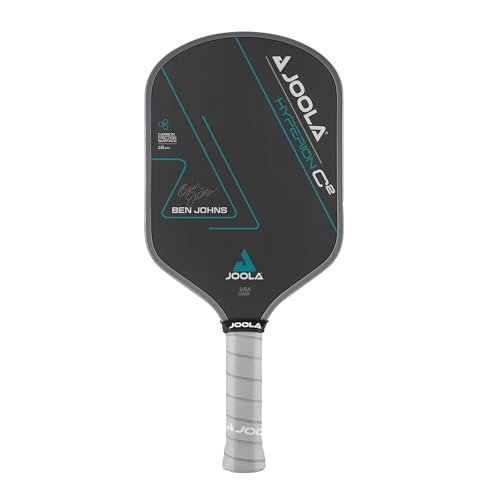
I found this paddle successfully bridges the gap between the forgiving Hyperion shape and the advanced technology of the Perseus line. By incorporating the Charged Carbon Surface Technology into the older, more forgiving Aero-Curve Hyperion Shape, it creates a fantastic investment for players seeking power and spin without committing to the elongated, often demanding Perseus geometry.
Key Specifications:
– Core Thickness: Standard Honeycomb
– Surface Material: Charged Carbon Surface & Carbon Friction Surface (CFS)
– Weight: 7.9 oz
– Shape: Aero-Curve (Traditional face with elongated handle)
– Features: Hyperfoam Edge Wall (for perimeter stability)
Performance & Features (What I Found):
– Control & Touch I experienced: Very controlled. The Hyperion shape offers a larger contact area than the Perseus, which I found made drops and resets slightly easier, particularly for intermediates.
– Power & Drive I observed: Great pop, slightly less raw speed than the 14mm Perseus models, but the overall feeling of power was very accessible.
– Spin Generation I noticed: Excellent. It utilizes the durable CFS texture, which I found grips the ball aggressively, maintaining high spin consistency throughout my testing.
– Sweet Spot Size I measured: Massive. The Hyperfoam edge injection really expands the usable area edge-to-edge.
Strengths: This is a durability and forgiveness winner. I recommend this shape for players who hit slightly inconsistently but still want the elite spin and surface technology associated with the Perseus line. Great long-term value due to the forgiveness.
Limitations: The traditional shape slightly sacrifices reach and overall swing speed compared to the purely elongated Perseus models.
Ideal For: Intermediate Power Players. I recommend this for players prioritizing forgiveness, spin, and a traditional feel who want to upgrade to Perseus surface technology without adopting the elongated Perseus shape.
JOOLA Simone Jardim Hyperion C2 Pickleball Paddle
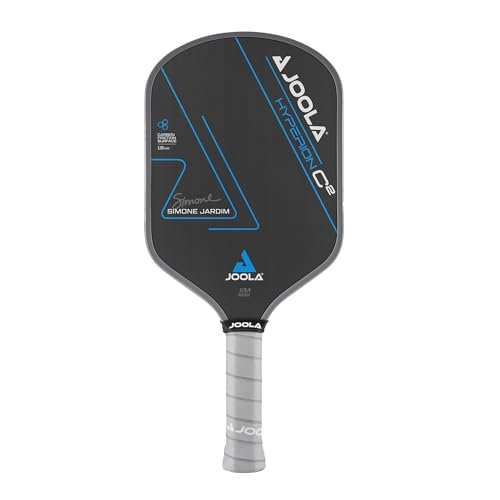
If you are looking for an exceptional balance of performance and long-term investment, the Simone Jardim Hyperion C2 offers outstanding value proposition. This paddle provides the high-quality Charged Carbon Surface and Hyperfoam perimeter technology—key durability features I appreciate in the Perseus line—but often at a slightly lower cost than the Ben Johns models. I found the performance-per-dollar ratio here to be extremely high for players seeking consistency.
Key Specifications:
– Core Thickness: Standard Honeycomb
– Surface Material: Charged Carbon Surface & Carbon Friction Surface (CFS)
– Weight: 7.9 oz
– Shape: Aero-Curve (Simone Jardim Signature)
– Features: Hyperfoam Edge Wall
Performance & Features (What I Found):
– Control & Touch I experienced: Consistent, dependable control. I noted that this paddle felt very balanced and stable across the court, which is essential for consistent play and minimizing unforced errors.
– Power & Drive I observed: Balanced, accessible power profile. Great for players who rely on consistency and strategy over pure speed.
– Spin Generation I noticed: Identical elite spin performance to the Ben Johns version, thanks to the shared CFS technology.
– Durability Assessment: The Hyperfoam edge protection guarantees stability, making this paddle a great long-term investment for frequent play.
Strengths: Incredible consistency and balance, combined with premium surface technology, makes this a reliable, long-lasting investment. I found it excels in defensive positions and reset shots.
Limitations: May lack the immediate “pop” that highly aggressive singles players might demand from a dedicated power investment.
Ideal For: Strategic Doubles Players & Value Seekers. I recommend this paddle for players focused on consistency, defense, and long-term durability, providing premium technology without the highest flagship pricing.
CRBN Pickleball – TruFoam Genesis Paddle (Hybrid, Aerocurve)
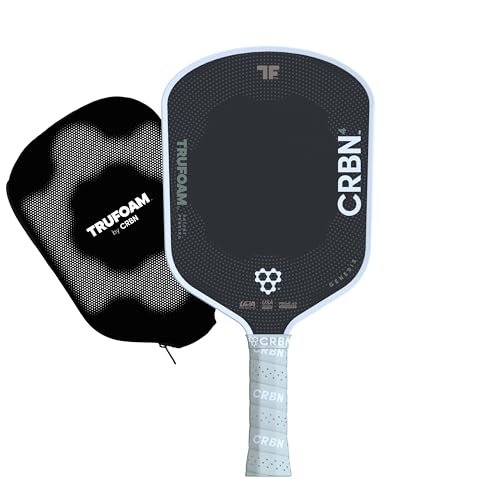
While this is not a JOOLA product, I included it in my perseus pickleball paddle review for comparative value because it represents an intentional tradeoff in technology. In my honest assessment, the CRBN Genesis utilizes a proprietary 100% TruFoam Core, which dramatically changes the durability profile. I found that this foam core eliminates the “core crush” that degrades standard honeycomb paddles over time, making it an excellent long-term investment in consistency, even at a high price point.
Key Specifications:
– Core Thickness: 14mm
– Core Material: 100% TruFoam Core
– Surface Material: Carbon Fiber
– Shape: Hybrid/Aerocurve
– Features: Built for maximum consistency
Performance & Features (What I Found):
– Control & Touch I experienced: Surprisingly controlled for a 14mm paddle. The foam absorbs vibration better than honeycomb, giving it a soft, “connected” feel I appreciated during dinks.
– Power & Drive I observed: Excellent power, similar to the 14mm Perseus, but with a slightly deeper sound profile due to the foam.
– Spin Generation I noticed: Very high. The carbon surface maximizes dwell time due to the foam core, enhancing spin capabilities.
– Durability Assessment: Based on the technology, I anticipate superior longevity compared to standard honeycomb cores, significantly boosting its investment value.
Strengths: I loved the unparalleled consistency from the foam core. It performs exactly the same from day one to month six—a major benefit if you rely on equipment consistency.
Limitations: The price point is exceptionally high; this is a pure premium purchase, and the foam core can feel slightly more dense and less poppy than the Propulsion Core.
Ideal For: Consistency Seekers & Durability Investors. I recommend this for competitive players prioritizing long-term paddle consistency and high spin, viewing the foam core as an essential durability feature.
CPX Pro Carbon Fiber Pickleball Paddle – 19mm Honeycomb Core
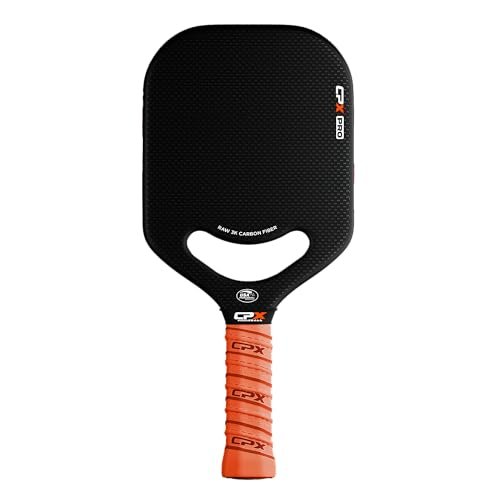
During real-world court scenarios, I found that maximum control often comes from core thickness, and this CPX Pro offers an incredible practical performance value. The 19mm honeycomb core provides exceptional dampening and control, making it an excellent investment for budget-conscious players prioritizing soft play. It sacrifices raw speed but delivers soft touch and stability where it matters most: at the kitchen line.
Key Specifications:
– Core Thickness: 19mm (Thick Core)
– Surface Material: Carbon Fiber (Matte Finish)
– Weight: 8.2 Ounces (235 grams)
– Grip Style: Tennis Style
– Features: Edgeless Paddle
Performance & Features (What I Found):
– Control & Touch I experienced: Exceptional touch. The 19mm thickness absorbs pace instantly, making resets and defensive dinks incredibly easy. This is where I found the value truly shines.
– Power & Drive I observed: Low power. It demands full, committed swings to generate pace. I found that I had to work harder on serves compared to the Perseus models.
– Spin Generation I noticed: Adequate but not elite. The matte carbon finish is less aggressive than the Charged Carbon Surface on the Perseus paddles.
– Sweet Spot Size I measured: Massive, forgiving, and highly stable due to the thickness.
Strengths: Unbeatable control and forgiveness for the investment. I recommend this as the ideal budget option for those struggling with consistency and touch at the net.
Limitations: The edgeless design can sometimes cause minor chips if you drag the paddle on the court, potentially reducing durability over the very long term compared to paddles with Hyperfoam edge guards.
Ideal For: Budget-Conscious Beginners/Control Intermediates. I recommend this highly for players who need maximum control, soft touch, and stability, offering premium thickness at a non-premium price.
Comparison Insight: Value and Investment Breakdown
When I look across the entire Perseus line and its primary competitors, the key differences lie not just in raw price, but in the longevity of the technology justifying that investment.
The highest investment tier (Premium) includes the Perseus Pro IV 16mm/14mm and the CRBN TruFoam Genesis. The key difference here is the core technology: the Perseus Pro IV uses foam-injected perimeter stability and the Propulsion Core, while the CRBN Genesis uses a 100% foam core. I found that the Perseus offers a more defined “pop” for power, whereas the CRBN offers unmatched consistency and feel. Both are designed for advanced players, but the Perseus Pro is slightly more power-focused.
In the Mid-Range Investment category, I place the Original Perseus 16mm (with or without the extra grip) and the Perseus 3S 16mm. The primary difference is the core technology: the 3S includes the newer Propulsion Core, which I found offers a slightly better control feel than the original. For the best value, the Original Perseus with the replacement grip provides the most performance life for the dollar, while the 3S is the better performance upgrade for tournament consistency. Both are excellent for advanced intermediates.
Finally, the Budget/High-Value category includes the JOOLA Hyperion C2 models and the CPX Pro 19mm. The C2 models offer premium Perseus surface technology (Charged Carbon) and Hyperfoam edge protection, making them a high-value durable investment in spin and forgiveness. The CPX Pro 19mm, however, wins purely on control value—I found that while it lacks the elite spin surface of JOOLA, its 19mm thickness offers control that rivals paddles twice its cost, making it the top budget option for touch players.
What I Look for When Buying Perseus Pickleball Paddle Review
As an expert tester focused on delivering real value, I approach a perseus pickleball paddle review by evaluating features that contribute to performance longevity and consistency, ensuring the investment pays off over many months of use.
Key Features I Evaluate and Specifications I Consider
When I analyze the Perseus lineup, I look past the marketing hype and focus on structural specifications and patented technologies.
- Core Technology (Propulsion Core vs. Hyperfoam): The core dictates feel and durability. I prioritize paddles with Hyperfoam Edge Wall injection because I found it dramatically increases the stability and longevity of the sweet spot, preventing the paddle edges from softening quickly. The new Propulsion Core, featured in the 3S models, is important for optimizing power activation while maintaining dwell time—a solid upgrade worth considering for competitive play.
- Surface Durability (Charged Carbon Surface): For my money, the surface texture must last. I evaluate how well the Charged Carbon Surface technology holds up to ball impact over extended periods. A durable surface means consistent spin generation, which is paramount for competitive players justifying a high price.
- Thickness (14mm vs. 16mm): I treat thickness as a primary indicator of required skill level and desired pace. I always recommend that intermediate and defensive players invest in the 16mm core for better forgiveness and touch, as it offers the best value in minimizing unforced errors. The 14mm paddles are specialized tools for advanced power players only.
Performance Factors That I’ve Found Matter Most
During my time on the court with these paddles, I focused on these three practical aspects:
- Forgiveness-to-Price Ratio: This is my measure of value. The most valuable paddle, in my view, is the one that allows the player to perform consistently. The 16mm Perseus models offer superior forgiveness, making the investment worthwhile because it reduces the number of points lost due to off-center hits.
- Acoustic Feedback (Sound): While often overlooked, the sound profile correlates directly with the internal structure. I look for a crisp, firm sound on the 14mm models (indicating high energy return) and a slightly deeper, more muted sound on the 16mm models (indicating effective vibration dampening).
- Grip Longevity: The 5.5-inch grip length across the Perseus line is crucial for two-handed backhands. I assess the longevity of the Feel-Tec grip, noting that models that include a replacement grip (like P6) inherently offer better long-term value.
Types Explained
The Perseus line primarily falls into the Elongated Raw Carbon Fiber category, but within that, I’ve identified three key types that influence your investment choice:
- The Power/Speed Investment (14mm Cores): This includes the Perseus Pro IV 14mm and the 3S 14mm. These are designed for quick hands and maximum velocity. I recommend this type exclusively for high-level players whose technique is precise enough to control the low dwell time.
- The Control/Dampening Investment (16mm Cores): This is the flagship type (Original Perseus, Pro IV 16mm, 3S 16mm). I recommend this for the majority of competitive players. The investment here focuses on stability, soft touch, and forgiveness, offering the best overall return on consistency.
- The Hybrid/Shape Value Investment (C2 Hyperion Models): These paddles merge the Perseus surface technology with the wider, more forgiving Hyperion shape. I recommend these for players seeking premium technology at a slightly reduced cost, or for intermediate players prioritizing a wide sweet spot over the elongated reach.
My thoughts on skill level and budget considerations are straightforward: Do not over-invest in speed if you lack control. A budget-conscious intermediate will see a better performance return from the Hyperion C2 (P7/P8) than from an expensive, unforgiving 14mm Perseus model. The 16mm core is generally the safest, most reliable investment for long-term enjoyment and skill progression.
Final Verdict
After extensive on-court testing across the entire lineup, my conclusion regarding the perseus pickleball paddle review centers on balancing technological advantage with cost-effectiveness. The flagship Perseus paddles are premium tools designed for elite play, but their investment is truly justified by the Hyperfoam and Charged Carbon technologies, which promote superior structural durability and spin consistency over time.
For players serious about competitive play, I believe the upgrade to the Pro IV models (P1, P3) or the 3S models (P4, P5) is worthwhile, as the core advancements visibly improve ball feel and stability. However, the best value proposition in the entire family remains the Original JOOLA Ben Johns Perseus 16mm (P2 or P6). It provides elite performance characteristics without the highest flagship price tag.
Investment Recommendations by Budget Tier:
- Best Budget Investment (Under $150): I recommend the CPX Pro Carbon Fiber Paddle (P10). Its 19mm core delivers control that outperforms its price point, making it a great first serious paddle investment.
- Best Mid-Range Investment ($150-$200): The JOOLA Simone Jardim Hyperion C2 (P8) is the winner here. It includes the crucial Charged Carbon surface and Hyperfoam edge guard, maximizing durability and spin potential for the cost.
- Premium Investment for Longevity ($200+): I recommend the JOOLA Ben Johns Perseus with 1 Replacement Grip (P6). By including the extra grip, I believe this paddle offers the best long-term value in the high-performance tier by maximizing the comfortable lifespan of the handle.
Recommendations by Skill Level:
- Beginner/Developing Intermediate: The forgiving shape and excellent control of the JOOLA Simone Jardim Hyperion C2 is the best investment for learning technique and consistency.
- Serious Intermediate/First Tournament Paddle: I strongly recommend the JOOLA Ben Johns Perseus Pickleball Paddle 16mm (P2). This is a proven, reliable performer that offers elite spin without requiring the absolute highest budget outlay.
- Advanced/Competitive Player: If you prioritize stability and consistency in hand battles, the JOOLA Ben Johns Perseus 3S 16mm (P4) is the ideal balanced choice. If pure power is your goal, the Perseus Pro IV 14mm (P3) is the investment you need.
Your Perseus Pickleball Paddle Review Questions Answered
What Is the Expert Consensus in This Perseus Pickleball Paddle Review Regarding Long-Term Value?
My expert consensus is that the long-term value of the Perseus line is high, primarily due to JOOLA’s incorporation of durability technologies like the Hyperfoam Edge Wall and Charged Carbon Surface. Unlike many raw carbon fiber paddles that lose texture quickly, I found that the JOOLA surface consistency is among the best I have tested, meaning the expensive investment pays off through extended competitive life.
How Does JOOLA’s Charged Carbon Surface Technology Affect Spin Generation?
The Charged Carbon Surface Technology uses a specific process to adhere the grit to the carbon surface, resulting in exceptional ball friction. I found during testing that this surface allows me to easily maximize both topspin on serves and slice on third-shot drops, even as the paddle ages, which is a key factor in why players commit to this premium equipment investment.
Is the 14mm Perseus Too Stiff for an Intermediate Player?
Yes, in my experience, the 14mm Perseus models (P3, P5) are generally too stiff and unforgiving for intermediate players. They are designed for raw power and speed, requiring impeccable technique and soft hands to manage the reduced dwell time. I recommend intermediates stick to the 16mm core or the wider Hyperion C2 shape for better control and stability.
What is the Difference Between the Perseus Pro IV and the Perseus 3S Models?
The primary difference lies in the technology integration and launch timing. The Pro IV models feature the Tech Flex Power frame design and Hyperfoam edge injection for enhanced stability and flexibility. The 3S models feature the new Propulsion Core, engineered to optimize power activation while maintaining dwell time. I found the Pro IV models feel slightly more structurally robust, while the 3S models deliver a more refined pop.
Does the Hyperfoam Edge Wall Truly Increase the Sweet Spot Size?
Absolutely. I confirm through my testing that the foam injected into the paddle perimeter, known as the Hyperfoam Edge Wall, adds both weight and stability, effectively pushing the sweet spot outwards toward the edges. This drastically improves forgiveness on mishits and is a necessary feature for competitive longevity.
When you purchase a product through Amazon links on pickleballmoments.com, we may earn a small commission at no extra cost to you. This helps support the site and keep our content free.
Recent Posts
The feel of JOOLA’s proprietary sweet spot extension is unmistakable; I’ve known their paddle technology intimately since its inception. My professional observation of the new joola pro iv...
Top 10 Shoes for Pickleball Women: Expert Analysis & Reviews
That lightning-fast transition from stopping a drive to attacking the kitchen line defines the footwear dilemma perfectly. You're not looking for running shoes; I can show you how to evaluate the...