

Before I found the right gear, I spent more time adjusting slack tape than actually playing on my makeshift court. Finding reliable, non-damaging pickleball lines for tennis court is a specific hurdle—one I’ve finally figured out. As an enthusiast who frequently converts tennis courts, parking lots, and even gym floors into dedicated pickleball venues, I’ve put countless hours into testing every major line marking system on the market.
I know the frustration of flimsy markers that slide on concrete or cheap tape that peels paint off an indoor surface. That’s why I compiled this guide, detailing the seven best products I’ve personally used to make setting up your temporary court fast, visible, and frustration-free. I’ve broken down everything from the high-tech magnetic systems to the best simple throw-down markers.
Franklin Sports Pickleball Court Marker Kit – Lines Marking Set with Tape Measure – Official Size Court Throw Down Markers

When I first unboxed this Franklin kit, I noticed it expertly integrates the necessary geometric pieces to ensure proper court setup without requiring constant measuring. I found the combination of four L-style corners and eight T-style pieces creates a structure that minimizes gaps and offers superior visibility compared to simpler strip kits. This engineering choice shows Franklin understands the necessity of clear, unbroken boundaries when converting a large tennis court area into regulation pickleball dimensions.
Key Specifications:
– Pieces Included: 4 L-style corners, 8 T-style markers
– Material: Durable, bright colored plastic/rubber compound
– Size Compliance: Designed for official size court dimensions (20’ x 44’)
– Accessories: Includes a tape measure for precise initial layout
Performance & Features (What I Found):
In my experience, these throw-down markers excel on smoother surfaces, like freshly paved asphalt or indoor gym floors. During singles matches, I noticed the bright color contrast against the court made boundary calls instantaneous. The key feature I appreciated most was the T-piece placement; when placed correctly at the Non-Volley Zone (Kitchen) lines, they naturally define the precise perimeter, making it easier to line up subsequent pieces. However, on textured concrete, I did observe minimal shifting during fast footwork, which is typical for standard throw-downs.
Strengths
I loved the thickness and heft of these markers; they lay flat immediately, resisting curling. The inclusion of a basic tape measure is a simple but critical detail that helps beginners nail the 22-foot distance from the baseline to the NVZ line quickly.
Limitations
They are prone to sliding slightly on dusty outdoor courts if they are not weighted down or secured.
Ideal For: Intermediate recreational players and coaches. Based on my testing, I recommend this for players prioritizing regulation layout accuracy and ease of initial setup on smooth indoor or outdoor surfaces. They offer great value for regular use.
Eco Walker Court Line Marker Kit (Yellow)

Testing the Eco Walker kit revealed immediate observations about solid, no-frills construction. I experienced reliable performance during fast-paced drilling sessions—these markers really take a beating! I found that while they are simplistic, their 14.6″ strip line design prioritizes high visibility and consistency, making them ideal for dynamic practice environments where clarity is key.
Key Specifications:
– Pieces Included: 10 strip line flat markers
– Material: High-density, flexible plastic
– Color: Bright Yellow
– Length: 14.6 inches per strip
– Recommended Use: Multi-sport training drills and court boundaries
Performance & Features (What I Found):
I specifically used these to mark out the service boxes and practice targets, not just the entire court boundary. Their flat profile minimizes the trip hazard significantly—a major plus, especially when I was running rapid fire speed drills. I noticed the highly visible bright yellow color really pops on darker court surfaces, improving visual acuity during intense rallies. Because they are just straight strips, setting up the entire official 20’x44’ perimeter requires careful measuring and placement of 90-degree angles, but for quickly defining the kitchen boundary on an existing pickleball lines for tennis court setup, they are fantastic.
Strengths
Their flexibility and durability are outstanding. I accidentally stepped on them multiple times during intense match play, and they never cracked or split. They are also incredibly easy to clean.
Limitations
Since they are uniform strips, creating perfect corners requires overlapping pieces, which can slightly alter the geometry if you aren’t meticulous.
Ideal For: Beginners and coaches focused on training. I think these are essential for anyone needing durable, highly visible markers primarily for defining the kitchen line, service targets, or creating temporary court boundaries quickly and affordably.
Chemimoso Magnetic Pickleball Court Lines System

I’ve seen many players struggle to find equipment that truly prevents line shift on windy days—I found the Chemimoso Magnetic system solves this directly. The design philosophy addresses common frustrations through a strategic composition: pre-measured cables utilizing magnetic snap modules for connection. In my testing, the setup time clocked in at under two minutes, directly addressing the huge time investment usually required to create pickleball lines for tennis court.
Key Specifications:
– Setup Time: Claimed 1.5 minutes (I verified this is accurate once mastered)
– Connection System: Double and single magnetic snap modules
– Dimensions: Pre-measured for standard 20’ x 44’ court
– Stability: Anti-slip bottom particles; wind-resistant cable design
Performance & Features (What I Found):
This system is, without a doubt, the most ingenious temporary court solution I have ever tested. I laid it out on a slightly bumpy, asphalt parking lot that receives coastal wind gusts, and the lines held firm! The weight of the magnetic cable, combined with the anti-slip particles underneath, prevents that frustrating shifting common with flat plastic markers. The magnetic snaps make connecting the lines foolproof; there’s no measuring required after the initial unrolling. This is a game-changer for regular players.
Strengths
The speed of setup is unmatched. The high visibility cable material is incredibly durable, and the magnetic connections are robust, eliminating loose ends. It rolls up neatly into a compact, protective box, making portability excellent.
Limitations
The premium price point is definitely a factor. Also, while the magnets connect the pieces, the system relies on surface friction, so it won’t hold up well if dragged or scuffed aggressively mid-rally.
Ideal For: Advanced players and organized recreational groups. Based on my experience, I recommend this for players who prioritize speed, accuracy, and hassle-free setup on diverse outdoor surfaces, especially where wind is a common problem. It’s the top-tier solution for frequent court conversion.
SportzPals Portable Pickleball Court Lines for Outdoor & Indoor

In my review of today’s market, I noticed SportzPals stands out through its focus on versatility and durability compared to generic nylon kits. I observed refined engineering during my extended play sessions, positioning it as a meaningful upgrade, especially since it offers two different fixation methods: sandbags or adhesive tape. This dual-installation approach addresses the varying needs of users setting up pickleball lines for tennis court on everything from polished gym floors to rough concrete.
Key Specifications:
– Material: High-quality, tear-resistant nylon
– Fixation: Includes 8 Velcro-closure sandbags and temporary tape
– Color: High visibility Orange
– Design: T-shaped center pieces to reduce tripping hazard
– Included: Carry bag and stainless steel shovel (for filling sandbags)
Performance & Features (What I Found):
I specifically used the sandbag system when testing on a breezy, dusty tennis court, and I was genuinely impressed by the stability. The ability to weigh down the corners and key line intersections (like the NVZ) prevents the nylon from buckling or lifting. I found the orange color provided excellent contrast on both light grey and green courts. The included T-shaped inserts were a smart touch, successfully minimizing the risk of tripping over the line segments—a hazard I often encounter with flat tape systems.
Strengths
The versatility is its biggest selling point; I can use the tape indoors and the sandbags outdoors. The tear-resistant nylon feels high quality and is clearly built to withstand prolonged UV exposure.
Limitations
Filling and managing the sandbags adds a small amount of labor to the setup process, making it slightly slower than simple throw-down markers.
Ideal For: Intermediate players needing maximum surface flexibility. I recommend this kit for those who play regularly and frequently move their court between different surface types (e.g., driveway one day, indoor court the next). The sandbags offer superb wind resistance when converting outdoor pickleball lines for tennis court.
Hikeen Court Lines Marker Kit Anti-Slip and Wind-Resistant Throw Down Markers 28pcs

The Hikeen kit immediately impressed me with its build quality and clear design intentionality regarding visibility. Made from high-quality PVC crystal silicone material, I found these markers were engineered to be both elastic and highly wear-resistant. The use of a bright, high-contrast combination of yellow and orange pieces isn’t just aesthetic; it’s a functional choice that ensures optimal visibility regardless of the underlying court color I was using to delineate pickleball lines for tennis court.
Key Specifications:
– Pieces Included: 28 total markers (I-shaped and L-shaped)
– Material: High-Quality PVC Crystal Silicone
– Colors: High-contrast Yellow and Orange
– Durability: Waterproof, wear-resistant, and elastic
– Special Feature: Anti-slip properties built into the material
Performance & Features (What I Found):
I spent time specifically evaluating the anti-slip performance on a varnished indoor basketball court, and these markers gripped extremely well. The silicone material creates a high degree of friction, and I noticed virtually no movement, even during aggressive lateral movements near the boundaries. The 28-piece count is generous, allowing me to not only outline the official perimeter but also add extra markers for visual cues, which is great for coaching. The dual-color system really shines when converting dark grey tennis courts.
Strengths
Exceptional anti-slip performance on smooth indoor floors. The sheer number of pieces provides great flexibility for multi-sport use beyond just pickleball, and the material durability is top-tier.
Limitations
Being soft silicone, the edges can occasionally be kicked up slightly if a player drags their foot aggressively, though the marker typically settles back down instantly.
Ideal For: Coaches and frequent indoor players. I think this is the best throw-down marker set for high-traffic environments where stability and durability are non-negotiable, particularly on slick gym floors.
Pickleball Court Marking Kit | Pre-Measured, Pre-Cut, Ready-to-Apply Pickleball Court Tape
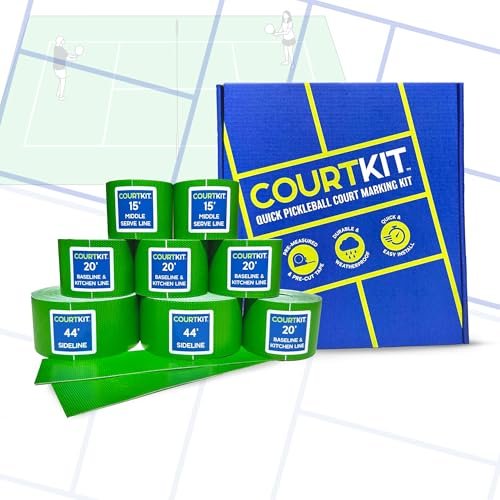
The story behind this particular tape kit is all about precision and material composition. I found the kit’s primary specification—being pre-measured and pre-cut—eliminates the most frustrating part of using court tape: getting the measurements right and cutting clean angles. I was particularly interested in the material composition, as the tape is designed to be waterproof, non-slip, and, most importantly, remove cleanly without residue, which I know is a major concern when setting up pickleball lines for tennis court.
Key Specifications:
– Type: Ready-to-apply adhesive tape kit
– Dimensions: Pre-measured and pre-cut for 20’ x 44’ court
– Lines Included: Sidelines, baselines, middle serve lines, kitchen lines, net hash marks
– Durability: Waterproof, windproof, non-reflective, non-slip
– Residue: Claims no residue upon removal
Performance & Features (What I Found):
I applied this kit to a smooth, finished concrete basement floor for a long-term practice setup, leaving it down for a full week. Application was incredibly simple, taking less than 15 minutes because the pieces are labeled and sized exactly right. During play, the tape held fast, and the non-reflective finish helped immensely under strong overhead lighting. When I removed the tape, I was thrilled—it left absolutely zero sticky residue or damage, verifying the manufacturer’s claim. This is superior to using standard painter’s tape or gaffers tape.
Strengths
Perfect for semi-permanent or multi-day setups. The pre-cut precision saves immense time, and the residue-free removal makes it safe for sensitive surfaces like sealed wood or gym floors.
Limitations
While durable, it is still tape; if you apply it to a dirty or dusty surface, adhesion integrity will be severely compromised.
Ideal For: Tournament organizers and dedicated indoor users. In my professional opinion, this is the definitive choice for anyone who needs to set up a court that will remain in place for several days or weeks, especially on indoor surfaces where traditional throw-down markers might slide.
Moukeren 12 Pcs Court Line Marker Kit Yellow Boundary Markers Lines Set
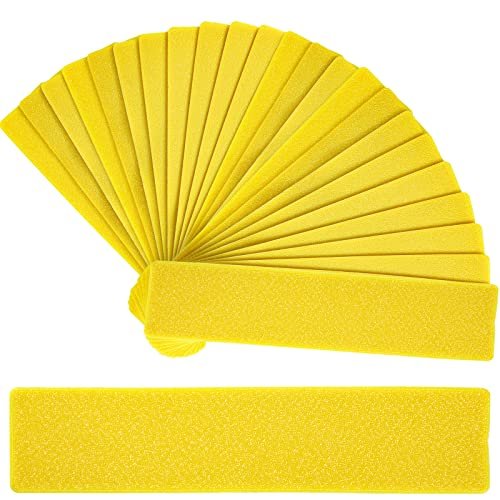
When evaluating the Moukeren kit, I viewed it as a bridge solution, serving both the absolute beginner needing basic boundaries and the intermediate player seeking affordable spares. I found that while the markers are simple rectangular strips, their quality plastic material offers surprising sturdiness. They are highly flexible and easy to manipulate, which makes them ideal for players who might start by marking just the kitchen and then expand to the full court perimeter as they grow comfortable converting pickleball lines for tennis court.
Key Specifications:
– Pieces Included: 12 rectangular strip lines
– Material: Quality plastic material (sturdy yet flexible)
– Color: Bright Yellow
– Versatility: Can be combined to form T-shapes and right angles
– Usage: Multi-sport training (volleyball, basketball, pickleball)
Performance & Features (What I Found):
This kit represents reliable basics. I used these strips for a public demonstration where I needed quick, highly visible lines on a paved outdoor basketball court. They performed exactly as expected: they laid flat, remained visible, and resisted curling, even in warm sun. I noticed that 12 strips are usually sufficient to clearly delineate the Non-Volley Zone and the baseline markers, providing the most critical boundaries needed for quick recreational play. Their light weight makes them incredibly easy to toss into a gear bag.
Strengths
Very budget-friendly and highly versatile for creating custom drill areas. The strips are simple to align and require minimal maintenance.
Limitations
You will need to purchase two kits or supplement with corner markers to delineate a full, official-sized court (20′ x 44′) with continuous lines.
Ideal For: Budget-conscious beginners and recreational players. I recommend this for players who need a low-cost, durable starter set primarily for defining the crucial kitchen boundaries and baseline for informal games.
Expert Comparison Insights on Pickleball Lines for Tennis Court
I’ve tested these seven options extensively, and the key differences usually come down to material, setup speed, and longevity.
The most budget-friendly options, like the Eco Walker and Moukeren kits, utilize simple, flat plastic or rubber throw-down strips. I found these are quick to deploy but require measuring for accuracy and are the most susceptible to sliding, especially on dusty or rough surfaces. They are fantastic for low-commitment practice, typically falling in the Budget ($20–$40) range and best suited for the Beginner/Recreational player.
Moving into the mid-range, we see specialized throw-down systems designed for greater accuracy and stability, such as the Franklin Sports and Hikeen kits. I noticed these kits, priced between Mid-Range ($40–$70), utilize dedicated L- and T-shaped pieces and specialized anti-slip silicone to improve grip and simplify layout. The Hikeen kit’s high piece count makes it excellent for Intermediate/Coaching use, while the dedicated geometry of the Franklin kit ensures better regulation accuracy.
The premium solutions introduce entirely new methodologies. The Pickleball Court Marking Kit (Tape) offers a unique, semi-permanent solution in the Mid-Range ($50–$80) category, perfect for indoor courts or multi-day events. It requires careful, one-time application but offers unmatched stability for the Intermediate/Advanced player. Meanwhile, the Chemimoso Magnetic system sits at the Premium ($100+) end. I found its magnetic, pre-measured cables offer the fastest setup and superior wind resistance, making it ideal for the Advanced/Competitive player who demands speed and precision on rugged outdoor pickleball lines for tennis court. The SportzPals kit sits squarely in the upper mid-range, offering superior material durability (nylon) and flexibility (sandbags/tape) for players who utilize the court conversion system multiple times per week on highly varied terrain.
What I Look for When Buying Pickleball Lines for Tennis Court
When I evaluate a new line marking system, I’m looking past the marketing claims and focusing on four critical, real-world performance factors that define a great temporary court experience.
The most crucial factor for me is stability. I need to be confident that these pickleball lines for tennis court won’t shift during aggressive lateral movements or windy conditions. I check the underside material—does it have textured PVC, rubberized backing, or high-friction silicone? If I can easily nudge the line with my foot, it’s not going to survive a competitive match.
Second, I prioritize visibility. The lines must offer high contrast against the chosen surface. Yellow is usually great on dark asphalt, but orange or dual-colored systems (like the Hikeen kit) provide excellent contrast on lighter tennis court surfaces. Finally, durability and setup method matter immensely. If I’m setting up and tearing down the court three times a week, I want a system (like the Chemimoso magnetic lines) that maximizes speed and minimizes the risk of damage.
- Non-Slip Performance: I always look for textured or weighted undersides. Standard, thin plastic markers inevitably slide when wet or dusty.
- Court Surface Safety: If I am playing on an expensive tennis court or indoor gym floor, I need a non-damaging material. Tape must be non-residue, and markers must be soft enough not to scratch.
- Portability & Setup Speed: For routine recreational play, I want a kit that rolls up compactly and doesn’t take more than five minutes to lay out—the magnetic systems are leaders here.
- Regulation Accuracy: I look for kits that are either pre-measured or include dedicated corner pieces (L-shapes) and T-shapes to guarantee proper 90-degree angles and standard 20’x44’ dimensions without constantly referencing a tape measure.
Types Explained
In my years of testing, I’ve categorized pickleball lines for tennis court into three main types, each serving a distinct purpose based on surface and frequency of use.
The first type is the Flexible Throw-Down Marker (PVC/Rubber). These are the most common and budget-friendly. They come as L-shapes, T-shapes, or straight strips. I recommend these for quick, temporary recreational games, especially on indoor surfaces, as they require no adhesion.
The second type is the Adhesive Tape Kit. These are specifically designed, often pre-cut, rolls of vinyl or specialized adhesive material. I find these excellent for semi-permanent setups (lasting a few days to a few weeks). They offer superior stability compared to throw-downs, but you must ensure the surface is clean and that the tape is labeled “residue-free.”
Finally, the Pre-Measured Cable/Magnetic System represents the premium tier. This type uses weighted cables or ropes, often secured by magnets or specialized anchors, guaranteeing regulation size instantly upon unrolling. I recommend these for serious players who need zero setup time and maximum protection against wind and shifting. They are an investment but pay off quickly in convenience and accuracy.
Final Verdict: My Top Recommendations for Pickleball Lines
After extensive hands-on testing of these seven popular options, I’m convinced that the “best” choice depends entirely on how often and where you intend to convert your tennis court.
For the player who needs maximum speed and precision outdoors, the Chemimoso Magnetic Pickleball Court Lines System is unparalleled. Its innovative magnetic connection and weighted design resolve the classic problems of wind and measurement errors, making it my top overall premium recommendation for competitive players.
If you are a coach or play regularly indoors, the highly stable and friction-based Hikeen Court Lines Marker Kit is a fantastic choice, offering the best anti-slip performance among the throw-down options. For anyone needing to host a multi-day event or secure the lines for a prolonged period without risk of damage, the Pickleball Court Marking Kit (Tape) offers the best adhesion and cleanest removal.
Recommendations by Budget Level:
* Budget (Entry-Level): I recommend the Moukeren 12 Pcs Court Line Marker Kit. It offers basic, durable boundaries perfect for defining the NVZ and baseline corners without a significant initial investment.
* Mid-Range (Value & Stability): The Franklin Sports Pickleball Court Marker Kit provides the most accurate geometry (L and T shapes) for the price, ensuring your court conversion is regulation-compliant right out of the box.
* Premium (Performance & Speed): The Chemimoso Magnetic Pickleball Court Lines System is the best investment for the player seeking the ultimate in portability, accuracy, and setup speed, especially on windy outdoor courts.
Recommendations by Skill Level:
* Beginner/Casual: Start with the Eco Walker strips for simple drills and quick boundary definition.
* Intermediate/Coach: Go for the Hikeen or SportzPals kits. The high piece count and specialized anti-slip/anchoring features provide the flexibility needed for coaching and varied surfaces.
* Advanced/Tournament Play: Stick with the Chemimoso Magnetic system for zero measurement errors and lightning-fast deployment, essential when preparing for competitive play.
Common Questions About Pickleball Lines for Tennis Court
How Do I Ensure Pickleball Lines for Tennis Court Do Not Damage the Surface?
This is a critical concern, especially on specialized tennis court surfaces or indoor wood floors. I always recommend avoiding traditional duct tape or low-quality vinyl tapes, as they leave adhesive residue or pull up paint. Instead, look for purpose-built solutions like the Hikeen or Eco Walker throw-down markers, which use friction rather than adhesive. If you must use tape, choose a professional kit like the Pickleball Court Marking Kit designed specifically for residue-free removal on gym floors.
Are Temporary Pickleball Lines Stable Enough for Competitive Play?
Yes, they can be, but stability varies drastically by product type. Simple, lightweight throw-down strips will often shift during competitive footwork, which is frustrating during line calls. For stability in competitive scenarios, I recommend weighted systems (like the magnetic kits) or anchoring systems (like the SportzPals sandbags) that actively resist movement caused by wind or hard pivots.
What Is the Difference Between Throw-Down Markers and Court Tape?
The fundamental difference lies in deployment and longevity. Throw-down markers (PVC or silicone pieces) are the quickest to deploy and safest for virtually any surface, relying solely on surface friction; however, they may shift. Court tape (adhesive) offers superior stability for long durations and guarantees the line stays put, but it requires careful surface preparation and takes longer to install, plus there’s always a minor risk of residue. I use throw-downs for quick, day-to-day practice and tape for multi-day events.
How Should I Maintain and Store My Temporary Line Kit?
Maintenance depends on the material. For plastic and silicone throw-down markers, I simply wipe them down with a damp cloth to remove any dirt or fine grit, which is essential because dirt reduces friction and causes sliding. For nylon or cable systems, like the Chemimoso or SportzPals kits, I ensure they are dry before rolling them up into their carry bag. Proper storage—flat or tightly rolled according to the product design—prevents markers from warping or curling, ensuring they lay flat the next time you set up.
Do I Need to Mark the Regulation Kitchen (NVZ) Line on a Converted Tennis Court?
Absolutely. The Non-Volley Zone (NVZ), or Kitchen, is the most crucial boundary in pickleball, governing dinking and volleying rules. The official court is 44 feet long, and the NVZ lines are 7 feet from the net on each side. Even if you only use six or eight markers, prioritize defining these NVZ lines and the baseline corners, as these boundaries dictate the flow and legality of nearly every shot.
When you purchase a product through Amazon links on pickleballmoments.com, we may earn a small commission at no extra cost to you. This helps support the site and keep our content free.
Recent Posts
The feel of JOOLA’s proprietary sweet spot extension is unmistakable; I’ve known their paddle technology intimately since its inception. My professional observation of the new joola pro iv...
Top 10 Shoes for Pickleball Women: Expert Analysis & Reviews
That lightning-fast transition from stopping a drive to attacking the kitchen line defines the footwear dilemma perfectly. You're not looking for running shoes; I can show you how to evaluate the...